
Reviewed · HISTORICAL TOURS
Tirana: Walking Tour through Attractions of Historic Center
Tirana reveals itself one street at a time. This $17 walking tour links Skanderbeg Square, Bunk’Art 2, Tirana Castle, the Pyramid, and several reminders of Albania’s communist past, giving you a useful first look at the capital. I like the small-group format and the guide’s focus on daily life, not just monuments. The main limitation is pace: two hours is tight for so many stops, and some visits are brief photo stops rather than full museum visits.
I also like that the tour brings practical food advice into the conversation. Guides such as Elton and Eliot have been praised for friendly storytelling, restaurant suggestions, and answers to questions, although your guide will depend on the day. If you want a relaxed museum afternoon, this is not it. If you want to get your bearings quickly, it makes a strong start.
In This Review
- Key points to know before you book
- Why this two-hour walk works as a first look at Tirana
- Skanderbeg Square sets the scale
- Et’hem Bej Mosque and the Clock Tower
- Bunk’Art 2 brings the communist period close
- Tirana Castle adds food and city life
- The Pyramid and Postbllok tell harder stories
- The cathedrals show Tirana’s religious mix
- House of Leaves is the serious final stop
- The guide is the main reason to choose this tour
- Pace, access, and what to bring
- Who will get the most from it
- Should you book this Tirana walking tour?
- FAQ
- Where does the walking tour start?
- How long does the tour last?
- What language is the tour conducted in?
- What sights are included?
- Does the tour include food?
- Is the tour wheelchair accessible?
- Can I cancel the booking?
Key points to know before you book
- A fast introduction to central Tirana: The route covers Skanderbeg Square, the Clock Tower, Et’hem Bej Mosque, Bunk’Art 2, the Pyramid, and more in two hours.
- Communist-era history is central: Postbllok, Bunk’Art 2, House of Leaves, and Enver Hoxha’s former residence help explain Albania’s recent past.
- Small groups make a difference: You have more room to ask questions and talk with the English-speaking guide.
- Food advice is part of the value: The guide recommends places to eat, and coffee or tea may be arranged by group decision.
- The route mixes grand sights with ordinary city life: You see religious buildings, public art, shopping streets, parks, and local meeting places.
- Expect a brisk walk: The tour is wheelchair accessible, but the number of stops means the schedule moves along.
Why this two-hour walk works as a first look at Tirana
Tirana can feel confusing at first. Its central streets combine Ottoman traces, Italian-influenced public buildings, communist planning, new towers, colorful murals, religious landmarks, and busy everyday commerce. A guide helps you connect those pieces before you start exploring alone.
The meeting point is easy to identify: the carousel, called Karuseli or Caurosel, at the southwest side of Skanderbeg Square near the Bank of Albania. Tirana’s tourist information point is also nearby, which is useful if you want maps or extra advice before the walk begins.
The tour is conducted in English and is designed for small groups. That matters here because Tirana’s story depends on questions. You may want to ask how the communist period changed family life, why certain buildings survived, or where to try traditional Albanian food. A small group gives you a better chance to do that than a large crowd gathered around a flag.
At $17, the price is modest for a two-hour introduction. You are paying less for long museum visits and more for orientation, interpretation, and local suggestions. The value is strongest on your first day in Tirana, when a good route can save you time and point you toward places worth returning to.
More Walking Tours in Tirana
- Walking Tour of Tirana
★ 5.0 · 646 reviews - Tirana: Express Walking Tour with a Guide
★ 4.8 · 503 reviews - Tirana Center: Magic Walking Tour French/Italian/English Etc
★ 4.9 · 402 reviews
Skanderbeg Square sets the scale
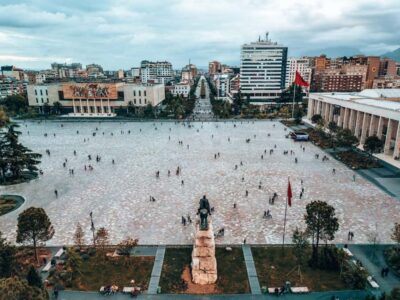
The walk begins in the center of Tirana at Skanderbeg Square, the city’s main public space. Allow about 20 minutes here for sightseeing, photographs, and an introduction to the city.
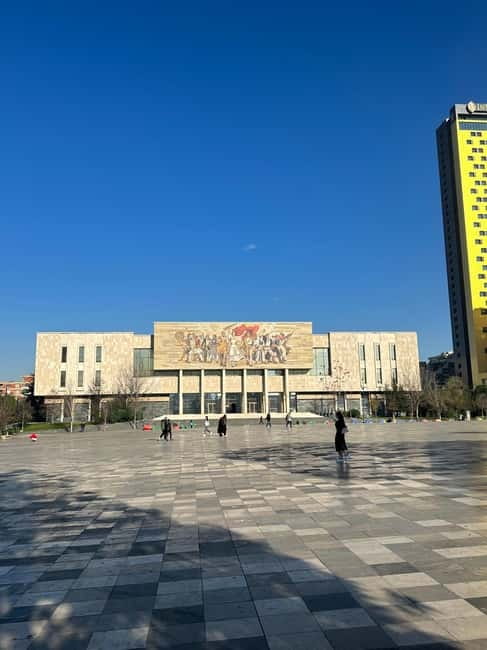
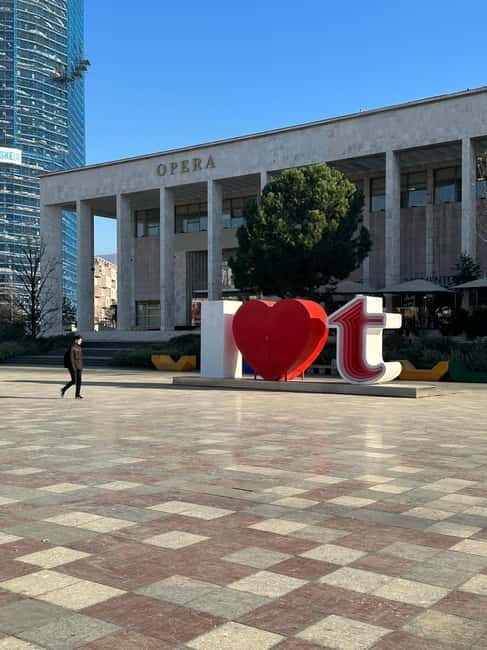
The square is a useful starting point because many of the capital’s main landmarks sit around it. You can see the National Historical Museum and Opera House, while the Et’hem Bej Mosque and Clock Tower help explain the older center. The guide also gives context about Albania’s long communist period, which lasted for almost 50 years.
This opening section is not only about buildings. It helps you understand how Tirana presents its national identity in public spaces. The square is broad and formal, while the streets beyond it are more varied and informal. Keep your camera ready, but pay attention to the explanation too. The background is what turns a collection of monuments into a readable city.
Et’hem Bej Mosque and the Clock Tower
The Et’hem Bej Mosque receives about 15 minutes, including a photo stop and visit. It is one of the most important older buildings in the center and provides a clear contrast with the secular public buildings around Skanderbeg Square.
The Clock Tower is listed later in the route, with about five minutes for photographs and a guided explanation. The short timing suggests that this is mainly an exterior stop unless the guide adjusts the schedule. You should see it as a chance to understand the square’s historic layout, not as a lengthy tower visit.
The sequence also includes the National Historical Museum and Opera House as sights along the route. The information provided does not promise a full interior visit to either one, so plan separate time if you want to explore their collections or interiors in detail.
Bunk’Art 2 brings the communist period close
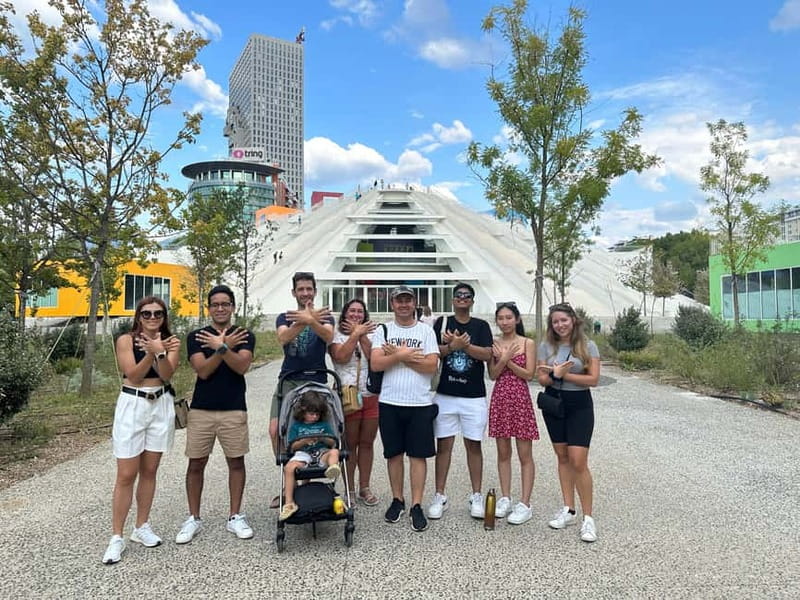
Bunk’Art 2 gets about 10 minutes. That is a short amount of time for a museum devoted to political persecution and surveillance, but even a brief guided look can give you a useful framework for Tirana’s twentieth-century history.
The museum helps connect the city you see today with the years when Albania was one of Europe’s most isolated communist states. Its subject is not distant royal history. It concerns police power, fear, and the effect of the regime on ordinary people.
Because the stop is short, you may not have time to examine every display. I would treat this visit as an introduction, then return later if the subject interests you. The route also includes House of Leaves, another major site connected with surveillance and the former secret police, so the two stops work well together.
The tour description says you can skip the ticket line. Even so, the brief timing means you should not assume every museum on the route receives a full visit. Ask the guide at the beginning how the group will handle entry and timing that day.
More History Tours in Tirana:
- From Tirana: Durres History Trip with Beach or Promenade
★ 4.8 · 455 reviews - Guided tour in Tirana – discoveries, history, culture (in FRENCH)
★ 5.0 · 204 reviews - From Tirana: Durres city & Golem beach, Sun & History Day Trip
★ 5.0 · 134 reviews - Tirana Walking Tour: History, Culture &Gems by a Passionate Guide
★ 5.0 · 52 reviews
Tirana Castle adds food and city life
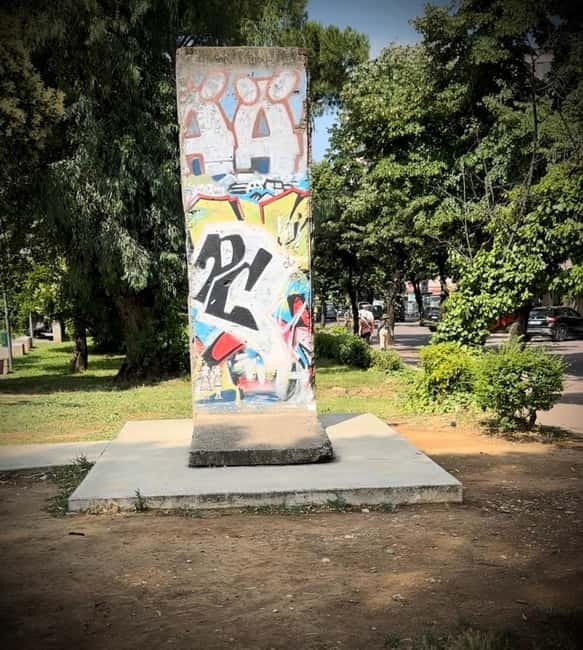
Tirana Castle receives about 15 minutes for photographs and a guided visit. Do not picture a medieval fortress preserved in isolation. In today’s center, the castle area is part of the city’s social and food scene, making it a useful stop for seeing how old structures are used in modern Tirana.
Food is one of the tour’s practical strengths. Albania is known for traditional dishes, and the guide offers recommendations for places to eat after the walk. This is more useful than a generic restaurant list because you can ask what fits your budget, how local dishes are served, and where to go near your hotel.
Coffee or tea may also be arranged by group decision. It is not presented as a guaranteed private tasting, so consider it a pleasant possibility rather than a central feature. The real value is the chance to get direct local advice while you are already seeing the city.
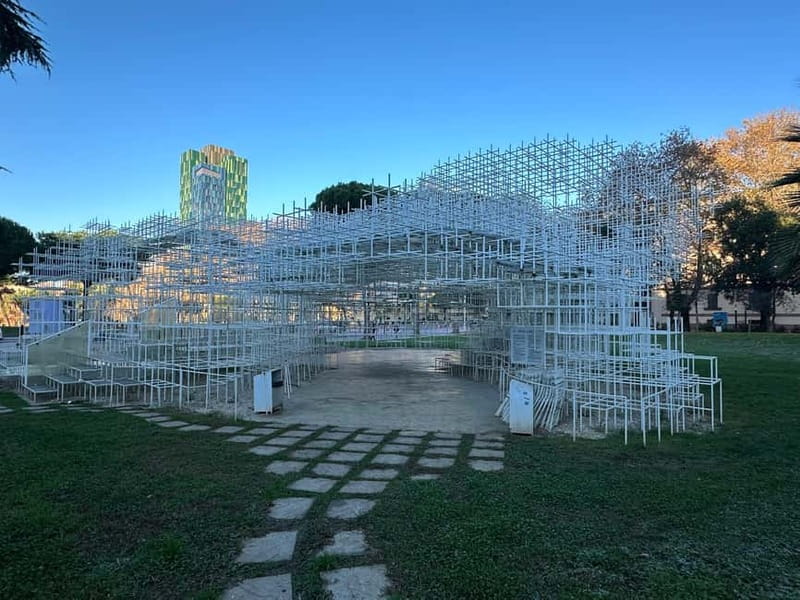
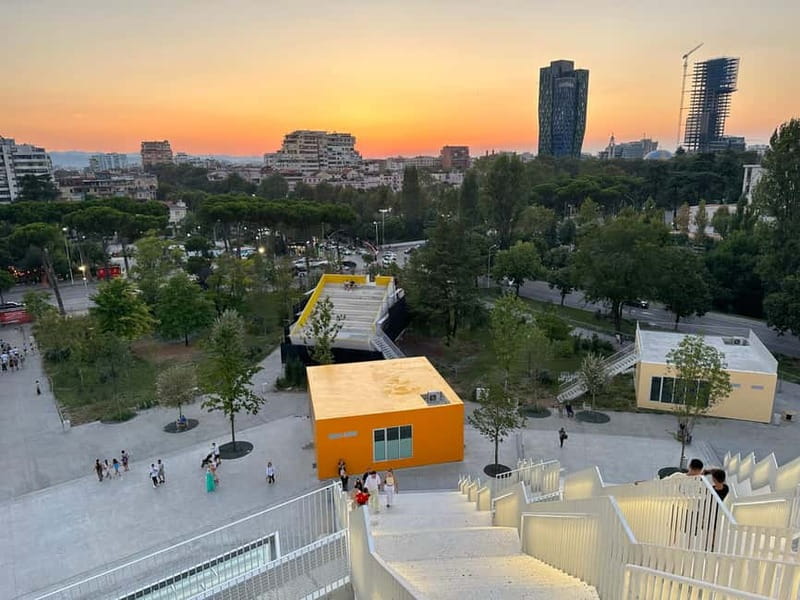
The route also passes Murat Toptani Promenade, the Lana River, Downtown 1, the Cloud installation, the Graffiti Wall, and Youth Park, also called Taiwan Park. These places add the modern, public side of Tirana to the historical stops. You get a sense of how residents use the center for walking, meeting, relaxing, and taking photographs.
The Pyramid and Postbllok tell harder stories
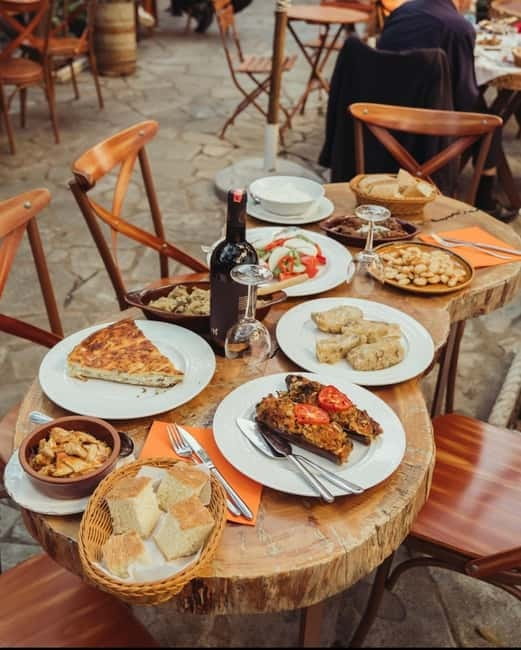
The Pyramid of Tirana receives the longest single stop, about 20 minutes, with photographs, a guided visit, and walking. The building is closely tied to Enver Hoxha, Albania’s former communist leader, and it has become one of the city’s most recognizable landmarks.
The Pyramid is valuable because it shows how Tirana has had to deal with its communist past in a very visible place. The building’s meaning has changed over time, and your guide can help explain that shift. You should have time to see it properly, but not necessarily to explore every part at leisure.
Postbllok, or Checkpoint, receives about five minutes. This memorial honors people who suffered under the communist regime. The stop is brief, yet its location in the middle of present-day Tirana makes the contrast especially sharp. Modern cafés, offices, parks, and traffic continue around a memorial to state oppression.
I appreciate this part of the route because it avoids presenting Albania as only a pleasant European capital with low prices. You see beauty and change, but you also confront the recent past that shaped the country. If history connected to prisons, surveillance, and political punishment is difficult for you, know that these subjects are a major part of the walk.
The cathedrals show Tirana’s religious mix
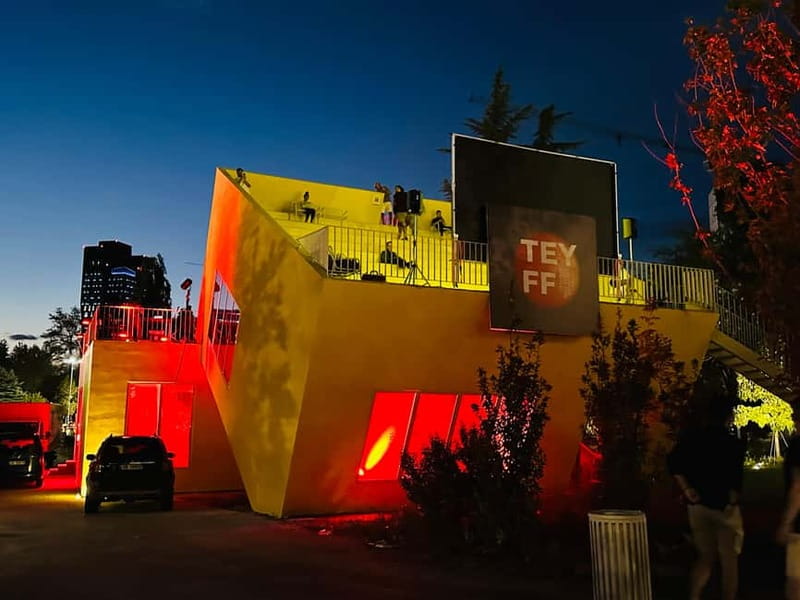
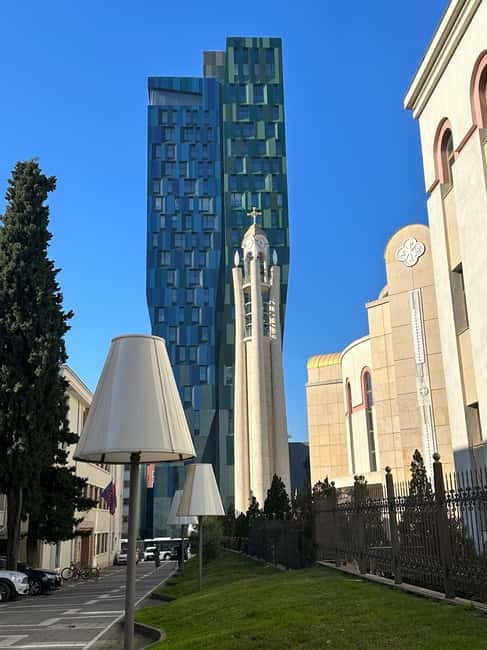
The route includes the Resurrection of Christ Orthodox Cathedral, with about 10 minutes for a guided visit and photographs. The building offers a strong visual change from the square, the communist memorials, and the modern public art.
The wider tour description also names Saint Paul Catholic Cathedral among the sights, along with the Orthodox Cathedral. The timed itinerary specifically assigns a stop to the Orthodox church, but it does not give Saint Paul a separate duration. If seeing both interiors matters to you, ask the guide how the day’s route will handle them.
These religious buildings help explain an important part of Tirana’s identity. The city’s center places Islamic, Orthodox, and Catholic landmarks within a relatively compact area. You do not need specialist knowledge to appreciate the architecture, but the guide’s explanation makes the buildings more meaningful than a quick photograph from the pavement.
House of Leaves is the serious final stop
The tour finishes at House of Leaves Museum, although the itinerary also lists it as a guided stop near the end. The museum is associated with the former secret police and the surveillance system used during the communist era.
The provided timing gives House of Leaves about 10 minutes for a guided explanation, rather than a full museum visit. That distinction matters. Ten minutes can introduce the building and its subject, but it is not enough for a slow examination of the exhibits. If this museum is a priority, set aside extra time and confirm whether your ticket or entry plan includes a longer visit.
The route also passes Enver Hoxha’s former residence, with about five minutes for a guided explanation and walk. This is another short but revealing stop. Seeing where the former leader lived, in the middle of a city now changing quickly, gives a physical focus to the political story introduced at Bunk’Art 2 and Postbllok.
Together, these stops make the walk more than a list of old buildings. You see how power was displayed, how citizens were watched, and how the city now explains that period to people arriving from abroad.
The guide is the main reason to choose this tour
The strongest feature is the guide’s role. The tour promises professional English-speaking guides, and the most praised qualities are friendliness, clear communication, local knowledge, and useful recommendations.
Elton has received especially warm praise for making the walk enjoyable and giving practical food advice. Eliot has also been singled out for an engaging presentation. Those guides may not lead every departure, so I would not book solely on the hope of having one of them. Still, the pattern tells you what this experience does best: conversation, storytelling, and personal advice.
One useful detail is that a guide continued with a solo booking rather than canceling when only one person attended. That suggests the small-group format can sometimes become a private-style walk. You should not assume every departure will be solo, but the possibility is appealing if you prefer asking lots of questions.
The best guides add details you would probably walk past on your own. They can point out architectural changes, explain the city’s transformation, and suggest what to eat after the tour. Several participants described learning about everyday life as well as history, which is exactly what makes a city walk worthwhile.
Pace, access, and what to bring
Two hours is efficient, but the schedule is full. The timed stops add up quickly, and the route includes many outdoor sections between landmarks. Wear comfortable shoes, bring water, and keep some flexibility if you want photographs.
The activity is described as wheelchair accessible. That is helpful, though the route includes public streets, promenades, museum entrances, and historic buildings, so you may still want to confirm any specific access needs before booking.
The meeting point is central and does not require a separate transfer. Starting at the carousel near the Bank of Albania keeps the first morning simple, especially if you are staying in central Tirana.
The tour offers free cancellation up to 24 hours before departure and a reserve-now, pay-later option. These terms are useful if your schedule is still changing, but the main practical choice is timing. Book it early in your stay so the food and sightseeing suggestions can shape the rest of your visit.
Who will get the most from it
I would choose this walk if you have limited time in Tirana, want a first orientation, or care about the connection between architecture, politics, and daily life. It also suits solo visitors who value conversation and want a local person to help them read the city.
It is a good fit for people who prefer a compact overview to a long lecture. You will see many key places, hear the main historical outline, and leave with suggestions for restaurants and further sightseeing.
I would choose something slower if your main goal is detailed museum study. Bunk’Art 2 and House of Leaves deserve more than the short periods assigned here, and the tour cannot give every landmark equal attention. Think of it as a map and introduction, not a substitute for returning to the museums.
The experience has a 5 out of 5 score from 24 ratings, with repeated praise for the friendly presentation, local tips, and historical storytelling. That high score fits the tour’s purpose, but keep your expectations realistic: its success depends on the guide and on accepting a brisk schedule.
Should you book this Tirana walking tour?
Yes, if you want an affordable first look at Tirana with a strong focus on communist-era history and practical local advice. For $17, the combination of a central route, English guidance, small groups, and restaurant suggestions offers good value.
Book it for your first day, ask how much time you will have inside each museum, and return later to Bunk’Art 2 or House of Leaves if their subjects catch your attention. Skip it only if you want a slow, specialist museum tour. For most first-time visitors, this is a sensible way to begin understanding Tirana.
FAQ
Where does the walking tour start?
The guide meets you near the carousel, or Karuseli, on the southwest side of Skanderbeg Square, close to the Bank of Albania. Tirana’s Infopoint is also near the meeting place.
How long does the tour last?
The tour lasts two hours.
What language is the tour conducted in?
The tour is conducted in English by an English-speaking live guide.
What sights are included?
The route includes Skanderbeg Square, Et’hem Bej Mosque, Bunk’Art 2, Tirana Castle, the Pyramid of Tirana, Postbllok Checkpoint, the Resurrection of Christ Orthodox Cathedral, House of Leaves Museum, Enver Hoxha’s former residence, and the Clock Tower. It also passes several other central sights and public spaces.
Does the tour include food?
The guide recommends places to eat and shares advice about Albanian food. Coffee or tea may be provided based on the group’s decision. A full meal is not listed as included.
Is the tour wheelchair accessible?
Yes, the activity is described as wheelchair accessible.
Can I cancel the booking?
Yes. You can cancel up to 24 hours in advance for a full refund. You can also reserve now and pay later.
Newly listed around Tirana
- Wonderful Sunset and Dinner in the Castel Of Petrela★ 4.6 · 4 reviews
- Zipline Tirana Adventure & Petrela Castle – With Transport★ 4.4 · 10 reviews
- Wine Tasting & Vineyards Escape near Tirana★ 4.9 · 8 reviews
- Walking Tour in Tirana, Albania★ 3.7 · 28 reviews
- Vlora, Dhermi & Llogara Day Trip from Durrës or Golem★ 5.0 · 5 reviews
- Day Tour to Petrela Castle and Zip Line Albania Adventure★ 5.0 · 10 reviews
- From Tirana: Mount Dajti Adventure, Local Vibes & Cable Car opt★ 4.5 · 6 reviews
- Winetasting tour in Alpeta winery – Roshnik village by 1001 Albanian Adventures★ 5.0 · 26 reviews
Historical Tours, compared.
Guided tour in Tirana – discoveries, history, culture (in FRENCH)
Read our review →
Durres city & Golem beach, Sun & History Day Trip
Read our review →
Tirana Walking Tour: History, Culture &Gems by a Passionate Guide
Read our review →
Semi – Private Tour at Cape of Rodon; Hidden Beaches & History
Read our review →
Ancient City of Butrint, UNESCO World Heritage site – A Must
Read our review →Browse the lists this tour appears in