
Reviewed · HISTORICAL TOURS
Guided tour in Tirana – discoveries, history, culture (in FRENCH)
Tirana reveals itself one layer at a time. This 150-minute French-language tour links the capital’s major sights with the stories behind them, from Ottoman mosques and modern cathedrals to communist monuments and the polished streets of Blloku. It is led by Max, a local guide praised for his clear French, good humor, and passion for Albania.
I especially like the way the tour connects history with daily life, rather than treating Tirana as a collection of photo stops. I also like the chance to ask about almost anything, including religion, food, practical travel questions, and the country’s communist past. The main consideration is pace: fitting this many sites into two and a half hours means some stops are short, and museum interiors are not included.
In This Review
- Five things to know before you book
- Why this French tour works so well in Tirana
- Starting at Skënderbej Square
- Et’hem Bej Mosque and Tirana’s Ottoman roots
- Bunk’Art 2 and the memory of communism
- Tirana Castle and the city’s older layers
- Namazgah Mosque and Albania’s religious mix
- St. Paul’s Catholic Cathedral
- The Pyramid, from communist monument to modern symbol
- Government buildings and the communist checkpoint
- Blloku, from restricted quarter to favorite district
- The Orthodox Cathedral and modern religious architecture
- The House of Leaves and the secret police
- Walking time, pace, and what is included
- What makes Max a strong guide
- Who should book this Tirana walk?
- Should you book it?
- FAQ
- Where does the tour begin?
- How long does the tour last?
- What language is the tour conducted in?
- Which religious buildings are visited?
- Are museum entrances included?
- Does the tour return to the starting point?
- Can I cancel the booking?
Five things to know before you book
- Max leads the tour in excellent French, with a friendly approach and a talent for explaining complicated periods simply.
- The route covers several faiths, including the Et’hem Bej Mosque, Namazgah Mosque, Catholic Cathedral, and Orthodox Cathedral.
- Tirana’s communist past gets serious attention, especially at Bunk’Art 2, the former secret police site, the Pyramid, and the communist checkpoint.
- The tour is useful at the start of a stay, since Max can answer practical questions and suggest places to eat or visit afterward.
- The $11 price is unusually good value for 150 minutes of guided sightseeing in the city center.
- Most museum visits are exterior overviews, so you should set aside extra time and money if you want to enter Bunk’Art 2 or the House of Leaves.
Why this French tour works so well in Tirana
Tirana is easy to walk around, but its past is not always easy to read. Ottoman traces sit beside Italian-influenced government buildings, communist structures, colorful apartment blocks, and new religious buildings. Without context, the city can feel like a series of unrelated sights.
This tour gives you a basic timeline. You move from the Ottoman period to the formation of the modern capital, then into the communist regime and the changes that followed. The result is less a formal lecture and more a guided conversation while walking through central Tirana.
The French language is a major advantage if you are more comfortable asking questions in French than in English. Max’s French is described as impeccable, and his explanations are praised for being clear rather than overly academic. That matters when the subject turns to Albania’s religions, political changes, or everyday customs.
I would particularly recommend taking this tour early in your stay. You can ask where to eat, which museums deserve your time, what to see in Blloku, and how to make sense of the capital’s layout. If you take it at the end of your visit, it works as a useful final thread tying together places you have already seen.
More History Tours in Tirana:
- From Tirana: Durres History Trip with Beach or Promenade
★ 4.8 · 455 reviews - From Tirana: Durres city & Golem beach, Sun & History Day Trip
★ 5.0 · 134 reviews - Tirana Walking Tour: History, Culture &Gems by a Passionate Guide
★ 5.0 · 52 reviews
Starting at Skënderbej Square
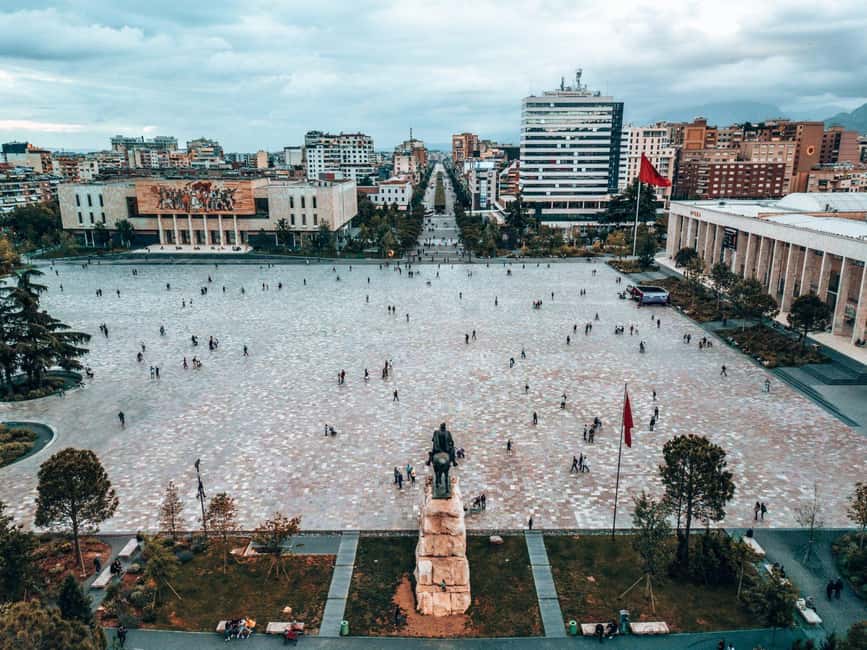
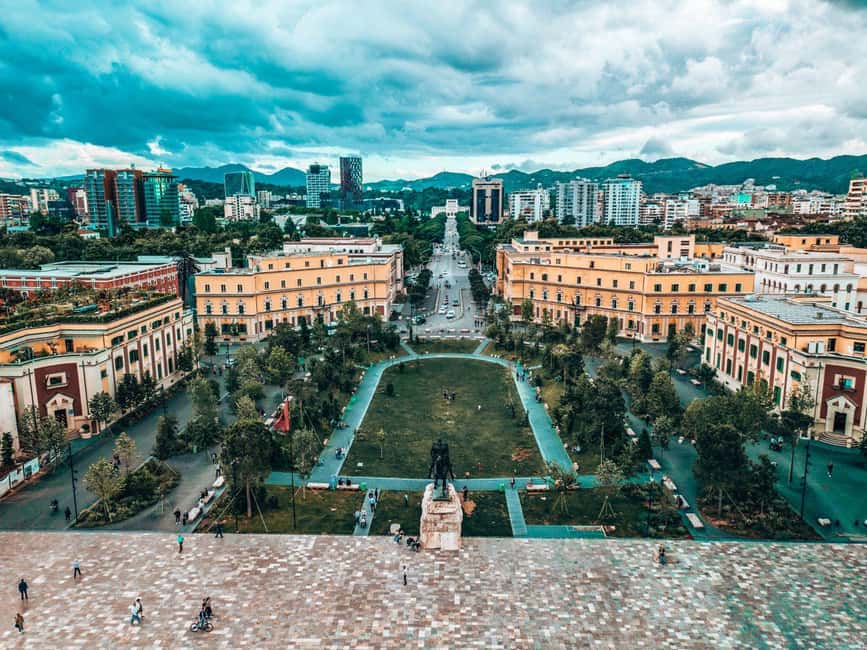
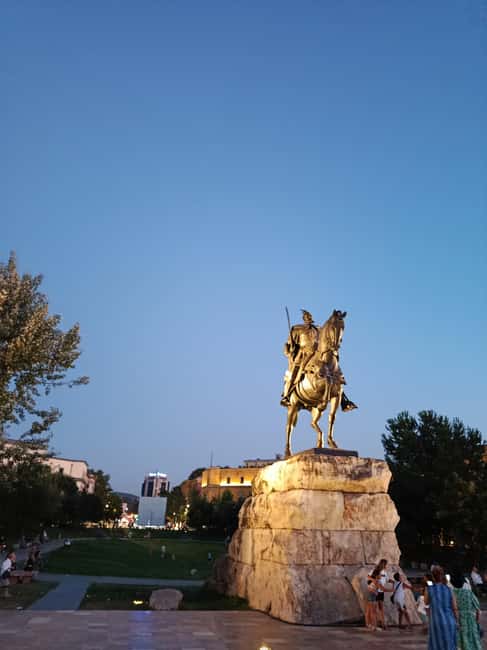
The meeting point is beside the statue of Skënderbej, Albania’s national hero, in front of the National History Museum. This is a sensible place to begin because the square is the symbolic center of Tirana and a useful reference point for the rest of your visit.
The opening explanation covers the square’s architecture and its role in the capital. You also get an introduction to the National History Museum, the Opera, and the changing appearance of Tirana. Even if you do not enter the museum, this first stop helps explain how the city developed from a smaller Ottoman settlement into Albania’s political and cultural center.
Arrive about five minutes early. The meeting point should be easy to recognize, but a WhatsApp number is recommended, which is useful if you need to clarify the exact spot or are delayed.
Et’hem Bej Mosque and Tirana’s Ottoman roots
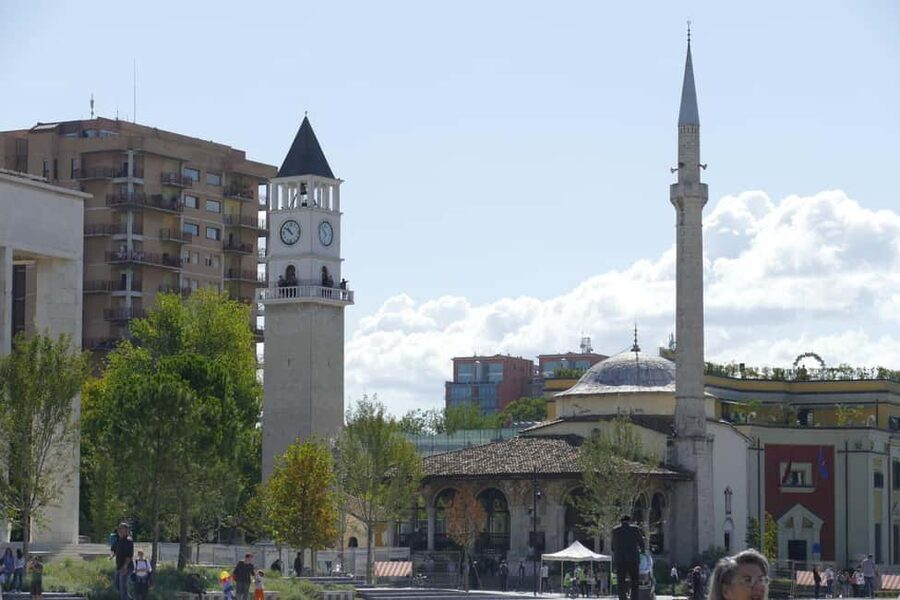
The Et’hem Bej Mosque is one of the most important early stops. The guided visit inside lasts about ten minutes, so this is a focused introduction rather than a long religious or architectural tour.
The mosque gives you a chance to see a more traditional side of Tirana before the route moves into its twentieth-century story. Max explains the historical setting and the place of religion in Albania, a subject that becomes more interesting as the tour later takes you to the Catholic and Orthodox cathedrals.
The short visit also keeps the route moving. If you want time to look closely at the interior, ask questions while you are there, or take photographs, you may need to be efficient.
Bunk’Art 2 and the memory of communism
From the mosque, the group walks for roughly ten minutes to Bunk’Art 2. The stop is mainly an outside overview, with explanations about the site and its connection to Albania’s communist period.
This is one of the moments where a guide adds real value. Communist history can be reduced to a few dates and slogans, but sites such as Bunk’Art 2 help connect state control with actual urban spaces. Max discusses the historical background without turning the walk into a heavy classroom lesson.
Entry to the museum is not included. That is important to understand before booking. If the subject interests you, you can return later and pay for the interior visit separately. The guided tour gives you the background first, which may help you decide if you want to spend more time inside.
A few more Tirana trips worth comparing
- From Tirana: Bovilla Lake & Gamti Mountain Hiking Day Trip
★ 4.9 · 4,397 reviews - From Tirana: Bovilla Lake & Gamti Mountain Hiking Tour
★ 4.9 · 3,003 reviews - From Tirana: Bovilla Lake & Gamti Mountain Viewpoint Hike
★ 4.8 · 2,053 reviews - Tirana/Durres/Golem: Saranda, Ksamil, Blue Eye Day Trip
★ 4.8 · 1,584 reviews
Tirana Castle and the city’s older layers
The walk to Tirana Castle takes about five minutes. This is a brief stop, but it gives the tour another change of tone.
The castle area is tied to the older city and now forms part of a modern central district with shops and places to eat. The guide discusses its history and development, helping you see how old urban traces have been absorbed into present-day Tirana.
Do not expect a long castle visit or a preserved fortress experience on the scale of a major European citadel. This stop is better understood as a compact piece of the city’s past, included within a broader walk.
Namazgah Mosque and Albania’s religious mix
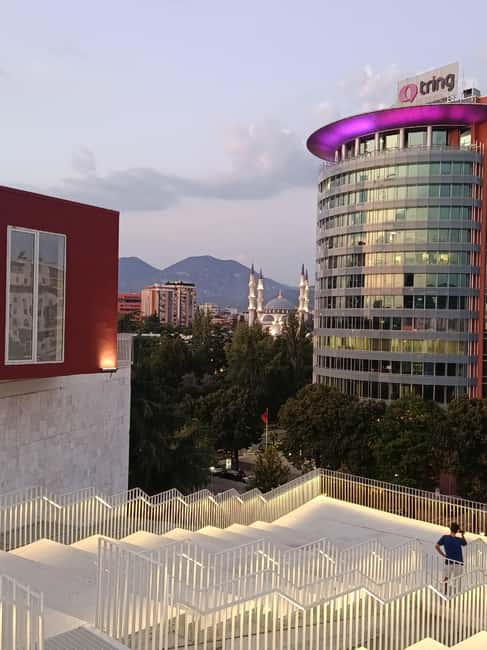
The next religious stop is Namazgah Mosque, also called the Grand Mosque of Tirana. The visit inside takes about ten minutes and offers a contrast with the older Et’hem Bej Mosque.
The modern building and its interior frescoes show how Tirana continues to change. Placing this stop beside the Catholic and Orthodox cathedrals makes the religious story more complete. Albania’s identity cannot be explained through one faith or one tradition, and this sequence gives you a practical sense of that variety.
The tour does not treat religion as a decorative subject. It forms part of the country’s social and political story, including the effects of the communist regime and the later return of visible religious life.
St. Paul’s Catholic Cathedral
The route continues to Tirana’s Catholic Cathedral, St. Paul’s. There is an interior visit, followed by a short walk.
This is another useful contrast in the tour’s design. Within a small central area, you see different architectural languages and religious traditions. The cathedral visit also keeps the discussion grounded in the present, rather than leaving Albania’s faiths trapped in the past.
Because the schedule is tight, the stop is not designed for quiet contemplation or detailed art analysis. I would treat it as a concise introduction. If you are especially interested in church architecture, you can note the location and return later.
The Pyramid, from communist monument to modern symbol
The Pyramid of Tirana receives one of the longer explanations, around twenty minutes. That is appropriate because the building has a complicated story and a changing role in the city.
The Pyramid was created during the communist period and later became one of Tirana’s most recognizable structures. Its meaning has shifted as Albania changed. Max explains its architecture, its original purpose, and the way the building has evolved over time.
This is one of the best stops for understanding Tirana’s relationship with its recent past. The city has not simply demolished every communist landmark. Some structures have been reworked, debated, or given new uses. The Pyramid shows how a difficult monument can remain part of public life while its meaning changes.
You get a guided explanation outside rather than a full building visit. The twenty-minute discussion should be enough to give you the essentials without allowing one landmark to take over the entire route.
Government buildings and the communist checkpoint
The tour passes the Prime Minister’s Office and the Albanian Parliament from outside. Max explains their role and points out features connected to the capital’s political center.
This is not an interior government tour. The value comes from seeing the buildings in relation to the rest of central Tirana and hearing how the capital’s institutions developed.
The communist checkpoint adds a more physical reminder of the former regime. These installations can look modest, but they help make the period feel less abstract. You are not only hearing about political control. You are seeing one of the places and structures associated with it.
For anyone interested in twentieth-century Europe, these stops give the tour a strong sense of place. Albania’s communist period was unusually isolated, and its effects still shape the city’s monuments, public memory, and conversations.
Blloku, from restricted quarter to favorite district
Blloku is one of the most revealing parts of the walk. The neighborhood has developed into one of Tirana’s best-known areas, but its earlier history gives it a very different character.
The tour covers the neighborhood’s historical role and later development. You also receive practical information about places worth visiting there, which makes this stop especially useful if you plan to return for food, coffee, or evening time.
Blloku shows how quickly Tirana has changed. A district once associated with the political elite is now part of the city’s social life. That shift says a great deal about Albania after communism, and Max uses the neighborhood to connect politics with ordinary urban change.
The guided portion lasts about fifteen minutes. You should not expect a full food tour or time to stop at every café. Instead, you get orientation and ideas for a later visit.
The Orthodox Cathedral and modern religious architecture
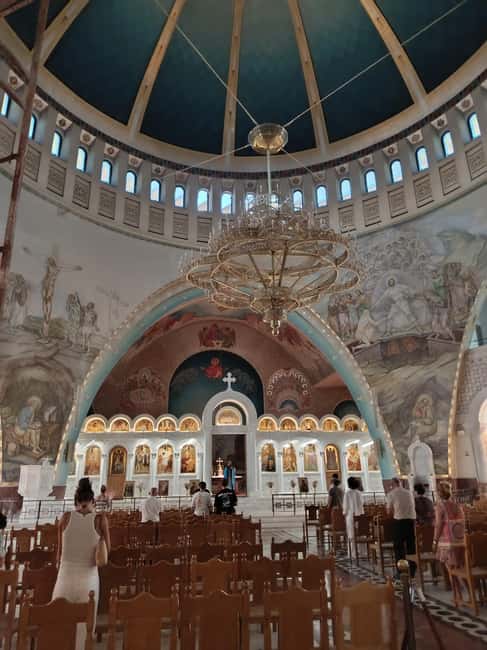
The Resurrection of Christ Orthodox Cathedral is another interior stop. The visit is listed as a short part of the walking route, despite one itinerary entry showing an inconsistent five-hour duration. The overall activity lasts 150 minutes, so you should expect a brief visit rather than several hours inside the cathedral.
The building’s modern design and frescoes add another visual contrast to the route. After the Ottoman mosque, the newer Grand Mosque, and the Catholic Cathedral, this stop completes the tour’s look at Tirana’s major religious traditions.
I like this part of the route because it avoids presenting Albanian culture as a single story. You see several communities and styles within walking distance of one another. The guide’s explanations help tie these buildings to the wider history of the country.
The House of Leaves and the secret police
The House of Leaves is visited from the outside, with historical explanations about the Albanian secret police and its role during the communist regime.
The site is a natural companion to Bunk’Art 2 and the communist checkpoint. Together, these stops explain how surveillance and political control affected Albanian society. The House of Leaves is not treated as just another old building. It becomes part of the tour’s larger question: how does a city remember a period that many people still remember personally?
Museum entry is not included. If you want to explore the exhibits, plan a separate visit. The exterior explanation gives you enough context to decide if the museum deserves a place in your schedule.
Walking time, pace, and what is included
The route is centered on downtown Tirana and returns to Skënderbej Square. Most of the movement is on foot, with short walks between stops. There is no separate transport segment described, so comfortable shoes are a sensible choice.
The tour includes the French-speaking guide, historical explanations, panoramic views of key monuments, and answers to practical questions. It does not include museum admissions or personal purchases such as coffee, ice cream, or other local products.
At $11 per person, the value is strong. You are paying less than the cost of many short city walks, yet the route covers mosques, cathedrals, political buildings, communist sites, Blloku, and the Pyramid. The tradeoff is that the tour gives you an overview, not long visits inside each attraction.
The route may feel brisk if you prefer to linger at every building. I would see it as a city orientation with historical depth, then choose two or three places to revisit independently.
What makes Max a strong guide
The most consistent praise centers on Max’s personality and French. He explains Tirana’s past with simplicity and enthusiasm, answers questions about culture and daily life, and offers practical suggestions for the rest of your stay.
That combination matters. A guide can recite dates, but a good city walk should also help you understand how the place works now. Max’s role appears to be conversational as well as informative, so you can ask about history, religion, food, or ordinary life in Albania.
The experience also appears to hold up in poor weather. One Italian-speaking participant described a detailed tour despite heavy rain. The activity is offered in French, so this is not a substitute for an Italian-language tour, but the account suggests that the guide takes the walk seriously even when conditions are not ideal.
Who should book this Tirana walk?
I would recommend it to:
- French-speaking visitors on a first stay in Tirana
- People interested in religion and twentieth-century European history
- Anyone who wants a quick city orientation before choosing museums and neighborhoods
- Couples, families, and groups looking for a low-cost guided activity
- Visitors who like asking questions instead of following a silent sightseeing route
- Anyone deciding what to do with the rest of a short city break
It may be less suitable if you want long museum visits, a slow photography walk, or a focused food tour. The tour covers many subjects, so its strength is range and context rather than specialist detail at one site.
The activity is not suitable for people over 95 according to the stated conditions. The walking format also means you should consider your own comfort with a 150-minute city route.
Should you book it?
Yes, if you want a low-cost introduction to Tirana in French. At $11, the tour offers an impressive amount of ground and gives you a useful framework for understanding the city’s Ottoman, religious, communist, and modern chapters.
Book it near the start of your stay if you want restaurant ideas, neighborhood advice, and help planning museums. Take it near the end if you prefer a final explanation of the places you have already seen.
The main thing to remember is that this is an overview. You will see and discuss the major sites, but museum interiors and personal purchases are not included. If you accept that limitation, Max’s clear French, local perspective, and willingness to answer almost any question make this one of the better-value ways to get oriented in Tirana.
FAQ
Where does the tour begin?
The tour begins at Skënderbej Square, next to the statue of the national hero, in front of the National History Museum.
How long does the tour last?
The tour lasts 150 minutes, or two and a half hours.
What language is the tour conducted in?
The live tour guide speaks French. Some content may be shown in its original language.
Which religious buildings are visited?
The route includes the Et’hem Bej Mosque, Namazgah Mosque, Tirana’s Catholic Cathedral, and the Resurrection of Christ Orthodox Cathedral.
Are museum entrances included?
No. Museum interiors are not included. This applies to places such as Bunk’Art 2 and the House of Leaves, which are covered through exterior explanations and historical context.
Does the tour return to the starting point?
Yes. The tour returns to Skënderbej Square, the departure meeting point.
Can I cancel the booking?
Yes. You can cancel up to 24 hours in advance for a full refund. You can also reserve now and pay later.
Newly listed around Tirana
- Wonderful Sunset and Dinner in the Castel Of Petrela★ 4.6 · 4 reviews
- Zipline Tirana Adventure & Petrela Castle – With Transport★ 4.4 · 10 reviews
- Wine Tasting & Vineyards Escape near Tirana★ 4.9 · 8 reviews
- Walking Tour in Tirana, Albania★ 3.7 · 28 reviews
- Vlora, Dhermi & Llogara Day Trip from Durrës or Golem★ 5.0 · 5 reviews
- Day Tour to Petrela Castle and Zip Line Albania Adventure★ 5.0 · 10 reviews
- From Tirana: Mount Dajti Adventure, Local Vibes & Cable Car opt★ 4.5 · 6 reviews
- Winetasting tour in Alpeta winery – Roshnik village by 1001 Albanian Adventures★ 5.0 · 26 reviews
Historical Tours, compared.
Durres city & Golem beach, Sun & History Day Trip
Read our review →
Tirana Walking Tour: History, Culture &Gems by a Passionate Guide
Read our review →
Semi – Private Tour at Cape of Rodon; Hidden Beaches & History
Read our review →
Ancient City of Butrint, UNESCO World Heritage site – A Must
Read our review →
Browse the lists this tour appears in