

Reviewed · HISTORICAL TOURS
Tirana Walking Tour: History, Culture &Gems by a Passionate Guide
Tirana reveals itself on foot. This 3 to 4 hour walk connects Ottoman landmarks, communist memories, lively neighborhoods, religious sites, and everyday city life, with guide Albiona supplying the context that helps the pieces fit. I especially like the small group limit of 11 people, which leaves room for questions, and the complimentary rakia tasting, a simple local touch that makes the experience feel personal rather than mechanical.
I also like that the tour is designed for your first day, beginning and ending at Skanderbeg Square. The main drawback is pace: 21 stops in a few hours means several places receive only five or ten minutes, and the House of Leaves museum costs extra. If you want long museum visits, this is not the right format. If you want a broad, useful introduction to Tirana, it offers strong value for $36.20.
In This Review
- Five things to know before you book
- Why this is a smart first walk in Tirana
- Skanderbeg Square sets the historical frame
- From Sulejman Pasha Square to the New Bazaar
- Tombs, old houses and the traces of earlier Tirana
- Murat Toptani Street and Tirana Castle
- Komiteti Kafe Museum and the changing face of Tirana
- The communist past in Postbllok and Blloku
- Religious revival at the Orthodox Cathedral
- House of Leaves and the Bank of Albania
- The $36.20 price and what you receive
- Who will enjoy this Tirana walking tour most?
- Should you book it?
- FAQ
- Where does the Tirana walking tour begin?
- Where does the tour end?
- How long does the walking tour last?
- How many people can join the tour?
- Is the tour offered in English?
- Is rakia included?
- Is admission to the House of Leaves included?
Five things to know before you book

- Albiona is the heart of the experience: She explains Albania’s past clearly, answers questions in excellent English, and connects national events with family life and modern Tirana.
- The route covers both old and new Tirana: You move from Skanderbeg Square and Ottoman monuments to the New Bazaar, Blloku, the Pyramid, and modern cafés.
- Communist history receives serious attention: Bunk’Art 2, the Checkpoint Memorial, Enver Hoxha’s former villa, and the House of Leaves help explain the country’s recent past.
- A maximum of 11 people keeps the walk manageable: You get a more personal experience than on a large coach-style city tour.
- Rakia is included, but museum entry is not: The complimentary shot is part of the tour. Admission to the House of Leaves is extra, and personal expenses are also your responsibility.
Why this is a smart first walk in Tirana
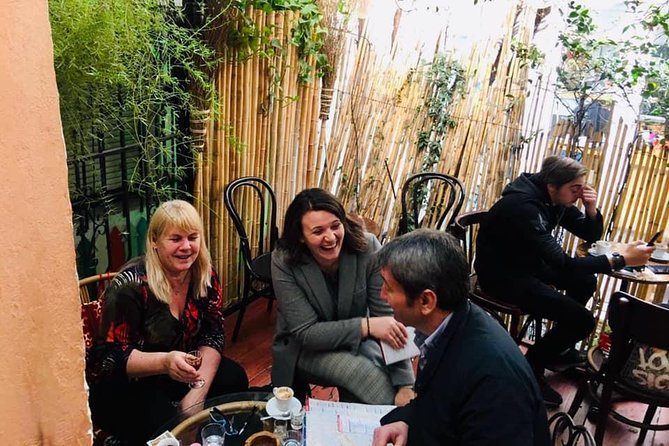
Tirana can feel confusing at first. Ottoman traces sit beside communist buildings, new restaurants fill old commercial quarters, and grand public spaces often reflect several political eras at once. A guide can save you from seeing these places as disconnected photo stops.
That is where Albiona adds real value. Her explanations cover Albania’s history, culture, families, and present-day life. The strongest praise for her guiding style centers on balance: she explains the harsh years of dictatorship without turning the entire tour into a grim lecture, then shows how Albanian optimism, strength, and hospitality continue today.
I also appreciate the practical timing. A delayed arrival does not necessarily ruin the experience. Albiona has adjusted the walk for late arrivals while keeping it useful and enjoyable, an important point if you are coming through busy city traffic.
The tour is offered in English and uses a mobile ticket. It begins at Skanderbeg Square, near public transportation, and returns to the same meeting point. Most people can take part, but remember that this is a city walk lasting several hours. Comfortable shoes and water are sensible choices, even though those details are not formally listed as requirements.
More Walking Tours in Tirana
- Walking Tour of Tirana
★ 5.0 · 646 reviews - Tirana: Express Walking Tour with a Guide
★ 4.8 · 503 reviews - Tirana Center: Magic Walking Tour French/Italian/English Etc
★ 4.9 · 402 reviews
Skanderbeg Square sets the historical frame
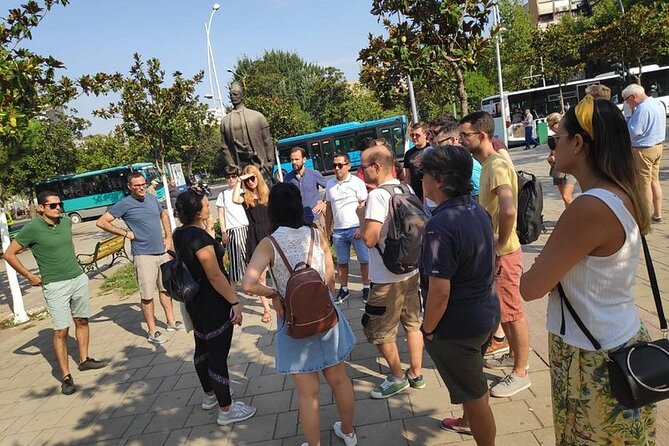
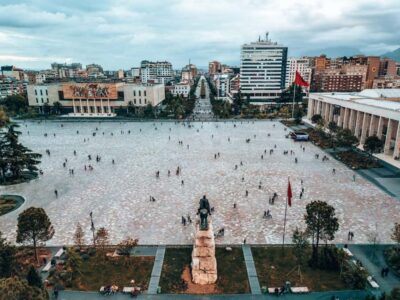
The tour starts at Skanderbeg Square, Tirana’s main public space. Named for Albania’s national hero, Gjergj Kastrioti Skanderbeg, the square gives Albiona a natural place to explain the country’s long struggle for identity and independence.
You spend about 20 minutes here. That is enough time to get oriented and understand why this part of Tirana matters, without standing in one spot for too long. The square is also a useful visual introduction to the city, where large civic spaces and older landmarks meet newer urban design.
From here, the Et’hem Bey Mosque is only a short step away. The mosque is modest outside but far more decorative inside, with frescoes showing trees, waterfalls, and bridges. These natural scenes are unusual in Islamic art and give the building a calm, distinctive character.
The Clock Tower follows, with about five minutes devoted to this 35-meter landmark. Built in the 19th century, it combines Ottoman and Venetian influences. You should think of this stop as a quick explanation and photo opportunity, not a tower visit.
From Sulejman Pasha Square to the New Bazaar
Sulejman Bargjini Square is smaller than Skanderbeg Square but carries an important connection to Tirana’s beginnings. The square honors Sulejman Bargjini, regarded as the city’s founder, and gives Albiona another chance to link the modern capital with its earlier history.
The New Bazaar, or Pazari i Ri, is one of the more enjoyable pauses on the route. Allow about 20 minutes to look around the revitalized market area, where fresh produce, spices, local foods, crafts, and shops bring a more everyday feel to the tour.
This is a good place to pay attention to how Tirana changes from one neighborhood to the next. The market keeps traditional references while also serving a modern social life. You might want to return later for a longer look or something to eat, since 20 minutes is enough for an introduction but not a full market visit.
Nearby, Teqja Pazari introduces the Bektashi tradition. The Bektashi Order is a Sufi Muslim movement known for mystical practice and progressive values. This short stop adds an important layer to Albania’s religious story, especially because the country later banned all religious practice under communist rule.
Tombs, old houses and the traces of earlier Tirana
Kapllan Pasha’s Tomb is an octagonal stone monument dating from the early 19th century. Its columns, stone bases, capitals, and plant decoration reward a closer look, even though the stop lasts only about ten minutes.
Kapllan Pasha, a former ruler of Tirana, was buried here before being returned to Istanbul. The tomb’s condition and setting also raise a useful point about the city’s past: many historic structures survived beside later construction, but not always in a setting that makes their importance obvious.
The Ethnographic Museum, also called the Toptani Sarajet Old Typical House, gives you a brief look at traditional Albanian domestic life. The planned five-minute stop is short, so treat it as an introduction rather than a full museum visit.
The same applies to Bunk’Art 2. This former communist-era bunker is one of Tirana’s most striking places for learning about political repression and surveillance. The tour allows about five minutes here, which is enough for orientation from the outside or a concise explanation, but not enough for the full museum experience. If communist history is your main reason for visiting Tirana, plan a separate return visit.
More History Tours in Tirana:
- From Tirana: Durres History Trip with Beach or Promenade
★ 4.8 · 455 reviews - Guided tour in Tirana – discoveries, history, culture (in FRENCH)
★ 5.0 · 204 reviews - From Tirana: Durres city & Golem beach, Sun & History Day Trip
★ 5.0 · 134 reviews - Semi – Private Tour at Cape of Rodon; Hidden Beaches & History
★ 5.0 · 46 reviews
Murat Toptani Street and Tirana Castle
Rruga Murat Toptani brings you into a street where historic character meets modern city life. You spend around ten minutes walking through the area, seeing how Tirana’s center functions beyond its major monuments.
Tirana Castle follows with another short stop. The site includes ancient ruins and modern attractions, so it is less a traditional castle visit than a quick look at how the city has reused an old setting. You may find food, shops, and places to return to later, but do not expect a long archaeological explanation in five minutes.
Saint Paul’s Cathedral adds a quieter note. The Catholic cathedral offers architectural interest, religious context, and a pause from the busier streets. This stop is especially useful when paired with the later visit to the Orthodox Cathedral, since together they show Albania’s religious variety and its recovery after decades of official atheism.
Komiteti Kafe Museum and the changing face of Tirana
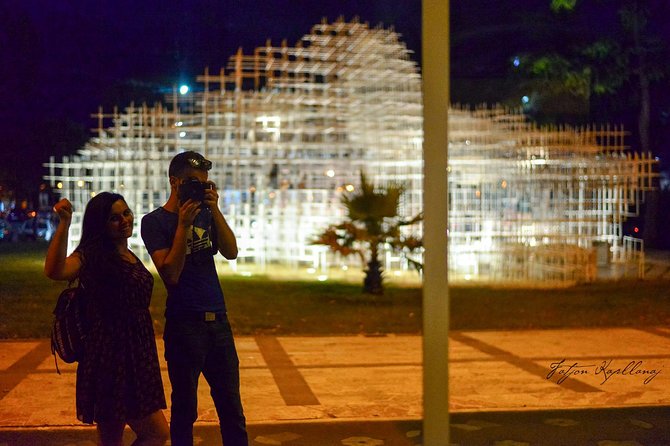
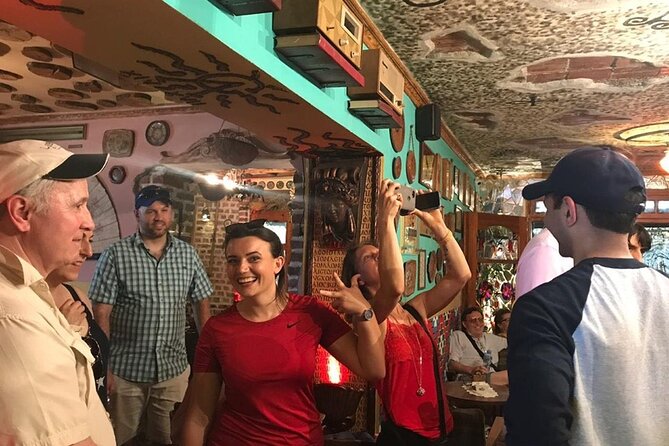
Komiteti Kafe Museum is one of the more atmospheric stops. The café and museum combination presents socialist-era objects and memories alongside traditional Albanian hospitality.
You get about 20 minutes here, which gives the place enough time to feel different from a standard monument stop. It is a chance to connect political history with ordinary habits, family life, design, and the objects people used at home. If you enjoy places where history is told through atmosphere rather than dates alone, this will likely be one of the tour’s more memorable pauses.
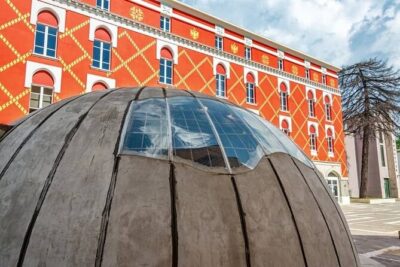
The Pyramid of Tirana is another quick but important stop. Built during the communist period and later transformed into a contemporary public space, it captures the city’s effort to deal with its difficult past without freezing in it.
The Pyramid is not simply an old building left behind. Its changing use reflects Tirana’s changing identity. The five-minute visit will not cover every detail, but Albiona’s explanation helps you see why the structure still matters.
The communist past in Postbllok and Blloku
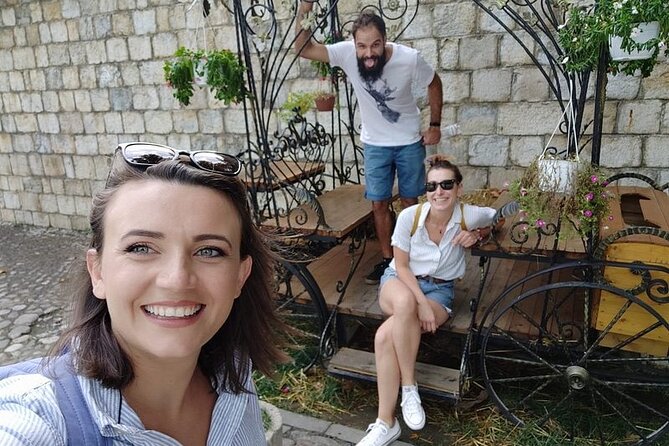
The Postbllok, or Checkpoint Memorial, sits near the entrance to Blloku. Its open-air installation recalls the oppressive communist regime and gives you a direct visual reminder of how recently Albania lived under severe political control.
The former Enver Hoxha villa is nearby. Hoxha ruled Albania for decades, and Blloku was once closed to ordinary citizens because it housed senior communist officials. Seeing the former villa from the outside helps explain the sharp divide between those inside the ruling circle and the wider population.
These stops are brief, but the subject deserves attention. Albania declared itself the world’s first atheist state in 1967, and religious practice was banned. Churches, mosques, and other religious sites were destroyed or put to different uses. Albiona’s approach, based on the experience of Albanian families and the long effects of the regime, helps prevent the history from becoming a list of dates.
Then the mood changes in Blloku. Once restricted to the communist elite, the neighborhood is now central to Tirana’s social life. Cafés, restaurants, and nightlife have replaced its former secrecy. I like this contrast because it shows political change through streets you can actually walk.
Shallvaret provides another short look at a neighborhood with older roots. It is not a major sightseeing stop on its own, but it helps broaden the walk beyond the best-known monuments.
Religious revival at the Orthodox Cathedral
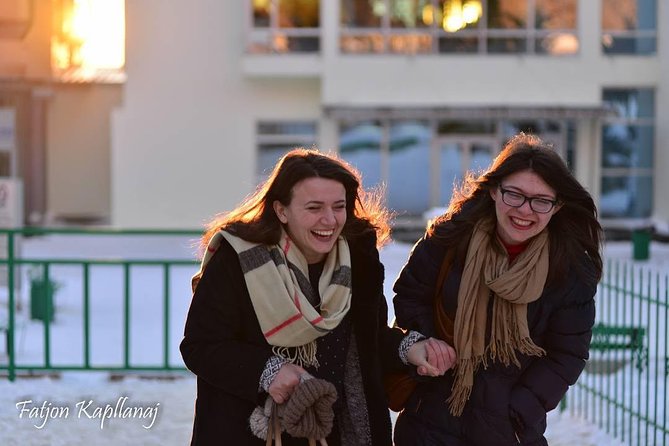
The Resurrection of Christ Orthodox Cathedral is one of Tirana’s clearest symbols of religious recovery. Albania’s communist government banned religious practice, and the country only began rebuilding religious institutions after the regime collapsed in the early 1990s.
The cathedral was built from 2001 to 2012 and consecrated on June 24, 2012. A ten-minute visit gives you time to appreciate the building and understand its place in modern Albanian life.
Placed alongside the Et’hem Bey Mosque, Saint Paul’s Cathedral, and the Bektashi site, this stop shows that Tirana’s religious story is not one-dimensional. You see several traditions in a city that spent decades trying to erase religion from public life.
House of Leaves and the Bank of Albania
The House of Leaves, officially the Museum of Secret Surveillance, is one of the most important places on the route for understanding communist surveillance. The building has a strong connection to the secret police and Albania’s communist era.
Admission is not included, and the tour allows about ten minutes. That timing is best understood as a short introduction. If you want to read exhibits and take in the museum properly, return on your own and pay the separate entrance fee.
The final stop is the Bank of Albania, established in 1925 as the National Bank of Albania. It remains the country’s central bank and plays a role in currency and monetary policy.
This may sound less dramatic than a mosque or dictatorship-era bunker, but it rounds out the tour. Tirana is not only monuments and political memories. It is also a working capital with financial, civic, and commercial institutions.
The $36.20 price and what you receive
At $36.20 per person, this is not the cheapest way to walk through Tirana, but the price is reasonable for a small-group, 3 to 4 hour introduction led by a guide who can explain both the visible landmarks and the less visible meaning behind them.
Most stops do not charge an admission fee. Your included extra is a shot of rakia, Albania’s traditional spirit. Other personal expenses are not covered, and House of Leaves admission costs extra.
The value rests mainly in the guide. You are paying for structure, local interpretation, answers to questions, and a route that combines major sights with places you might otherwise miss. Albiona has also helped visitors with local orientation after the walk, which can make the rest of your stay easier.
Book ahead if your dates are fixed. This experience is often reserved about 33 days in advance, and the group is capped at 11. Free cancellation is available up to 24 hours before the start time. Bad weather can lead to a new date or a full refund, since the experience requires suitable conditions.
Who will enjoy this Tirana walking tour most?
I would recommend it most strongly to first-time visitors, especially those arriving with little background on Albania. The opening overview gives you a framework for the rest of the walk, and the route can help you find your way around Tirana for the remainder of your trip.
It also suits anyone interested in political history, religion, architecture, markets, and modern city life. The tour does not treat Tirana as a collection of attractive buildings. It explains why a mosque, bunker, cathedral, former dictator’s villa, and fashionable neighborhood can all belong in the same city story.
Families and mixed-interest groups may appreciate the range of stops, though the communist material can be serious. People who want long visits inside museums should book this as an orientation walk, then return independently to Bunk’Art 2 or the House of Leaves.
You should also choose it if you like asking questions. Albiona’s strongest quality is her willingness to go beyond a prepared speech and discuss Albania’s culture, past, present, and future.
Should you book it?
Book this tour if you want to understand Tirana quickly and personally. The route covers an impressive amount of ground, while Albiona gives the city emotional and historical context that a guidebook alone cannot provide.
Skip it only if you prefer to explore entirely at your own pace or want extended museum visits. For most first-time visitors, the combination of small-group size, broad coverage, English guidance, local stories, and a rakia tasting makes $36.20 a fair price. I would schedule it early in your stay, then use Albiona’s suggestions to shape the days that follow.
FAQ
Where does the Tirana walking tour begin?
It begins at Skanderbeg Square, Plaza Tirana, Sheshi Skender Beu, Tirana 1001, Albania.
Where does the tour end?
The tour ends back at the meeting point in Skanderbeg Square.
How long does the walking tour last?
The experience lasts approximately 3 to 4 hours.
How many people can join the tour?
The maximum group size is 11 travelers.
Is the tour offered in English?
Yes. The tour is offered in English.
Is rakia included?
Yes. A complimentary shot of rakia, a traditional Albanian spirit, is included.
Is admission to the House of Leaves included?
No. Admission to the Museum of Secret Surveillance, also called the House of Leaves, is not included. Personal expenses are also not included.
Newly listed around Tirana
- Wonderful Sunset and Dinner in the Castel Of Petrela★ 4.6 · 4 reviews
- Zipline Tirana Adventure & Petrela Castle – With Transport★ 4.4 · 10 reviews
- Wine Tasting & Vineyards Escape near Tirana★ 4.9 · 8 reviews
- Walking Tour in Tirana, Albania★ 3.7 · 28 reviews
- Vlora, Dhermi & Llogara Day Trip from Durrës or Golem★ 5.0 · 5 reviews
- Day Tour to Petrela Castle and Zip Line Albania Adventure★ 5.0 · 10 reviews
- From Tirana: Mount Dajti Adventure, Local Vibes & Cable Car opt★ 4.5 · 6 reviews
- Winetasting tour in Alpeta winery – Roshnik village by 1001 Albanian Adventures★ 5.0 · 26 reviews
Historical Tours, compared.
Guided tour in Tirana – discoveries, history, culture (in FRENCH)
Read our review →
Durres city & Golem beach, Sun & History Day Trip
Read our review →
Semi – Private Tour at Cape of Rodon; Hidden Beaches & History
Read our review →
Ancient City of Butrint, UNESCO World Heritage site – A Must
Read our review →
Browse the lists this tour appears in