
Reviewed · HISTORICAL TOURS
“Tirana to Albania: Tracing a Historical Path Tour”
Tirana reveals its past one street at a time. This three-hour walk links Skanderbeg Square with mosques, communist-era sites, grand public buildings, and the New Bazaar, giving you a useful first look at Albania’s capital. I especially like the way the tour joins famous sights with less obvious reminders of dictatorship, and I like that guide Klejdi brings a strong personal connection to Albanian history and culture. The main drawback is pace: $37 buys a lot of ground in three hours, so several locations are photo stops or pass-by visits rather than long museum visits.
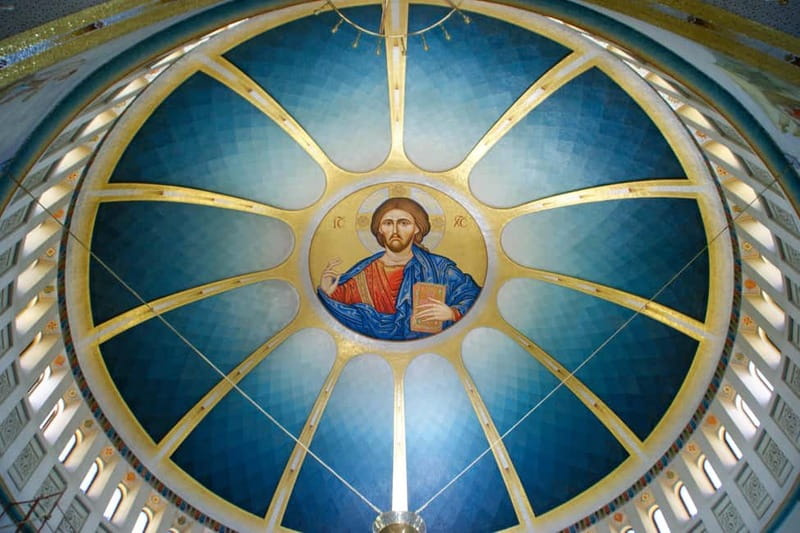
You meet at the Resurrection of Christ Orthodox Cathedral, either at the entrance or inside if the weather is poor. Klejdi leads tours in Albanian, English, French, and Italian, and his calm, attentive style has earned repeated praise for clear explanations, flexibility, and answering many questions. If you want a slower look at every interior, this is not the right format, but if you want to get your bearings quickly, it is a strong choice.
In This Review
- Key points to know before you book
- Starting beneath the cathedral dome
- Skanderbeg Square gives you the city’s main stage
- Ottoman details at Et’hem Bej Mosque
- Bunk’Art 2 and the difficult communist years
- Tirana Castle, Saint Paul Cathedral, and the Pyramid
- Blloku turns from restricted district to café quarter
- Postbllok makes memory public
- Mother Teresa Square and the stadium district
- Namazgah Mosque and Ottoman traces
- Finishing at the New Bazaar
- What $37 gets you
- Who will enjoy this walk most?
- Final verdict: book it for context and a fast start
- FAQ
- Where does the Tirana walking tour begin?
- How long does the experience last?
- What languages does guide Klejdi speak?
- Are breakfast and lunch included in the $37 price?
- Is the tour wheelchair accessible?
- What should I bring?
Key points to know before you book
- A three-hour history walk with a wide reach: You move from Ottoman landmarks and royal-era squares to Cold War memorials and modern Tirana.
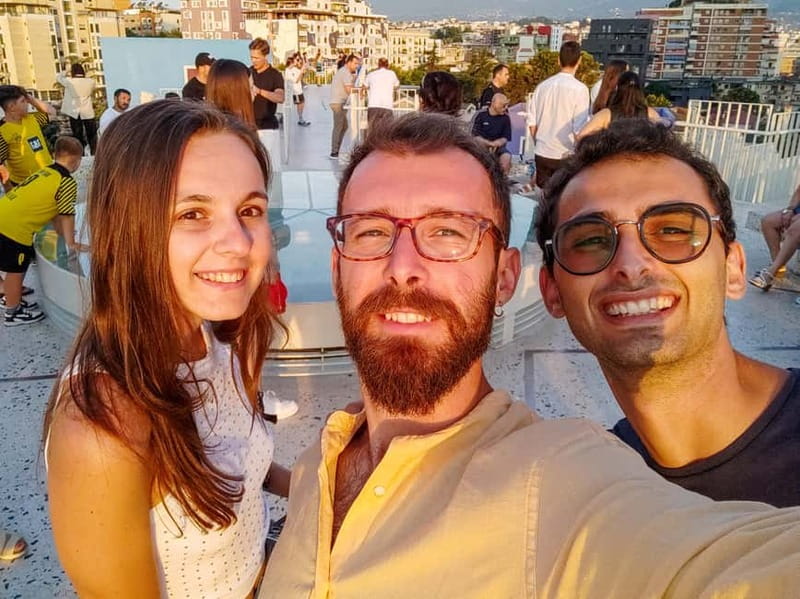
- Klejdi is the central asset: He is praised for speaking excellent French, answering detailed questions, and sometimes spending extra time with the group.
- The tour covers more than the city center: Blloku, Mother Teresa Square, the national stadium, Namazgah Mosque, and the New Bazaar all appear in one route.
- Food stops cost extra: Breakfast in Blloku and lunch near the New Bazaar are suggested parts of the experience, while personal expenses are not included.
- Expect a walking tour, not a museum marathon: Bunk’Art 2, the National History Museum, and other sites may be explained from outside or visited briefly.
- It works well early in your stay: The route gives you enough context to decide which Tirana sights deserve a longer visit later.
Starting beneath the cathedral dome
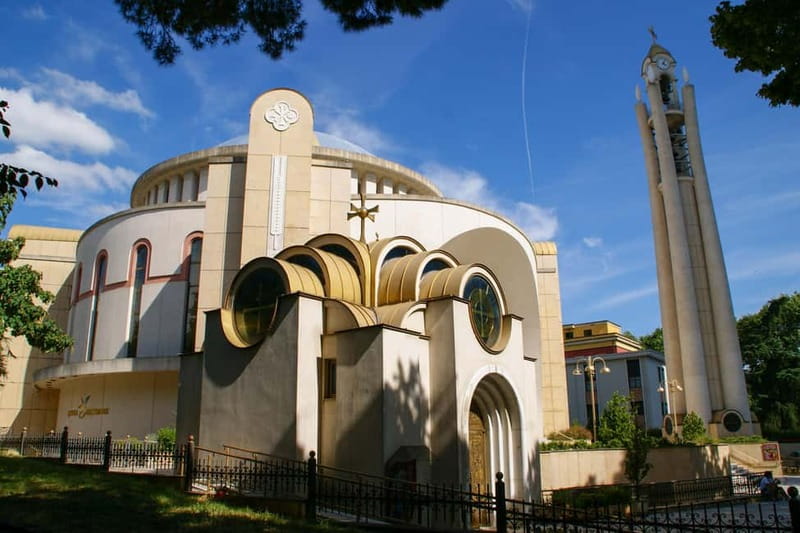
The meeting point, Katedralja Ortodokse Ngjallja e Krishtit, is a practical place to begin. The cathedral provides an immediate introduction to Tirana’s religious variety and offers a quieter opening before you reach the city’s main square.
You may have a short visit, a photo stop, and an introduction to the route. Since the meeting arrangements allow you to gather inside during poor weather, you are not left waiting on a street corner if rain arrives.
The tour then moves toward the center on foot. There is no bus or other transport involved, so wear shoes that can handle three hours of city walking. Bring clothing suited to the weather, especially if you choose a warm-season starting time.
More History Tours in Tirana:
- From Tirana: Durres History Trip with Beach or Promenade
★ 4.8 · 455 reviews - Guided tour in Tirana – discoveries, history, culture (in FRENCH)
★ 5.0 · 204 reviews - From Tirana: Durres city & Golem beach, Sun & History Day Trip
★ 5.0 · 134 reviews
Skanderbeg Square gives you the city’s main stage
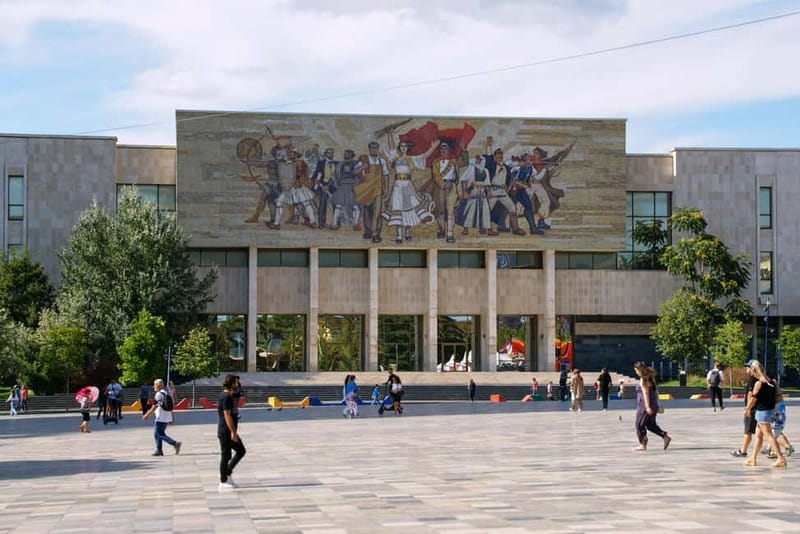
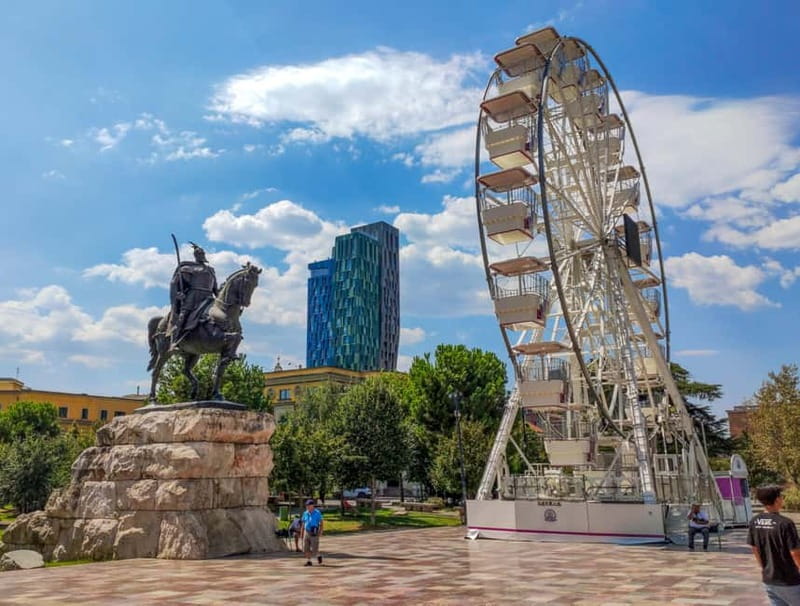
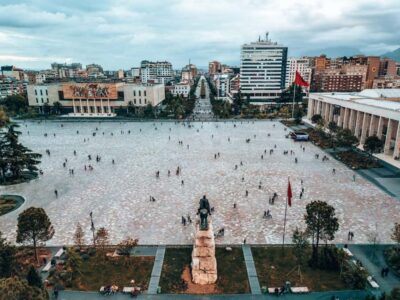
Skanderbeg Square is Tirana’s broad civic heart. The square is named for Albania’s national hero, Gjergj Kastrioti Skanderbeg, whose equestrian statue gives the space its central focus.
Here, Klejdi can help you read the surrounding architecture instead of treating the square as a quick photograph. The National History Museum and the Palace of Culture frame the area, showing how Tirana uses one central space for national memory, public events, art, and daily city life.
The National History Museum is included in the explanation of the route, but the schedule does not promise a full museum visit. If you want to see its exhibits, ask Klejdi how much time is available or return later on your own.
That is one of the useful features of this walk. You get an overview first, then you can choose where to spend your independent time. The route is especially helpful if you have only a short stay in Tirana and do not want to guess which buildings matter.
Ottoman details at Et’hem Bej Mosque
The Et’hem Bej Mosque is one of the most rewarding stops because it brings fine Ottoman design into the middle of the capital. Its painted decoration and fresco work make it more than a quick exterior photograph.
The tour includes a visit, guided explanation, and some free time. Modest clothing is the sensible choice for any mosque visit, and you should follow the site’s instructions about entry and behavior.
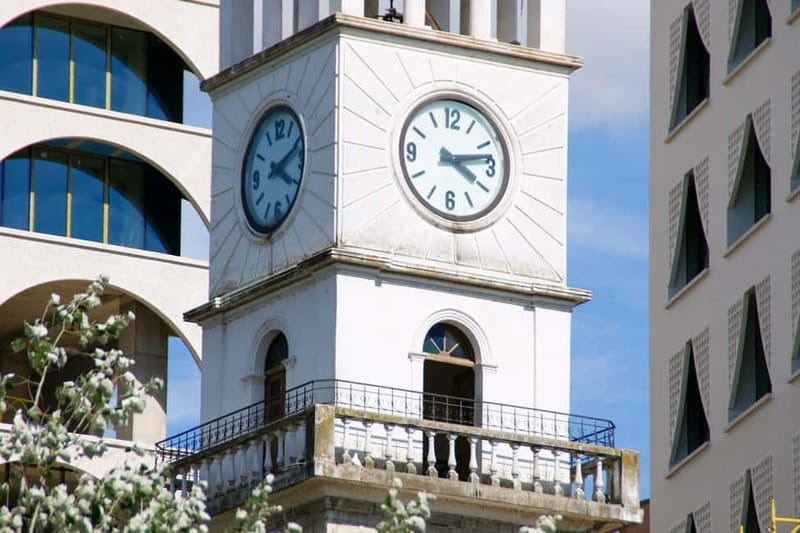
Beside the mosque, the Clock Tower adds a second landmark to the same stop. The tower is one of Tirana’s familiar symbols, and the tour includes its story and a photo opportunity. The information provided does not guarantee that you will climb the tower, so treat the panoramic view as a possibility rather than a promised part of the $37 fee.
The contrast here is pleasing: one building is intimate and decorated, the other is narrow, vertical, and practical. Together they show how the square grew from older Ottoman-era roots into a modern capital.
Bunk’Art 2 and the difficult communist years
The walk continues through Pedonalja, Tirana’s pedestrian zone, toward Bunk’Art 2. This section shifts the mood from public monuments to Albania’s communist period.
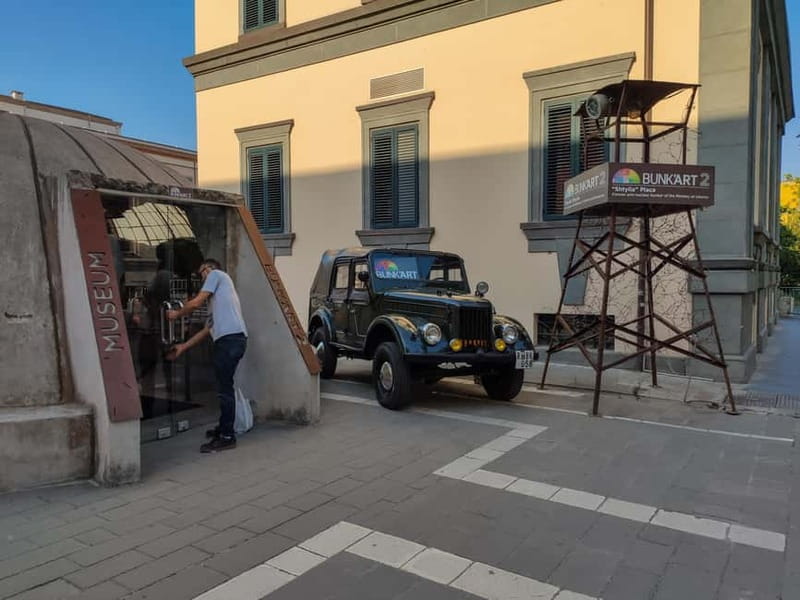
Bunk’Art 2 occupies a former bunker and explains life under Enver Hoxha’s dictatorship. Its themes include political repression, secret police activity, and the experiences of ordinary people under the regime. Even a short introduction here adds weight to the cheerful cafés and polished streets you see elsewhere.
The itinerary lists a photo stop and guided explanation at Bunk’Art 2, not a guaranteed extended museum visit. That matters because the museum itself needs more time than this walking route can provide. If the communist period interests you, plan to return separately.
Tirana’s recent past is not presented as a dusty chapter. It still shapes how people understand public space, religion, politics, and family memory. Klejdi’s background and enthusiasm are valuable here because a guide can connect dates and buildings with the larger story of Albania’s isolation and political control.
A few more Tirana trips worth comparing
- From Tirana: Bovilla Lake & Gamti Mountain Hiking Day Trip
★ 4.9 · 4,397 reviews - From Tirana: Bovilla Lake & Gamti Mountain Hiking Tour
★ 4.9 · 3,003 reviews - From Tirana: Bovilla Lake & Gamti Mountain Viewpoint Hike
★ 4.8 · 2,053 reviews - Tirana/Durres/Golem: Saranda, Ksamil, Blue Eye Day Trip
★ 4.8 · 1,584 reviews
Tirana Castle, Saint Paul Cathedral, and the Pyramid
Tirana Castle offers a change of pace. You can visit, walk through the area, and have time for shopping. It is a useful stop for seeing how old city traces have been adapted for present-day use, rather than preserved as a silent ruin.
The route also includes Saint Paul Cathedral, with a visit and free time. Along with the Orthodox cathedral at the start and the mosques later in the walk, it helps you see the capital’s range of religious buildings within a compact urban area.
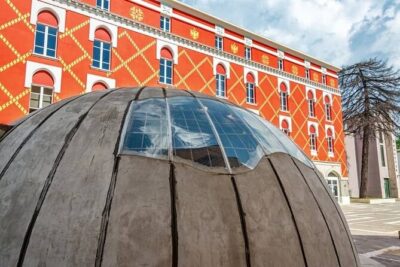
Then comes the Pyramid of Tirana, one of the city’s most striking modern structures. It was built as a museum dedicated to Enver Hoxha and now represents Albania’s changing relationship with its communist past. Its unusual shape makes it an easy photo stop, but its meaning is more important than its appearance.
The Pyramid has also become a place for cultural events. I like this stop because it shows that Tirana does not simply erase uncomfortable buildings. Instead, it keeps reworking them. You see a structure born from dictatorship being given a new public role.
The schedule allows a break here, which is welcome. Three hours of walking with so many stops can feel full, so use this pause to drink water, take photographs, and ask questions.
Blloku turns from restricted district to café quarter

Blloku gives you one of the sharpest contrasts in Tirana. During communism, it was reserved for the political elite. Today, it is known for cafés, restaurants, bars, and boutiques.
The route passes through the neighborhood and includes a breakfast stop at a stylish café. Fresh pastries and Albanian coffee make this a pleasant point to rest, but the cost is your own. Personal expenses are not part of the tour price.
That extra expense is small compared with the value of a guided explanation here. Without context, Blloku can look like any fashionable district. With the story of its former restrictions, the cafés and shops take on a different meaning. The neighborhood becomes a clear example of how Tirana has changed since the end of communist rule.
You also pass Enver Hoxha’s former residence. The building is not presented as a full interior tour, but seeing its place in Blloku helps connect the neighborhood’s old role with the man who ruled Albania for decades.
Postbllok makes memory public
The Postbllok Memorial is one of the tour’s most serious stops. It reflects on authoritarian rule and gives the walk a physical place for remembering those affected by the regime.
This is not a light sightseeing point, and it should not be rushed emotionally, even if the schedule is brisk. The memorial works well alongside Bunk’Art 2 because the two stops approach the communist period in different ways: one uses a former bunker and museum displays, while the other places remembrance in open public space.
If you are visiting Tirana with teenagers, this part can be especially useful. The story is not limited to rulers and political slogans. It raises questions about daily life, fear, silence, and how a country chooses to remember.
Mother Teresa Square and the stadium district
Mother Teresa Square brings another side of Tirana into view. The Polytechnic University and Palace of Congresses give the square a formal, institutional character, with architectural influences that include fascist and modernist design.
The tour includes a guided walk and photo stop here. You will not spend hours on architectural detail, but Klejdi can help you notice the mix of political eras in the buildings. Tirana often places different periods close together, so the city works almost like an open-air timeline.
Nearby, Air Albania Stadium adds a newer landmark. The national stadium hosts sports, concerts, and dining, and its presence shows the capital’s current public life. It is a pass-by stop rather than a stadium event, so do not book this tour expecting a match, concert, or stadium interior experience.
Still, the pairing is worthwhile. Mother Teresa Square shows formal state architecture, while the stadium points toward entertainment and contemporary city life.
Namazgah Mosque and Ottoman traces
The walk continues to the Grand Mosque of Tirana, also called Namazgah Mosque. The mosque is presented as a major spiritual and cultural center once completed, and the tour includes a visit, explanation, and photographs.
Because construction and access conditions can change, you should confirm what parts are open at your chosen time. The supplied details do not promise a particular interior arrangement or completed status.
The route then passes through Sulejman Pasha Square, an area tied to Tirana’s Ottoman heritage. Nearby, the Kapllan Pasha Tomb is one of the few remaining Ottoman structures in the city. This is a small but important reminder that Tirana’s past is not limited to the communist period or modern construction.
The sequence works well because you see a major religious building alongside a surviving Ottoman monument. One points toward Tirana’s future religious and civic role, while the other preserves a fragment of the older city.
Finishing at the New Bazaar
The final stop is the New Bazaar, or Pazari i Ri. This is a good place to finish a walking tour because it brings you back to ordinary city life: produce, food, shopping, and local activity.
The market is suited to browsing for souvenirs and seeing fresh ingredients. You can also finish with an Albanian lunch at a traditional restaurant. Again, food is not included, so budget separately for lunch and the earlier café stop.
The New Bazaar also gives you an easy decision point for the rest of your day. You can stay for a meal, shop, or use the guide’s suggestions to choose another part of Tirana to explore. Since the tour has already introduced the main central areas, you should have a clearer sense of where you want to return.
What $37 gets you
At $37 per person, the price is fair for a live, three-hour walking tour with a dedicated guide. You are paying mainly for Klejdi’s explanations, route planning, and ability to connect places that might otherwise feel unrelated.
The value is strongest if you are new to Tirana. In one outing, you see the central square, Ottoman religious architecture, Christian cathedrals, communist sites, Blloku, public squares, the stadium, and the New Bazaar. Replicating that route alone would be possible, but you would lose the historical links between the stops.
The price is less attractive if you want long museum visits or paid entries included. Bunk’Art 2 and the National History Museum receive attention in the route, but the tour format does not promise enough time for a full museum experience. Food, shopping, and personal expenses are also extra.
You can cancel up to 24 hours before the activity for a full refund, and the reserve-now, pay-later option helps if your schedule is still moving around. The experience is wheelchair accessible, though you should still discuss your exact needs when booking if the route’s access details matter to you.
Who will enjoy this walk most?
I would recommend it to first-time visitors who want a clear introduction without spending a full day on one museum. It is also a good fit for families, especially if older children or teenagers are interested in Albania’s communist period and changing urban life.
French-speaking visitors have a particularly useful option because Klejdi is praised for speaking French very well. The tour is also available in English, Albanian, and Italian.
You should choose it early in your stay. The route helps you decide if you want to return to Bunk’Art 2, enter the National History Museum, spend more time at the Pyramid, or linger in Blloku and the New Bazaar.
It may not suit you if you dislike walking, want a quiet architectural tour, or prefer to explore only two or three sights in depth. The route covers a great deal, and its strength is connection rather than extended time inside each attraction.
Final verdict: book it for context and a fast start
Book this tour if you want Tirana explained by someone who cares about the country, not just recited from a guidebook. Klejdi’s warmth, language skills, willingness to answer questions, and habit of adapting the pace are the strongest reasons to choose it.
The route is ambitious for three hours, so keep your expectations sensible. You will see many locations, but some are brief visits, exterior explanations, or photo stops. At $37, that is a good trade if your goal is to understand Tirana’s main story and find the places worth revisiting.
Skip it only if you already know the city well or want full museum access. For most first visits, this walk gives you a useful map of Tirana’s past and present, plus a pleasant finish at the New Bazaar.
FAQ
Where does the Tirana walking tour begin?
The tour begins at the entrance of the Resurrection of Christ Orthodox Cathedral, also called Katedralja Ortodokse Ngjallja e Krishtit. If the weather is poor, the meeting can take place inside the cathedral.
How long does the experience last?
The walking tour lasts three hours. Starting times vary, so you should check availability for the date you want.
What languages does guide Klejdi speak?
The tour is available in Albanian, English, French, and Italian.
Are breakfast and lunch included in the $37 price?
No. Breakfast in Blloku and lunch at the New Bazaar are suggested stops, but personal expenses are not included in the tour price.
Is the tour wheelchair accessible?
Yes, the activity is listed as wheelchair accessible.
What should I bring?
Bring comfortable shoes and clothing suited to the weather. The route is a three-hour walking tour through Tirana.
Newly listed around Tirana
- Wonderful Sunset and Dinner in the Castel Of Petrela★ 4.6 · 4 reviews
- Zipline Tirana Adventure & Petrela Castle – With Transport★ 4.4 · 10 reviews
- Wine Tasting & Vineyards Escape near Tirana★ 4.9 · 8 reviews
- Walking Tour in Tirana, Albania★ 3.7 · 28 reviews
- Vlora, Dhermi & Llogara Day Trip from Durrës or Golem★ 5.0 · 5 reviews
- Day Tour to Petrela Castle and Zip Line Albania Adventure★ 5.0 · 10 reviews
- From Tirana: Mount Dajti Adventure, Local Vibes & Cable Car opt★ 4.5 · 6 reviews
- Winetasting tour in Alpeta winery – Roshnik village by 1001 Albanian Adventures★ 5.0 · 26 reviews
Historical Tours, compared.
Guided tour in Tirana – discoveries, history, culture (in FRENCH)
Read our review →
Durres city & Golem beach, Sun & History Day Trip
Read our review →
Tirana Walking Tour: History, Culture &Gems by a Passionate Guide
Read our review →
Semi – Private Tour at Cape of Rodon; Hidden Beaches & History
Read our review →
Ancient City of Butrint, UNESCO World Heritage site – A Must
Read our review →Browse the lists this tour appears in