
Reviewed · HISTORICAL TOURS
Tirana: A walk through the history of Albania.
Tirana’s past is written into its streets. This 150-minute walk links Illyrian roots, Ottoman rule, independence, and communism with the city you see today. I like the small group of no more than six people, and I like that the English-speaking guide can shape the conversation around your interests. The main consideration is pace: you cover a lot on foot, and the route is not suited to wheelchair users or people with mobility impairments.
I also like the blend of serious history and everyday Tirana life. You move from mosques and grand boulevards to Blloku cafés, parks, and the House of Leaves, then finish with a tasting of Albanian raki. At $30 per person, it offers good value if you want context rather than a quick photo tour, though food, hotel transfers, and museum admission are not included.
In This Review
- Key points to know before booking
- Starting at Skënderbej Square
- Et’hem Bej Mosque and the Clock Tower
- Ottoman echoes and Tirana’s early center
- National history in a city of public squares
- Bulevardi Dëshmorët e Kombit and Mother Teresa Square
- A pause at the Grand Park of Tirana
- Blloku and Tirana’s modern social life
- The Orthodox Cultural Center
- House of Leaves and the communist years
- Raki tasting and the return to the square
- What the $30 price delivers
- Who should book this Tirana history walk?
- Should you book it?
- FAQ
- Where does the tour start and finish?
- How long does the tour last?
- What language is the tour conducted in?
- How large is the group?
- Is raki tasting included?
- Is food included?
- Is the tour suitable for wheelchair users?
Key points to know before booking
- Four eras shape the walk: The guide explains Albania through prehistory and the Illyrian tribes, the Skanderbeg period under Ottoman pressure, the Renaissance and independence, and communist rule.
- Six-person maximum: A small group gives you a better chance to ask questions and follow a personal interest.
- Major Tirana sights fit into 150 minutes: The route includes Skënderbej Square, Et’hem Bej Mosque, Mother Teresa Square, the Grand Park, Blloku, the Orthodox Cultural Center, and the House of Leaves.
- History meets present-day life: Blloku shows modern Tirana, while the House of Leaves deals with the harsh rule of Enver Hoxha.
- Raki is included: You receive a tasting of Albania’s traditional alcoholic drink, but meals and other food are not part of the price.
- A walking tour with limits: Comfortable walking is important, and the tour is not suitable for wheelchair users or people with mobility impairments.
Starting at Skënderbej Square
Your walk begins at Skënderbej Square, the central meeting point and a sensible place to start understanding Tirana. The square gives the guide room to explain the shape of the city before the route moves into its older, more layered corners.
I like this opening because the tour does not treat Tirana as a collection of unrelated sights. Instead, the guide uses four broad periods to explain why Albania looks and feels the way it does now. You begin with the Illyrian tribes and prehistory, move into the age associated with Skanderbeg and the Ottoman Empire, then reach the declaration of independence and the communist period.
That framework is useful for first-time visitors. Albania’s story can seem hard to sort out when you are looking at a mosque, an Italian-influenced boulevard, a communist-era building, and a new café district within the same afternoon. A guide gives those pieces an order.
The square is also where you can settle into the pace. This is not a coach ride with a view through a window. You walk from stop to stop, so wear shoes that can handle city streets and allow some energy for the final part of the route.
More Walking Tours in Tirana
- Walking Tour of Tirana
★ 5.0 · 646 reviews - Tirana: Express Walking Tour with a Guide
★ 4.8 · 503 reviews - Tirana Center: Magic Walking Tour French/Italian/English Etc
★ 4.9 · 402 reviews
Et’hem Bej Mosque and the Clock Tower
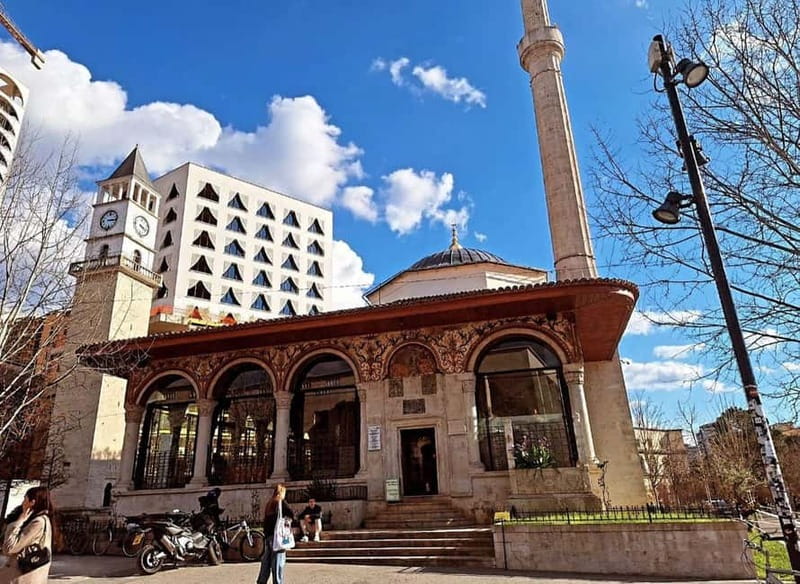
The next important stop is Et’hem Bej Mosque, one of the central sights around Skënderbej Square. The mosque is paired with the Clock Tower in the tour’s introduction to Tirana’s Ottoman-era setting.
The guide’s job here is not simply to point at the building. You learn how this period connects to Albania’s wider story, including the place of Skanderbeg in the country’s national memory. That context matters because Albania’s past includes several changes in power, religion, and identity, and the tour presents them as part of one long story.
The mosque is a place where respectful behavior matters. The supplied information does not promise a full interior visit, so you should think of this stop as guided sightseeing rather than assume a particular amount of time inside. If access or opening conditions affect the visit, the guide can still explain the site and its role in Tirana.
The nearby Clock Tower adds a useful visual contrast. Together, the tower and mosque make this a compact history lesson in the heart of the capital. You get architecture, civic space, and a chance to ask questions before the route becomes more spread out.
Ottoman echoes and Tirana’s early center
The walk also points to Selim Pashe Toptani’s Palace, described as having 32 rooms in an oriental style, and Tirana Castle, known as the heart of Tirana. These details help show that the city’s older story is not limited to one mosque or one square.
You should check your expectations here. The experience description names these places among the important landmarks, but the timed route does not promise a long interior tour of every building. The value is in seeing how the guide connects Tirana’s central area to its Ottoman and local ruling traditions.
Tirana Castle is especially useful as an idea, even if your visit is brief. It represents the older core of the city, while the surrounding center shows how much Tirana has changed. The tour keeps returning to that contrast: older foundations beside newer public spaces and commercial life.
This is also where the small-group format can make a real difference. With six people or fewer, you can ask the guide to clarify a name, period, or custom without losing the group in the noise of a large crowd. One of the named guides, Armando, was praised for offering detailed information about Tirana’s history, local traditions, and small curiosities. Another account describes the guide sharing personal experiences along the way, which can make the history easier to remember.
National history in a city of public squares
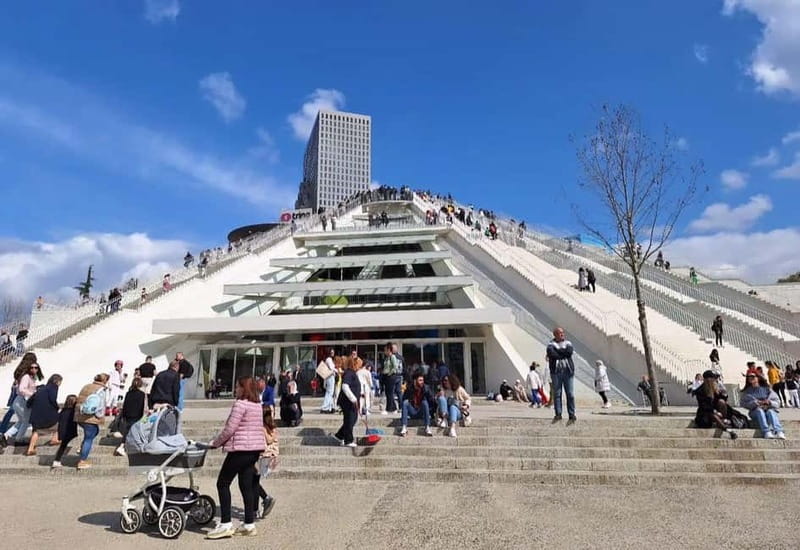
The National Historical Museum is listed among the significant Tirana landmarks, with 6,293 museum artifacts in its collection. The tour’s 150-minute format does not indicate that a full museum visit is included, so do not book this walk expecting an extended indoor museum session.
Still, its place in the tour’s wider story is important. The museum represents the national timeline that the guide is explaining on the streets. You are learning not only what Albania’s major eras were, but also how those eras are presented and remembered in the capital.
This distinction helps you plan. If you want a serious museum visit, set aside separate time. If you want a guide to make the country’s history easier to follow before you explore alone, this walk can provide a useful first layer.
I find that approach practical. A first visit to Tirana can be full of names and dates, but the guide gives you a working map. You can then decide which places deserve a longer return visit.
More History Tours in Tirana:
- From Tirana: Durres History Trip with Beach or Promenade
★ 4.8 · 455 reviews - Guided tour in Tirana – discoveries, history, culture (in FRENCH)
★ 5.0 · 204 reviews - From Tirana: Durres city & Golem beach, Sun & History Day Trip
★ 5.0 · 134 reviews - Tirana Walking Tour: History, Culture &Gems by a Passionate Guide
★ 5.0 · 52 reviews
Bulevardi Dëshmorët e Kombit and Mother Teresa Square
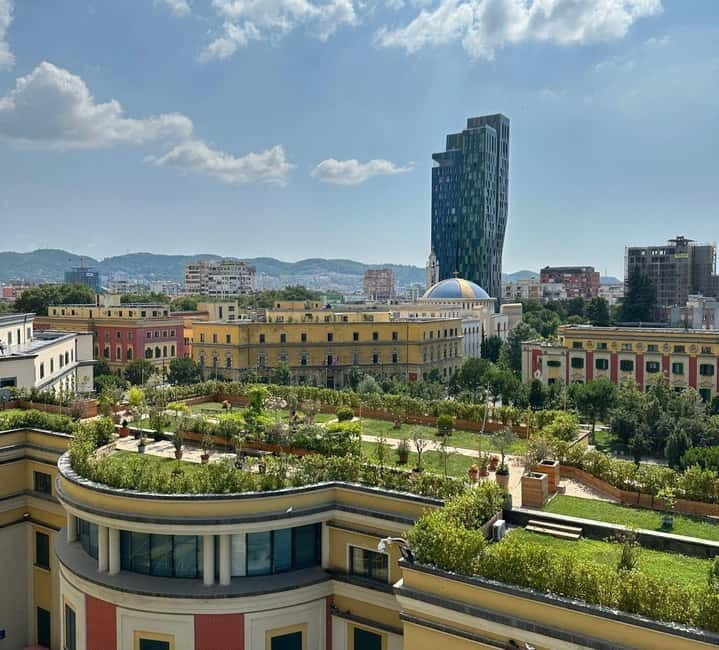
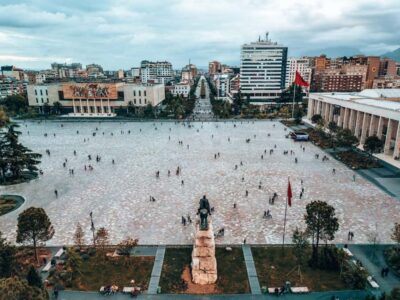
From the center, the route follows Bulevardi Dëshmorët e Kombit, one of Tirana’s important ceremonial boulevards, toward Sheshi Nënë Tereza, or Mother Teresa Square. This part of the walk shifts the focus from the old center to the city’s grander public spaces.
The boulevard lets you see how Tirana presents national identity through scale and setting. Large civic spaces can feel formal, but they also give you a clearer sense of how the capital is organized. Your guide can explain the historical meaning behind the route rather than leaving you with a series of impressive-looking buildings.
Mother Teresa Square adds another layer to the story of Albanian identity. The tour lists it as a guided visit, so you can expect commentary rather than simply passing through on the way to the park.
This section may appeal most to you if you like seeing how a capital city uses squares and boulevards to tell its story. If you prefer only old buildings and tightly packed historic lanes, this part may feel less intimate. Its strength is scale and context.
A pause at the Grand Park of Tirana
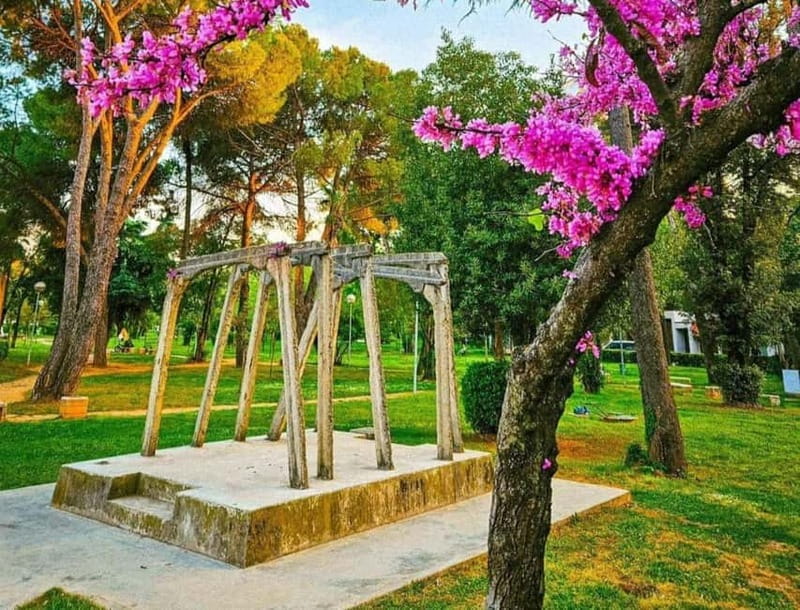
The route continues to the Grand Park of Tirana, where you get a change of pace from the central streets. The park is included as a guided visit, and it gives the tour room to discuss the capital beyond its monuments.
I like this stop because a city is not only its official buildings. Parks show how local life fits into the urban plan, and they give you a better sense of the city’s present-day rhythm. The supplied details do not promise a long rest break or a particular park activity, so treat this as part of the walking route rather than a scheduled picnic.
The park also breaks up the historical material. After learning about empires, independence, and dictatorship, you can look at Tirana as a living city rather than only a subject in a history lesson.
Keep an eye on the clock here. The entire experience lasts 150 minutes, and several stops follow. You may have time to pause briefly, but this is not designed as a leisurely half-day park outing.
Blloku and Tirana’s modern social life
The route then reaches Blloku, an area associated with modern Tirana life and la dolce vita. This is one of the tour’s most useful contrasts. You move from national monuments and political history into a district linked with cafés, restaurants, and a more social side of the capital.
Blloku also carries historical weight because its modern identity makes more sense after you understand Albania’s communist period. The tour does not present the district as only a place to eat or go out. It uses Blloku to show how Tirana’s public life has changed.
I would pay close attention here if you want practical ideas for the rest of your stay. The guide’s comments about current city life can help you decide where to return later. One account describes the guide as spontaneous and willing to follow particular interests, so this is a good point to ask about Tirana beyond the official sights.
There is a tradeoff. Blloku can feel less focused than the mosque or House of Leaves because its appeal is partly about atmosphere and daily life. That is exactly why it belongs on a city tour, but it may seem less important if you want only formal history.
The Orthodox Cultural Center
The Cultural Center of the Orthodox Church appears later in the route as a visit stop. Its inclusion broadens the tour’s view of Albanian religious and cultural life.
After Et’hem Bej Mosque, this stop helps you see that Tirana’s religious history cannot be reduced to one tradition. The guide can place the center within the wider story of Albania and explain how different religious communities fit into the capital’s identity.
The available details do not specify the length of the stop or promise a particular interior experience. I would therefore treat it as a guided point of interest, with the value coming from explanation and comparison.
For you, this is another reason the tour works better as an introduction than as a list of photo stops. The guide is connecting buildings to the country’s changing identity.
House of Leaves and the communist years
The most sobering part of the walk is the House of Leaves, a museum about the brutal regime of Enver Hoxha. This stop represents the fourth period in the tour’s structure, the years of communism described as the darkest time in Albanian history.
The museum gives the guide a strong place to explain how political control affected Albanian life. The tour information does not say that museum admission is included, so you should not assume that the $30 price covers entry. You may receive an outside explanation or guided sightseeing, while a full museum visit could require separate planning.
Even without a long museum visit, this stop adds needed weight to the tour. Tirana’s modern cafés and renovated public spaces can make the city seem carefree, but the communist past is not far away. The House of Leaves brings that past into view.
This is also where the guide’s personal stories and local curiosities can matter most. Historical facts tell you what happened, but a guide who explains how the period is remembered can make the subject feel less distant. The experience descriptions emphasize friendly, informal guidance, and that tone may help with a difficult subject.
Raki tasting and the return to the square
The tour includes a tasting of raki, a traditional Albanian alcoholic drink. It is a small part of the experience, but it gives the history walk a social finish.
You should note what is not included. Food is not provided, so this tasting is not a meal or a full food tour. Hotel pickup and drop-off are also excluded, and you return to Skënderbej Square rather than ending at your accommodation.
The return to the square makes the route easy to use as a first activity in Tirana. You can continue exploring from the center, find lunch on your own, or return to one of the sights that caught your attention.
At $30 per person, I think the drink tasting works as a modest extra rather than the reason to book. The real value is the guide’s time, the small group, and the connection between distant periods of Albanian history.
What the $30 price delivers
The price is reasonable for a 150-minute English-language walking tour with a group capped at six people. You are paying for a local guide, a planned route through key parts of central Tirana, and the chance to ask questions without competing with a large crowd.
The value is strongest if you are new to Albania. A good first-day guide can help you understand the names, symbols, and political changes you will keep seeing during the rest of your trip. The tour also combines formal sights with Blloku and the Grand Park, so you get more than an old-town circuit.
The value is weaker if you already know Tirana well or want long visits inside museums and religious buildings. The duration requires choices. You will see many important places, but you should not expect an in-depth museum program at every stop.
The available score is 5 out of 5 from eight ratings. The repeated praise centers on the guides being friendly, well prepared, informative, and willing to share personal experiences. Armando is specifically praised for detailed history, local traditions, and curiosity-driven conversation. Those are the qualities that can make a compact city walk worthwhile.
Who should book this Tirana history walk?
I would choose this tour for a first visit, especially if you want a clear introduction before exploring Tirana on your own. It suits anyone curious about how Albania moved from ancient tribal societies through Ottoman influence, independence, and communist rule into today’s city life.
It is also a good match for you if you prefer conversation to a fixed script. The small group allows room for questions, and the guide may adapt the discussion to your interests.
You should think twice if walking for 150 minutes is difficult. The experience is not suitable for wheelchair users or people with mobility impairments. You should also book something else if your main goal is a full museum tour, a food-focused outing, or hotel-to-hotel convenience.
Free cancellation up to 24 hours before the start gives you some flexibility, and you can reserve now and pay later. Check the available starting times before booking, since the schedule is not fixed in the details provided.
Should you book it?
Yes, if you want Tirana to make sense quickly. For $30, you get a small-group route, a local English-speaking guide, major central sights, a look at both historic and modern Tirana, and a raki tasting.
Book it early in your stay so you can use the guide’s suggestions afterward. Just keep your expectations clear: this is a brisk walking introduction, not a full museum tour, food tour, or private transfer service. If you can walk comfortably and enjoy asking questions, it offers a friendly, useful way to meet Albania’s past and present in one short outing.
FAQ
Where does the tour start and finish?
It starts and finishes at Sheshi Skënderbej, also known as Skënderbej Square.
How long does the tour last?
The walking tour lasts 150 minutes.
What language is the tour conducted in?
The live tour guide speaks English.
How large is the group?
The group is limited to six participants.
Is raki tasting included?
Yes. A tasting of raki, a traditional Albanian alcoholic drink, is included.
Is food included?
No. Food during the tour is not included.
Is the tour suitable for wheelchair users?
No. The experience is not suitable for wheelchair users or people with mobility impairments.
Newly listed around Tirana
- Wonderful Sunset and Dinner in the Castel Of Petrela★ 4.6 · 4 reviews
- Zipline Tirana Adventure & Petrela Castle – With Transport★ 4.4 · 10 reviews
- Wine Tasting & Vineyards Escape near Tirana★ 4.9 · 8 reviews
- Walking Tour in Tirana, Albania★ 3.7 · 28 reviews
- Vlora, Dhermi & Llogara Day Trip from Durrës or Golem★ 5.0 · 5 reviews
- Day Tour to Petrela Castle and Zip Line Albania Adventure★ 5.0 · 10 reviews
- From Tirana: Mount Dajti Adventure, Local Vibes & Cable Car opt★ 4.5 · 6 reviews
- Winetasting tour in Alpeta winery – Roshnik village by 1001 Albanian Adventures★ 5.0 · 26 reviews
Historical Tours, compared.
Guided tour in Tirana – discoveries, history, culture (in FRENCH)
Read our review →
Durres city & Golem beach, Sun & History Day Trip
Read our review →
Tirana Walking Tour: History, Culture &Gems by a Passionate Guide
Read our review →
Semi – Private Tour at Cape of Rodon; Hidden Beaches & History
Read our review →
Ancient City of Butrint, UNESCO World Heritage site – A Must
Read our review →Browse the lists this tour appears in