
Reviewed · COMMUNIST HISTORY TOURS
Private Cold War City Tour in Gjirokaster
Gjirokaster hides its hardest stories underground. This private tour links the Cold War Tunnel, Musine Kokalari’s memorial, and the former home of Enver Hoxha, giving you a sharper view of Albania’s communist past than a castle visit alone. I especially like the private format and the chance to pause over coffee or tea rather than rush from one site to the next.
I also like the focus on people who lived under the regime, including writer Musine Kokalari, not just on political buildings. The main drawback is that the tour is offered only in English, with no translated text provided, so some of the detail may be lost if English is not comfortable for you. The published information also needs clarification about the separate €14 entrance charge.
In This Review
- Key points to know before booking
- Why this Gjirokaster tour is different
- Entering the Cold War Tunnel
- Meeting Musine Kokalari at the My Muse Memorial
- Seeing the former Hoxha house as the Ethnographic Museum
- The castle and prison part of the experience
- Is $75.74 a fair price?
- Who will enjoy this private tour most?
- Practical advice for a better visit
- Should you book the Cold War City Tour?
- FAQ
- Where does the Private Cold War City Tour begin?
- Where does the tour end?
- How long does the tour last?
- What language is the tour offered in?
- Is the tour private?
- Is coffee or tea included?
- Are entrance tickets included?
- Is the Cold War Tunnel part of the tour?
- Can I cancel for a full refund?
Key points to know before booking
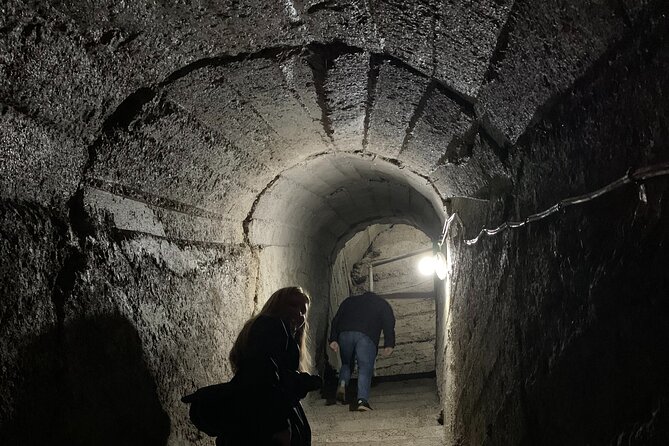
- The tunnel is the tour’s strongest stop: You enter a Cold War shelter built to protect Albania’s political leadership in the 1970s.
- Musine Kokalari adds a human story: Her memorial presents the life of Albania’s first female writer and a woman punished for opposing the communist regime.
- The tour is private: Only your group takes part, making it easier to ask questions and keep the pace comfortable.
- Coffee and tea are included: The final presentation ends with a drink in the tour company’s hall.
- English is the only listed language: There are no translated explanation panels mentioned in the tour details.
- Budget for the extra fee: The advertised price is $75.74 per person, while entrance tickets are listed separately at €14 per person.
Why this Gjirokaster tour is different
Gjirokaster is often presented through its stone roofs, steep lanes, and hilltop castle. Those sights matter, but they tell only part of the city’s story. This experience looks at the period when Albania was ruled by Enver Hoxha and when fear, isolation, punishment, and political control shaped ordinary life.
I like that the tour does not treat the Cold War as a distant international subject. In Gjirokaster, it becomes physical. You walk into a tunnel designed as a shelter for senior leaders. You hear about a writer sent to prison and hard labor. You visit the house connected with the dictator himself.
That combination gives you three different angles: the machinery of power, the cost of resistance, and the private setting from which a national leader came. It is a useful way to understand why the communist period still carries such weight in Albania.
The tour lasts about two and a half to just over three hours. The exact duration is given as approximately 2 hours 30 minutes to 3 hours 10 minutes, so leave some flexibility in your day. The private setup should suit you if you prefer conversation over a fixed large-group script.
More City Tours in Gjirokaster
- Gjirokastra- The Stone City & Blue Eye- The monument of Nature.
★ 4.5 · 180 reviews - From Saranda: Gjirokastra Stone City & Blue Eye Day Trip
★ 4.9 · 121 reviews - Gjirokastra & Bylis Illyrian City Day tour Tirana/Durres/Golem
★ 5.0 · 36 reviews
Entering the Cold War Tunnel
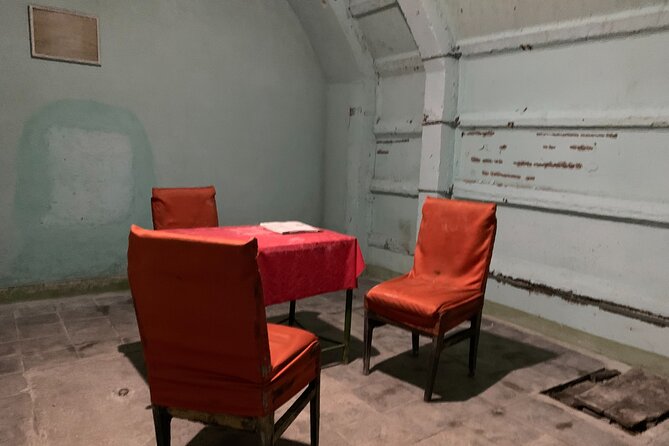
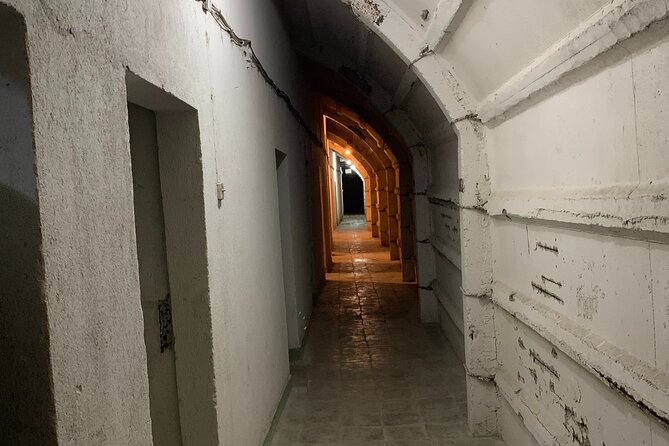
The tour begins at the Cold War Tunnel, built in the 1970s to protect the political bureau. Its purpose was not simply to shelter people during an attack. The leaders were meant to keep directing military action from underground if danger came.
That detail changes how you read the space. This was planned as a working refuge for the ruling elite, not an ordinary public bunker. The stories focus on how it would serve Albania’s leaders and on the confessions and facts tied to that period.
You should expect the tunnel to feel cool. That is one of its simple physical pleasures on a warm day, though you are there for a far more serious reason. The underground setting helps explain the atmosphere of suspicion and preparation that marked the regime.
The scheduled visit takes about 50 minutes, with admission listed as included for this stop. That is enough time for an introduction and a focused walk through the site, but not a long museum session. If you want every historical detail, listen closely and ask questions while you can.
The tunnel is likely the most memorable part for anyone interested in Cold War architecture, political history, or the practical workings of dictatorship. It may be less satisfying if you expect a large exhibition with extensive written material in several languages. One English-language visitor specifically found the visit interesting but wished for translations and more explanation.
Meeting Musine Kokalari at the My Muse Memorial
The second stop shifts attention from the people who held power to a woman who opposed the direction Albania was taking. The My Muse Memorial honors Musine Kokalari, an intellectual, writer, and politician from Gjirokaster.
Kokalari was Albania’s first female writer. She was also persecuted by the communist regime because of her opposing ideas. Her punishment included imprisonment at Burrel and hard labor at Rreshen.
The memorial is valuable because it gives the tour a personal center. Political history can become a list of rulers, dates, and institutions. Kokalari’s story asks you to think about what happened to an individual who kept writing and reading even after the regime had reduced her life to poverty and punishment.
The visit lasts about 40 minutes, and admission is listed as free. The wording of the tour promises an introduction to her inner world, so this stop is less about seeing a grand building and more about understanding a life shaped by courage and loss.
I would pay special attention here if you are interested in women’s history, Albanian literature, or the choices people made under an authoritarian system. It also gives younger members of a private group a more approachable subject than political theory alone.
The language issue matters here. Since the tour is offered in English, you will need enough English to follow a story with political and literary detail. There is no mention of multilingual written material, so ask the guide to slow down or explain a point again if needed.
Seeing the former Hoxha house as the Ethnographic Museum
The third stop is the Ethnographic Museum, located in the house where Enver Hoxha was born and raised. The building has had a strange life of its own. It was burned and rebuilt five times larger, later became a Museum of Weapons, and now serves as the Ethnographic Museum.
That history makes the building more than a simple childhood home. It reflects how Albania kept reworking the meaning of its past. A house connected with the dictator became a display of weapons and then an ethnographic museum, with each phase adding another layer to the site.
The guide will explain how Hoxha’s life as a leader began and how punishment reached opponents, acquaintances, and even people who had known him earlier. The description makes clear that the focus is not only on public decisions, but also on the resentment and personal consequences tied to his rule.
The visit takes around 40 minutes, with admission listed as included. Since the tour also covers the wider historic area of Gjirokaster, this stop helps connect the political story to the city itself.
Do not expect the house to offer a simple portrait of a famous leader. The building’s changes and the account of Hoxha’s rise are presented as something much more unsettling and complicated. That is a strength if you want context rather than a polished memorial.
After the museum, the tour closes with a short presentation at the company’s hall and coffee or tea. This is a useful ending. You can let the information settle, ask a final question, and take a brief break instead of being released straight into Gjirokaster’s steep streets.
More Private Tours in Gjirokaster
- Blue Eye, Gjirokaster & Lekures | Private & Small Group Tours
★ 5.0 · 44 reviews - Private Day Tour of Saranda Gjirokaster and Butrint from Tirana
★ 5.0 · 38 reviews - From Tirana & Durres: Private Tour of Gjirokaster & Blue Eye
★ 4.9 · 12 reviews - Private Day Tour of Gjirokastra from Tirana
★ 5.0 · 10 reviews
The castle and prison part of the experience
The tour overview also includes a visit to Gjirokaster Castle and the city castle’s prison building, with attention to the communist regime. The detailed stop schedule gives full timing for the tunnel, the My Muse Memorial, and the Ethnographic Museum, but it does not provide a separate duration for the castle or prison.
That is worth clarifying before you pay. You should ask the operator whether the castle prison is included in the guided sequence, whether it is covered within the general city walk, and how the €14 entrance charge is applied.
The castle is an important setting for the tour because it places the communist period inside a much older stronghold. The prison building also gives the subject a direct, physical link to confinement and punishment. If the castle visit is central to your plans, confirm exactly what you will see rather than assuming the full fortress is covered.
The supplied details list the meeting point as C-Adventures & Tours, 6001 Gjirokaster, and say the activity ends back there. That return point is convenient for planning a meal or an evening walk through the center afterward.
Is $75.74 a fair price?
At $75.74 per person, this is not a bargain-priced sightseeing walk. The value depends on how much you want personal attention and historical explanation.
A private tour can be worthwhile in Gjirokaster because the subject is not always easy to read from signs alone. The tunnel, the memorial, the former Hoxha house, and the castle prison each need context. A guide can connect those places into one story and adjust the pace to your group.
Coffee or tea is included, as is the guided tour. The small-group format is another real benefit, especially if you want to ask about Albania’s communist period without competing with a large crowd.
The main price concern is the entrance fee. The information lists entrance tickets as not included and gives a cost of €14 per person, yet individual stops are also marked as having admission included. That is a genuine inconsistency. I would contact C-Adventures&Tours before booking and ask whether the €14 is paid locally, which sites it covers, and whether any admission is already included in the $75.74 price.
If the extra fee covers the main paid sites, your total cost will be higher than the headline price. Even so, the tour can make sense for a first visit to Gjirokaster if you value explanation and a private setting more than keeping costs low.
Who will enjoy this private tour most?
I would recommend it to you if you have a strong interest in:
- Albania under Enver Hoxha
- Cold War shelters and political history
- Human rights and opposition figures
- Gjirokaster’s less decorative stories
- Private tours with time for questions
- English-language guiding
It is also a good choice if you have limited time in town and want several related sites handled in one booking. The tour gives you a clear historical theme rather than a general walk with a few random facts.
You may want another option if you need a tour in a language other than English. One participant found the material interesting but could not understand everything because no other language was offered and no translated text was available.
The tour should work for most people, and service animals are allowed. It is near public transportation, and the supplied information says most participants can take part. Still, the tunnel, castle, and old city setting may involve walking and uneven ground, so anyone with mobility concerns should ask the operator for current access details.
Practical advice for a better visit
Book with enough time to keep the day flexible. The stated duration ranges from 2 hours 30 minutes to 3 hours 10 minutes, and the listed stop times alone add up to about 130 minutes before any movement or final presentation.
Arrive at the C-Adventures&Tours meeting point in central Gjirokaster with your questions ready. The private format is most useful when you take advantage of it. Ask about how the tunnel worked, why Kokalari was punished, and how the Hoxha house changed into the museum you see today.
If you arrive early, it may be worth asking the company what can be arranged before the tour begins. A previous booking received help with another attraction after arriving early, which suggests some flexibility, though you should confirm what is possible on your date.
Wear shoes suited to old-town walking and bring a light layer for the tunnel. The underground air is cool, and the contrast may be welcome after time outdoors.
Finally, confirm three points before departure: the exact castle and prison access, the €14 entrance arrangement, and whether your group needs any language support. Those questions prevent the only real surprises attached to this experience.
Should you book the Cold War City Tour?
Book this tour if you want Gjirokaster explained through its communist past, not just photographed from the castle walls. The Cold War Tunnel is a strong opening, Musine Kokalari’s story adds moral weight, and the former Hoxha house gives the tour an unsettling personal angle.
I would be more cautious if your English is limited or if the additional €14 fee changes your budget. Confirm the admission details first, and do not expect extensive multilingual signage.
For the right audience, this is a thoughtful private history tour with a friendly guide, a useful coffee break, and access to places that make Albania’s recent past easier to understand.
FAQ
Where does the Private Cold War City Tour begin?
It begins at C-Adventures & Tours, 6001 Gjirokaster, Albania.
Where does the tour end?
The activity ends back at the meeting point.
How long does the tour last?
The approximate duration is between 2 hours 30 minutes and 3 hours 10 minutes.
What language is the tour offered in?
The tour is offered in English only.
Is the tour private?
Yes. Only your group participates in the activity.
Is coffee or tea included?
Yes. Coffee and/or tea are included, with a drink offered during the closing presentation at the tour company’s hall.
Are entrance tickets included?
The provided details list a €14 entrance fee per person as not included, but they also mark admission as included for some stops. Confirm the exact arrangement with C-Adventures&Tours before booking.
Is the Cold War Tunnel part of the tour?
Yes. The first stop is the Cold War Tunnel, with an advertised visit of about 50 minutes.
Can I cancel for a full refund?
Yes, if you cancel at least 24 hours before the experience’s start time. Cancellations or changes made within 24 hours are not refunded.
More Communist History Tours in Gjirokaster
- Durrës: ATV Guided Tour in Kallm with Secret Bunker Visit
★ 5.0 · 164 reviews - Tirana’s Communist Past; Small Group Walking Tour
★ 4.9 · 59 reviews - A Communist Manifesto: Tirana before and after
★ 5.0 · 50 reviews - From Albania: Permet /Thermal Baths with Bunker Food Tasting
★ 5.0 · 19 reviews
Newly listed around Gjirokaster
- Vlora, Llogara & Dhërmi: Albanian Riviera from Durres/Golem★ 4.9 · 7 reviews
- From Vlora: Albanian Riviera, Blue Eye & Gjirokaster Day Trip★ 4.0 · 6 reviews
- Full Day South Albania Expedition Blue Eye & Gjirokaster★ 4.0 · 4 reviews
- Day Tour of Gjirokastra & Blue Eye from Tirana or Durres★ 5.0 · 10 reviews
- Gjirokastra, Full Day Trip from Tirana★ 5.0 · 2 reviews
- Full Day trip to Stone City of Gjirokastra & Blue Eye★ 5.0 · 2 reviews
- Private Day Tour of Gjirokastra from Tirana★ 5.0 · 10 reviews
- Private Tour from Tirana, Gjirokastër , Saranda and South Riviera★ 5.0 · 10 reviews
Communist History Tours, compared.
ATV Guided Tour in Kallm with Secret Bunker Visit
Read our review →
Tirana’s Communist Past; Small Group Walking Tour
Read our review →
From Albania: Permet /Thermal Baths with Bunker Food Tasting
Read our review →
Full-Day Tour of Albania’s Bunkers and Beaches, from Tirana
Read our review →
Browse the lists this tour appears in