
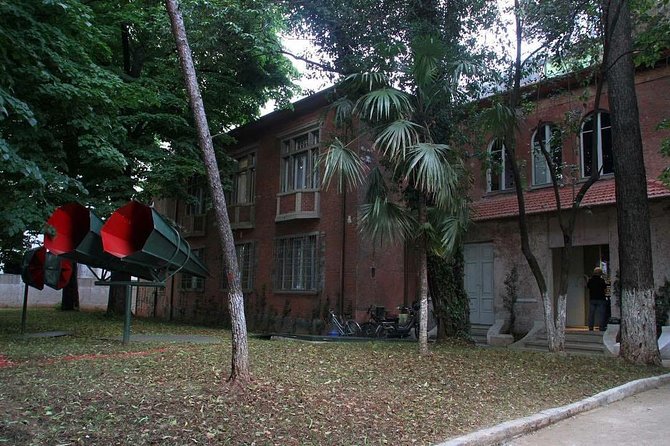
Reviewed · COMMUNIST HISTORY TOURS
The truest face of Communism
Tirana’s past is hiding in plain sight. This tour makes the city’s communist era easier to understand through Bunk’Art 1 and the Postbllok memorial, while also showing you the mosques, hotels, cafés, and boulevards of modern Tirana. I like the personal approach, especially when guides such as Leo, Dio, Aldo, Eni, Mimi, and DC connect big political events to family stories.
I also like that hotel pickup, coffee or tea, and a taste of rakia are included. The main caution is important: the description promises an air-conditioned vehicle, but one guest found the experience was entirely on foot and covered nearly five miles. Confirm the transport plan before booking, especially in hot weather.
- Bunk’Art 1 puts communist Albania underground, inside a vast former nuclear shelter with corridors, rooms, and exhibits.
- The private format gives your group room to ask questions, and several guides are praised for clear English and warm personal attention.
- Blloku reveals the sharp contrast between the privileged communist leadership and ordinary Albanian life.
- Postbllok uses real physical fragments from a labor camp, a bunker, and the Berlin Wall to explain isolation and repression.
- Rakia, coffee, byrek, and traditional food add a human touch to a serious subject.
- The walking distance may be greater than expected, so ask whether your booking includes vehicle transport.
In This Review
- Why Tirana’s communist past is worth a half-day
- Starting with Skanderbeg Square’s layered center
- The Pyramid and the public image of Enver Hoxha
- Postbllok and the physical marks of repression
- Blloku, from secret privilege to café culture
- Inside Bunk’Art 1’s 3,000 square meters
- The guides make the difference
- Walking, transport, and the real time commitment
- Is $90.11 a fair price?
- Who should book this Tirana experience?
- Should you book it?
- FAQ
- How long does the tour last?
- What time does the tour start?
- Where does the tour begin?
- Is hotel pickup available?
- Does the tour return to the starting point?
- Is this a private tour?
- What language is the tour offered in?
- Are entrance fees included?
- Is lunch included?
- What happens if bad weather cancels the tour?
Why Tirana’s communist past is worth a half-day
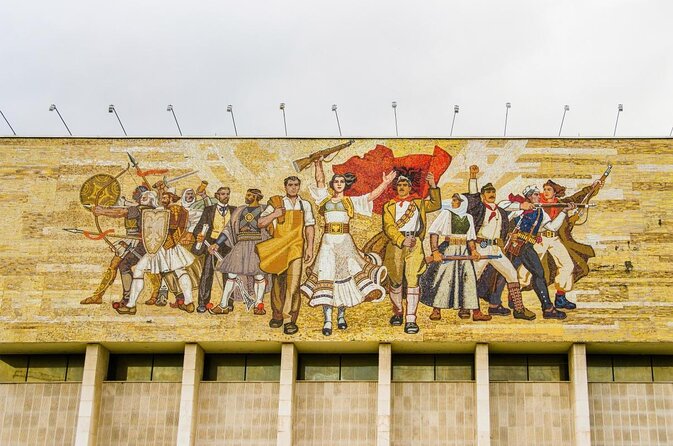
Tirana can look young, colorful, and café-centered at first glance. Yet its streets are filled with reminders of a far more closed and fearful period. Enver Hoxha ruled Albania’s Communist Party from 1944 until his death in 1985, and the country became one of Europe’s most isolated states.
This experience is designed to connect those reminders. You begin among the civic buildings of Skanderbeg Square, pass the former power center of Blloku, pause at memorials to political repression, and finish inside Bunk’Art 1. The route gives you both the official face of the regime and the spaces built to protect its leaders.
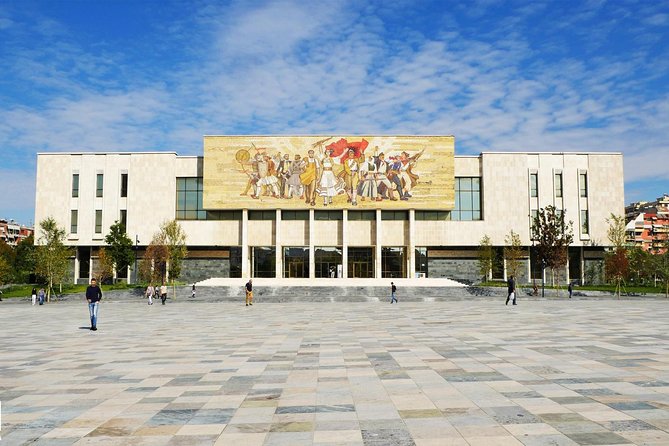
I find that useful because a museum alone can leave you with dates and labels, while a city walk alone can leave you with attractive buildings but little context. Here, the two work together. Your guide can explain why a pyramid was built for a dictator, why a bunker sits in an ordinary city, and why a fashionable neighborhood once disappeared from public maps.
The tour lasts about four to five hours and costs $90.11 per person. That is not the cheapest way to see Tirana, but the value improves if you want a private experience, hotel pickup, entry fees, refreshments, and a guide who can explain the country’s recent past in clear English.
Starting with Skanderbeg Square’s layered center
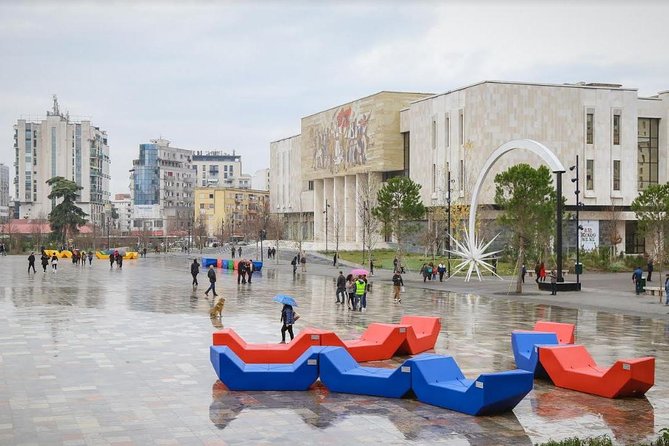
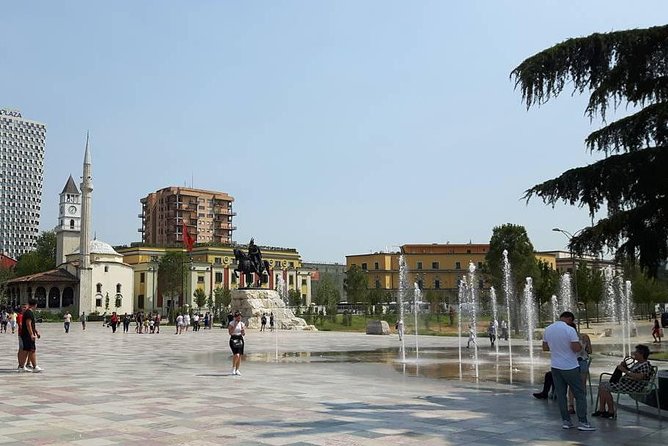
The tour begins at 9:00 a.m. at Skanderbeg Square, with pickup also available from your hotel, hostel, or another agreed location in Tirana. Starting here makes sense. This is the capital’s main public space and a good place to see how Ottoman, Italian, communist, and modern Albanian influences sit close together.
The first half-hour includes the Et’hem Bey Mosque, the Clock Tower, the National Theater of Opera and Ballet, the National Bank of Albania, and the Tirana International Hotel. The square itself is free to visit, so you are paying for the guide’s explanation rather than admission.
One unusual detail here is the Opera and Ballet building. Its first brick was placed by Nikita Khrushchev, the former leader of the Soviet Union. That small fact helps show Albania’s political links during the early communist period, before Hoxha’s government turned toward a more fiercely independent and isolated path.
The square also gives you a useful visual introduction to Tirana. Religious buildings, state offices, hotels, and monuments share the same central space. You may find this stop less dramatic than Bunk’Art, but it helps you read the city before the tour turns toward dictatorship and repression.
More Communist History Tours in Tirana
- Tirana’s Communist Past; Small Group Walking Tour
★ 4.9 · 59 reviews - A Communist Manifesto: Tirana before and after
★ 5.0 · 50 reviews - From Albania: Permet /Thermal Baths with Bunker Food Tasting
★ 5.0 · 19 reviews
The Pyramid and the public image of Enver Hoxha
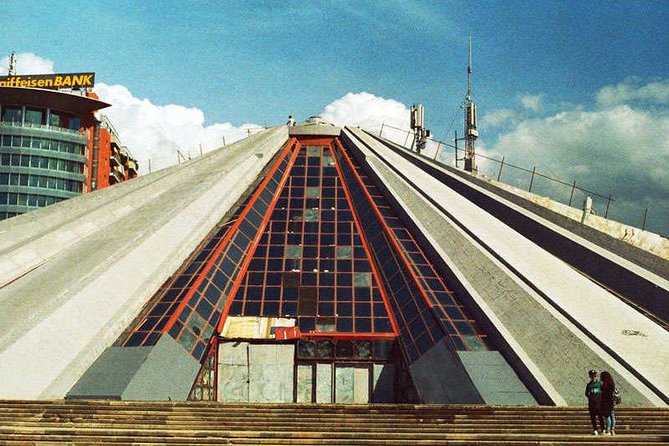
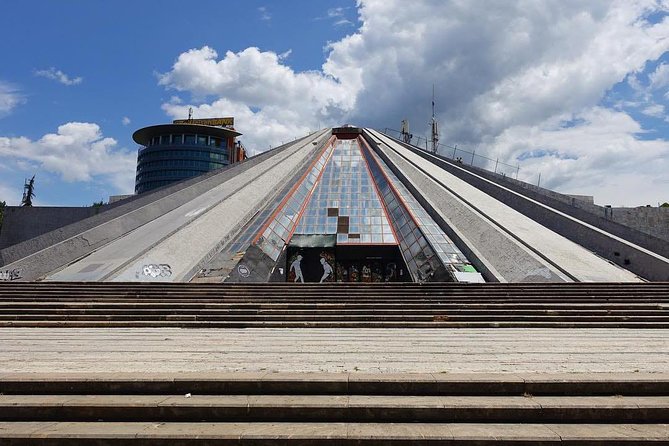
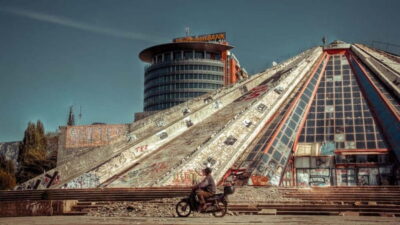
A short visit to the Enver Hoxha Pyramid brings the regime’s self-image into view. The building was created as a museum dedicated to Hoxha, Albania’s long-serving communist leader, and opened in 1988, three years after his death. His daughter helped design it.
The structure has had several lives since communism ended. It has served as a cultural center and a national television office, and it survived plans to demolish it. Today, the building works more as a symbol and photo stop than as a full museum visit on this tour.
You will spend about 15 minutes here, with no admission fee. That is enough time for your guide to explain the pyramid’s purpose and its connection to the former regime, but it is not enough for an extended architectural visit. If you want to explore the building’s current interior in detail, you will need to check what access is available separately.
I like this stop because the Pyramid is not presented as a simple curiosity. It was intended to honor a dictator, yet it now prompts questions about memory, public space, and what a country does with the buildings left by an old government.
Postbllok and the physical marks of repression
Postbllok, also called the Checkpoint Monument, is one of the most effective short stops. It was created by former regime dissident Fatos Lubonja and artist Ardian Isufi as a memorial to communist isolation and suffering.
The monument combines three objects:
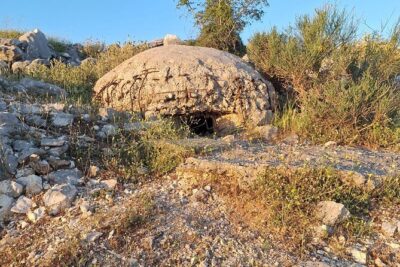
- A concrete defensive bunker
- Concrete supports from the Spaç labor camp
- A painted section of the Berlin Wall from Potsdamer Platz
The bunker recalls the thousands built across Albania. The regime constructed them in case of nuclear war or foreign attack, with the stated idea that each family should have one. Their presence also shows how fear shaped daily life and public space.
The concrete pieces from Spaç are especially powerful. Thousands of political prisoners suffered at that labor camp between 1968 and 1990. You are not just hearing about forced labor in the abstract. You are looking at material taken from a place tied to imprisonment and hardship.
The Berlin Wall section widens the story beyond Albania. It connects Albanian isolation with the broader division of Europe during the Cold War. The stop lasts only about ten minutes, but a good guide can make those minutes count. Ask questions here if you want a clearer picture of how Albania differed from other communist countries.
Blloku, from secret privilege to café culture
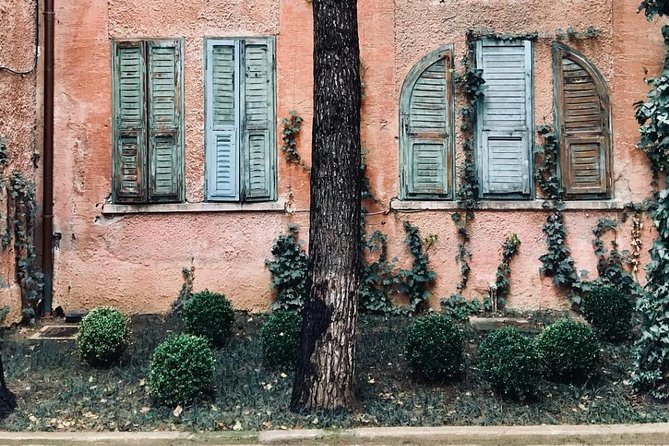
Blloku offers the tour’s sharpest change of mood. During the communist period, this neighborhood was reserved for the political leadership and their families. It was so restricted that even maps left it out.
Today, Blloku is one of Tirana’s social centers, filled with boutiques, coffee shops, cocktail bars, pubs, and street art. The contrast is almost too neat: a former district of privilege now known for nightlife and casual dining.
You pass the former villa of Enver Hoxha. It is visible from outside but not open for entry on this experience. The villa is important because it shows the gap between the government’s claims of equality and the protected, comfortable life enjoyed by its senior officials.
This is also where the tour includes traditional food and rakia at a nearby restaurant. Coffee and tea are included as well. One particularly positive account describes trying rakia and byrek with Mimi and DC, along with enjoying their help with extra requests. Another account praised the lunch as excellent, although lunch itself is not included in the listed price.
That distinction matters. You should expect a tasting or food stop, but you should budget separately for lunch if you want a full meal. Rakia is a strong traditional spirit, so take the warning seriously and keep your portion modest if you still have walking and museum time ahead.
Somewhere else in Albania, a completely different day:
- From Tirana: Bovilla Lake & Gamti Mountain Hiking Day Trip
★ 4.9 · 4,397 reviews - From Tirana: Bovilla Lake & Gamti Mountain Hiking Tour
★ 4.9 · 3,003 reviews - From Tirana: Bovilla Lake & Gamti Mountain Viewpoint Hike
★ 4.8 · 2,053 reviews - Tirana/Durres/Golem: Saranda, Ksamil, Blue Eye Day Trip
★ 4.8 · 1,584 reviews
Inside Bunk’Art 1’s 3,000 square meters
Bunk’Art 1 is the main event for many people. The museum occupies nearly 3,000 square meters of underground rooms, corridors, and container-like spaces spread over several levels. The bunker was built in the 1970s and remained secret for much of its existence.
It was designed to survive a nuclear attack. Its double-concrete walls and underground layout were intended to shelter more than 100 people, including members of the political elite. The attack never came, but the bunker now provides a concrete way to understand the government’s fear of invasion and nuclear war.
You spend about an hour here. That is long enough to see a meaningful portion of the museum, though the corridors and many rooms may tempt you to linger. The building’s layout is part of the experience. You move through a sealed, artificial world made for emergency rule, official protection, and isolation from the outside.
The exhibits contain fragments of Albania’s communist past. I would value the guide here, since a label can tell you what a room was used for, while a good explanation can show why that room mattered. Aldo, Leo, Dio, and Eni are each praised for explaining Albania’s past clearly, and several accounts specifically credit personal stories with making the material easier to grasp.
Bunk’Art is not light entertainment. Some parts may leave you quiet, particularly if you are sensitive to stories of surveillance, prison camps, and political punishment. Still, the museum gives the tour its strongest sense of place. You are not simply looking at a photograph of a bunker. You are walking through one.
The guides make the difference
The experience is offered in English, and the guide is central to its value. Several guides receive strong praise for both language skills and personal attention.
Leo is described as polite, personal, and careful with the group. Another account credits him with giving helpful explanations inside the bunker rather than leaving visitors to read the labels alone. Dio is praised for his English and broad command of Albanian history. Aldo is especially appreciated for stories about how his own family experienced communism.
Eni is singled out for making each location engaging, including a personal family story. Mimi and DC are praised for being helpful throughout the day and for adding warmth to the food and rakia stop.
The private format should make it easier to ask questions and adjust the pace for your group. Still, one account describes a small-group setting where not everyone had the same level of interest. Even a private booking can involve different attention spans if your own party includes people with mixed interests.
If you want a serious history lesson, tell your guide at the start. If you prefer a lighter city introduction with only a little political detail, say that too. The strongest part of this format is the chance to shape the conversation.
Walking, transport, and the real time commitment
The advertised duration is four to five hours, with an air-conditioned vehicle listed among the inclusions. Hotel pickup is available in Tirana, and the activity returns to the meeting point at the end.
There is one practical wrinkle. A participant reported that the experience was a fully walking tour of almost five miles, despite the vehicle description. The scheduled stops can be reached by walking in central Tirana, but Bunk’Art 1 is a major factor when judging the route and effort.
I would confirm three details before paying:
- Is a vehicle used between stops?
- How much walking is expected?
- Does hotel pickup mean pickup only, or transportation throughout the tour?
Wear comfortable shoes and carry water, even if a vehicle is confirmed. The itinerary includes outdoor stops, city streets, and a large underground museum. Good weather is required, and the operator offers another date or a full refund if poor weather causes cancellation.
The tour is described as suitable for most people, with service animals allowed and public transportation nearby. No special fitness level is stated, so asking about walking distance is the safest choice for anyone with mobility concerns.
Is $90.11 a fair price?
At $90.11 per person, this is best viewed as a guided history experience rather than a basic sightseeing transfer. You receive hotel pickup, an air-conditioned vehicle according to the listed inclusions, coffee or tea, rakia, entry fees for the included sites, and a private tour for your group.
The price makes more sense if you have only a short stay in Tirana. One person with just 48 hours in the city found the experience a useful way to understand Tirana and Albania quickly. You see the central square, modern Blloku, communist memorials, and Bunk’Art without having to arrange each piece separately.
It is less compelling if you only want a quick orientation or prefer to explore museums at your own pace. The Pyramid and Postbllok are free, and Skanderbeg Square costs nothing to enter. Much of what you pay for is the guide’s time, transportation arrangements, historical explanation, and the ease of fitting major sites into one morning.
The strongest value comes when your guide is like Leo, Dio, Aldo, Eni, Mimi, or DC: clear, attentive, and willing to connect public history with family experience. Since guide quality can shape the day, use the private format to ask questions and request the pace you want.
Who should book this Tirana experience?
I would choose this tour if you want Albania’s communist period explained by a local guide rather than encountered through signs alone. It suits first-time visitors, people with only a day or two in Tirana, and anyone interested in Cold War Europe, political memory, or twentieth-century Balkan history.
It also works well for couples, families, or friends who want a private outing. The food and rakia stop keeps the day from becoming a string of solemn memorials, while Blloku gives you a feel for how the city has changed.
I would hesitate if you dislike museums about repression, cannot manage a long walk, or want a fully fixed vehicle-based itinerary. I would also ask about lunch, since lunch is not included even though a food stop is part of the day.
Free cancellation is available if you cancel at least 24 hours before the start time. Changes made within 24 hours are not accepted, and late cancellations are not refunded.
Should you book it?
Book this experience if you want context, personal stories, and efficient sightseeing in one half-day. Bunk’Art 1 is the strongest reason to go, while Blloku and Postbllok give the museum’s story a clear connection to the city outside.
Before booking, confirm the transport arrangement and expected walking distance. If those details suit you, the $90.11 price is reasonable for a private English-language tour with hotel pickup, admissions, refreshments, and a guide who can make Albania’s difficult past understandable without reducing it to a list of dates.
FAQ
How long does the tour last?
The experience lasts approximately four to five hours.
What time does the tour start?
The scheduled start time is 9:00 a.m.
Where does the tour begin?
The stated meeting point is Skanderbeg Square in Tirana.
Is hotel pickup available?
Yes. Pickup is available from your hotel, hostel, or another agreed departure point in Tirana.
Does the tour return to the starting point?
Yes. The activity ends back at the meeting point.
Is this a private tour?
Yes. Only your group participates in the private activity.
What language is the tour offered in?
The tour is offered in English.
Are entrance fees included?
Yes. All fees and taxes are included, along with admission to the included paid attractions.
Is lunch included?
No. Lunch is not included, although the tour includes traditional food and a stop with rakia in the Blloku area.
What happens if bad weather cancels the tour?
If poor weather causes cancellation, you will be offered another date or a full refund.
Newly listed around Tirana
- Zipline Tirana Adventure & Petrela Castle – With Transport★ 4.4 · 10 reviews
- Wonderful Sunset and Dinner in the Castel Of Petrela★ 4.6 · 4 reviews
- Wine Tasting & Vineyards Escape near Tirana★ 4.9 · 8 reviews
- Walking Tour in Tirana, Albania★ 3.7 · 28 reviews
- Vlora, Dhermi & Llogara Day Trip from Durrës or Golem★ 5.0 · 5 reviews
- Day Tour to Petrela Castle and Zip Line Albania Adventure★ 5.0 · 10 reviews
- From Tirana: Mount Dajti Adventure, Local Vibes & Cable Car opt★ 4.5 · 6 reviews
- Winetasting tour in Alpeta winery – Roshnik village by 1001 Albanian Adventures★ 5.0 · 26 reviews
Communist History Tours, compared.
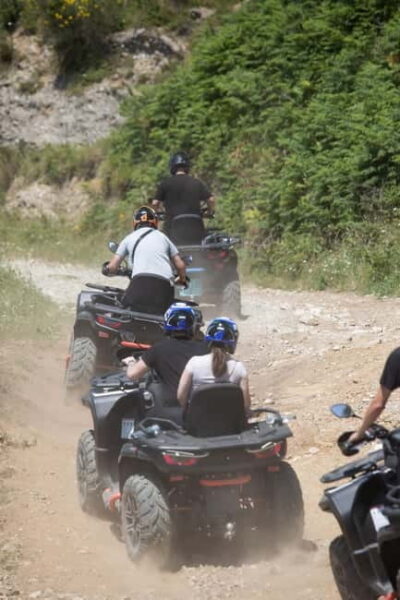
ATV Guided Tour in Kallm with Secret Bunker Visit
Read our review →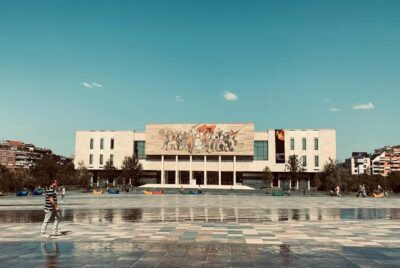
Tirana’s Communist Past; Small Group Walking Tour
Read our review →
From Albania: Permet /Thermal Baths with Bunker Food Tasting
Read our review →
Full-Day Tour of Albania’s Bunkers and Beaches, from Tirana
Read our review →
Browse the lists this tour appears in