
Reviewed · COMMUNIST HISTORY TOURS
Tirana’s Communist Past; Small Group Walking Tour
History feels close to the pavement here. This two-hour walk links Tirana’s communist memorials, former power centers, religious landmarks, and lively modern streets in a way that helps you understand the city quickly. I especially like the small group of no more than eight people, which makes it easier to ask questions, and the route’s mix of serious history with everyday Tirana life. The guides, including Markel, Brikena, Angjelo, and Elvis, have been praised for making difficult subjects clear without turning the outing into a lecture.
I also like the price: $13 per person is a strong deal for a guided introduction to central Tirana. The main drawback is the brisk two-hour schedule. You pass Bunk’Art 2 and the House of Leaves rather than touring inside, and some stops are brief, so you may want to return later for a closer look.
In This Review
- Key points before you book
- Why this short walk works for a first visit
- Meeting at the Twin Towers
- Postblloku: Albania’s dictatorship in concrete
- Blloku, from forbidden quarter to café district
- The House of Leaves and the machinery of surveillance
- Skanderbeg Square and the fall of Enver Hoxha
- Bunk’Art 2 from the outside
- Tirana Castle and the city’s older layers
- Religion after the world’s first atheist state
- The pace, group size, and guiding style
- Is $13 good value?
- Who should book this walk?
- Should you book Tirana’s Communist Past?
- FAQ
- How long is Tirana’s Communist Past walking tour?
- How much does the tour cost?
- Where does the tour begin?
- What language is the tour offered in?
- How large is the group?
- Does the tour include entry to Bunk’Art 2 or the House of Leaves?
- Can I cancel the booking?
Key points before you book
- Postblloku uses real objects from the dictatorship, including a concrete bunker, Berlin Wall section, and steel supports from a forced labor camp.
- Blloku tells two stories at once: it was once closed to ordinary Albanians, and today it is one of Tirana’s most social, modern districts.
- Skanderbeg Square marks the regime’s public collapse, including the 1991 overthrow of Enver Hoxha’s statue.
- Religious sites add essential context, since Albania banned religious practice after declaring itself the world’s first atheist state in 1967.
- The pace is leisurely enough for photographs, but the route covers many landmarks in only two hours.
- The meeting point is easy to identify, at the Amo Sushi restaurant beneath Tower 2 of the Twin Towers, opposite the Pyramid of Tirana.
Why this short walk works for a first visit
Tirana can seem like a city of disconnected sights at first. One minute you are beside a Cold War bunker, then you are passing cafés and street art, then you are in a square shaped by communist parades. This tour ties those pieces together.
The subject is serious, but the route is not presented as a long classroom talk. The strongest guide comments in the supplied feedback describe a friendly, clear style, with personal stories and explanations of current life in Albania. Markel received repeated praise for making the past easy to follow, while Brikena was noted for adding personal perspective. Angjelo was praised for balancing historical detail with what is happening in Tirana today.
That matters because Albania’s communist period is not distant in the way ancient Roman history is. The regime ended in 1991, and the city still carries its physical remains. A good guide helps you see why a bunker is more than a block of concrete, and why a fashionable neighborhood can also be a former center of privilege.
The walk is especially useful during your first day in Tirana. It gives you a mental map of the central area and points you toward places you may want to visit later. Several people found it a good way to get oriented, and that is exactly how I would use it.
More Communist History Tours in Tirana
- A Communist Manifesto: Tirana before and after
★ 5.0 · 50 reviews - From Albania: Permet /Thermal Baths with Bunker Food Tasting
★ 5.0 · 19 reviews - The truest face of Communism
★ 5.0 · 18 reviews
Meeting at the Twin Towers
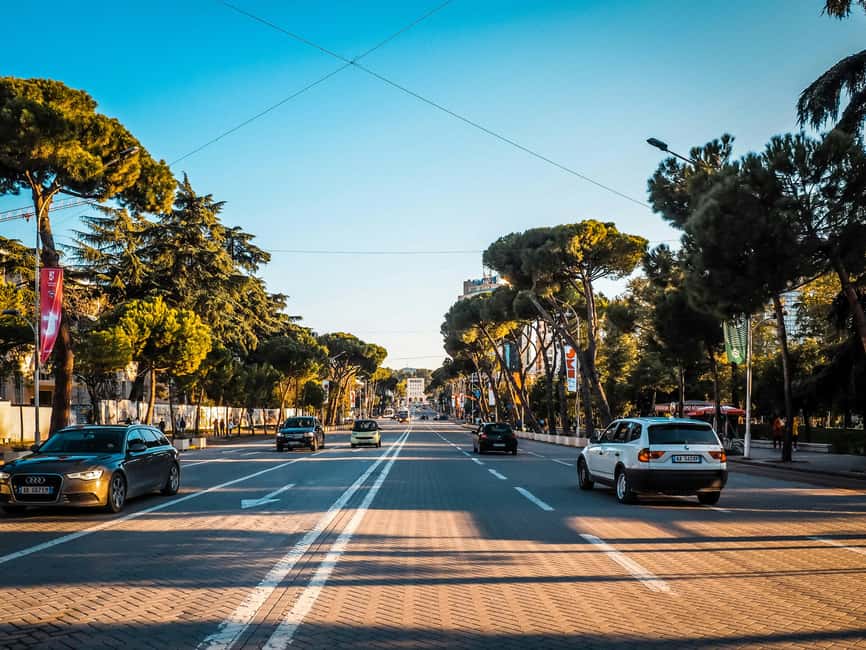
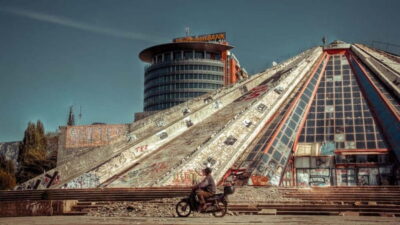
The starting point is at Bulevardi Dëshmorët e Kombit, outside the Amo Sushi restaurant on the ground floor of Tower 2 of the Twin Towers. The towers are directly opposite the Pyramid of Tirana, so the Pyramid is your best visual marker.
Arrive with a little time to spare. The meeting instructions specify the restaurant outside, rather than a general point somewhere around the towers. That small detail can save you from wandering around a large building complex looking for the guide.
The tour is offered in English, with a live local guide. Since the group is limited to eight participants, the setting should feel more like a guided conversation than a large city procession. You can ask about family memories, political change, religion, or practical places to eat afterward.
Bring sunglasses, a sun hat, and sunscreen. This is an outdoor walk with several exposed sections, and the tour runs for about two hours.
Postblloku: Albania’s dictatorship in concrete
The first major stop is Postblloku, also called the Checkpoint Memorial. It sits along Tirana’s main boulevard and gives the tour a sober beginning.
The memorial combines several original or directly connected pieces of communist-era history:
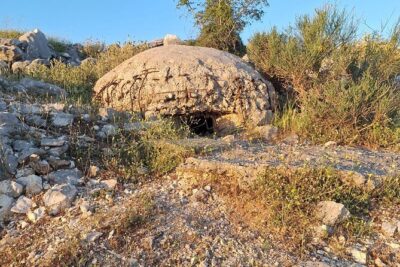
- A concrete bunker
- A section of the Berlin Wall
- Steel supports from a forced labor camp
These objects work together because Albania’s dictatorship was defined by isolation, control, and fear. Enver Hoxha’s government kept the country cut off for decades, and the bunker reflects the regime’s constant concern with outside attack and internal enemies. The forced labor camp material points to the human cost behind the political slogans.
You spend around ten minutes here with the guide. That is enough to understand the memorial’s purpose and ask basic questions, but not enough for a long, detailed museum visit. I would listen closely at this stop, since the guide’s explanation supplies much of the meaning. Without that context, the installation can look like a collection of unrelated objects.
Postblloku is one of the tour’s most effective moments because it puts the past in a modern public setting. Cars, offices, and daily city life continue around it. Albania’s old political system is gone, but the memorial refuses to let the subject disappear.
Blloku, from forbidden quarter to café district
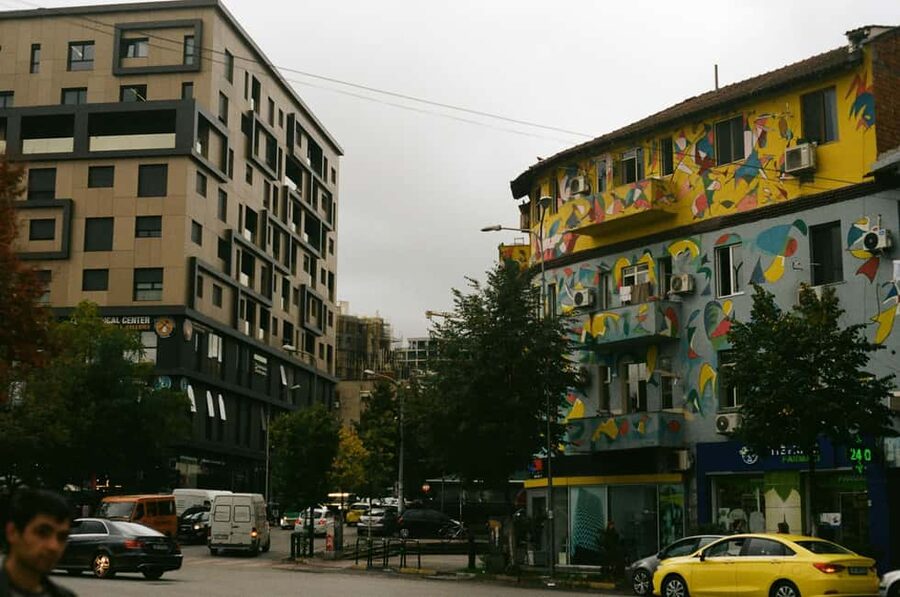
The route then enters Blloku, a neighborhood with a remarkable change in character. During communist rule, it was reserved for senior party officials and their families. Ordinary Albanians could not freely enter the area, and the former home of Enver Hoxha is here.
The guide explains the contrast between the district’s secretive past and its present-day identity. Today, Blloku is associated with cafés, street art, restaurants, and youthful city energy. The change is not just cosmetic. It shows how Tirana has reclaimed spaces once tied to political privilege.
You spend about twenty minutes walking and stopping for photographs. The former residence of Hoxha is viewed from outside, so do not expect an interior tour. Still, the location is valuable because it helps you picture the sharp divide between the ruling elite and the rest of the population.
I like this part of the walk because it avoids treating history as a row of gloomy monuments. You get to see how a neighborhood can carry a difficult past while functioning as an ordinary social center. Your guide can also connect the old political story with modern Tirana, which several participants valued.
More Walking Tours in Tirana
- Walking Tour of Tirana
★ 5.0 · 646 reviews - Tirana: Express Walking Tour with a Guide
★ 4.8 · 503 reviews - Tirana Center: Magic Walking Tour French/Italian/English Etc
★ 4.9 · 402 reviews - Walking tour of Tirana
★ 4.8 · 285 reviews
The House of Leaves and the machinery of surveillance
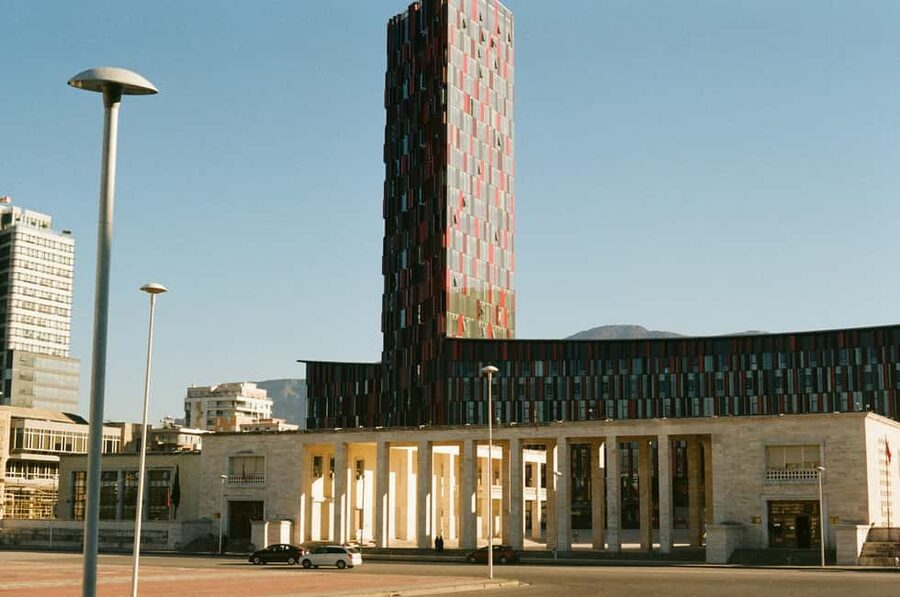
On the way toward the center, the route passes the House of Leaves, once the headquarters of Albania’s communist secret police, known as the Sigurimi.
The building is now associated with surveillance, interrogation, and the state’s monitoring of its own people. The tour passes by rather than taking you through the museum, so this is another place to mark for a return visit if you want a fuller experience.
That is one of the route’s practical limits. You see many important sites, but the tour cannot provide a museum visit at every stop while still keeping to two hours. I would treat the guide’s comments here as an introduction, then decide if the House of Leaves deserves a separate visit based on your interest in political repression and daily life under the regime.
Skanderbeg Square and the fall of Enver Hoxha
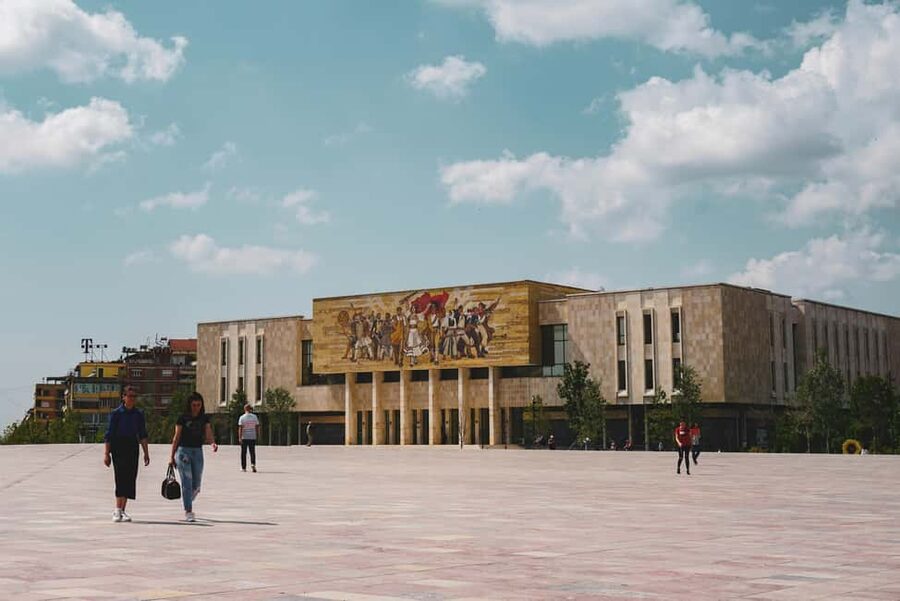
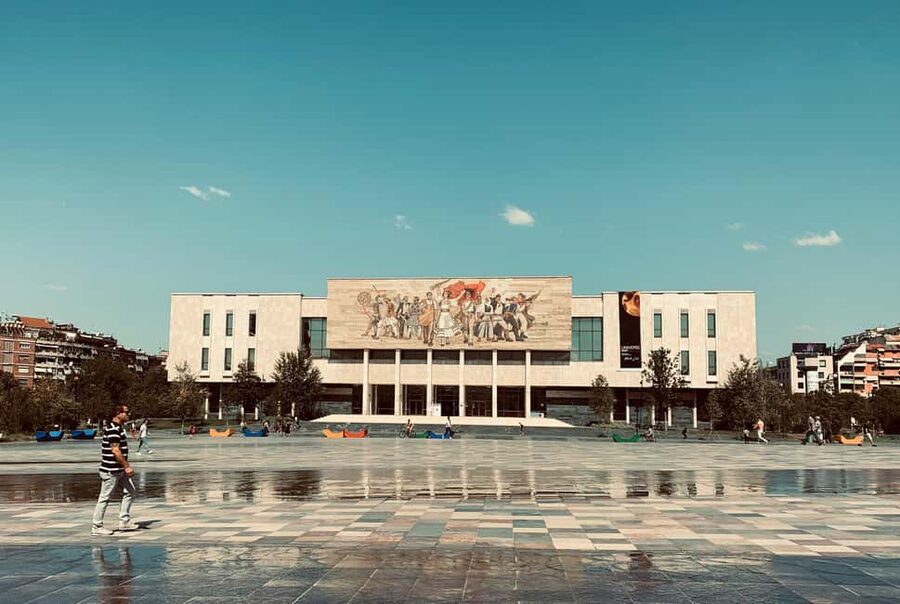
Skanderbeg Square is the emotional center of the walk. It is Tirana’s main public space, but its meaning changed sharply over time.
During the communist era, the square hosted military parades and political rallies. It was designed for public displays of loyalty and power. The statue of Enver Hoxha once occupied a prominent place here, until it was pulled down during the protests and political upheaval of 1991.
You spend about twenty minutes at the square, with time for sightseeing and photographs. The guide uses the open space to explain how communism ended in Albania and how public symbols can change meaning. A square that once projected the authority of one ruler became a place connected with the collapse of that authority.
This stop works best if you pay attention to scale. The broad space was made for crowds and ceremony, not quiet reflection. Your guide’s explanation helps you understand how architecture and public events supported the regime.
It is also a useful pause in the route. After the darker material at Postblloku and the House of Leaves, the square gives you a clear political turning point before the walk moves into other parts of central Tirana.
Bunk’Art 2 from the outside
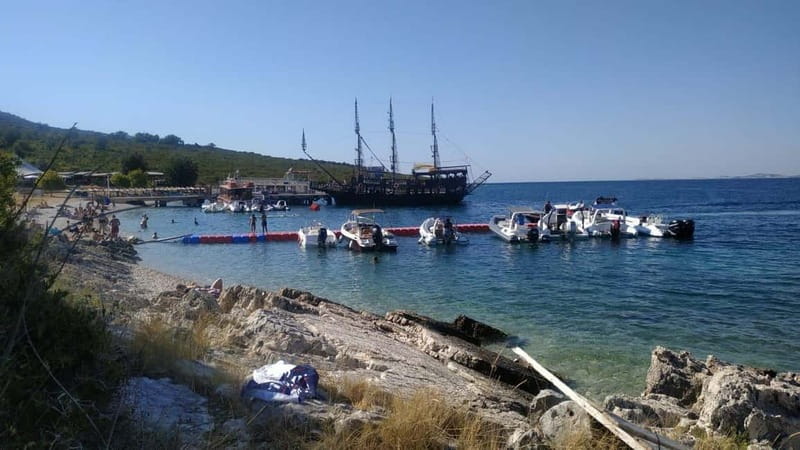
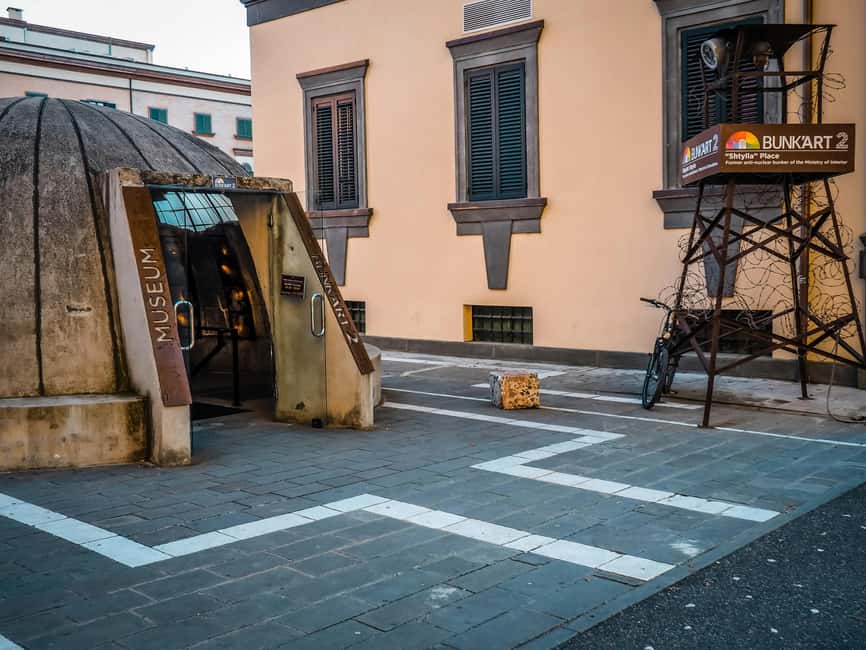
The group passes Bunk’Art 2, a museum built inside a former nuclear bunker. It was designed to shelter Albania’s communist leadership and close party officials during the Cold War.
The museum is one of Tirana’s best-known places for learning about the dictatorship, but this tour does not include an interior visit. You get a short exterior stop of about ten minutes and an explanation of why the bunker was built.
That distinction is important when you compare the tour with a full communist-history day. The $13 price covers a guided walk, not museum admission or an extended visit inside Bunk’Art 2. If bunker architecture, political prisons, and Cold War planning are your main interests, plan extra time to return.
For a first orientation, though, the stop makes sense. The bunker adds another layer to the story already introduced at Postblloku: Albania’s leaders feared invasion, distrusted foreign powers, and built heavily for a war that never came.
Tirana Castle and the city’s older layers
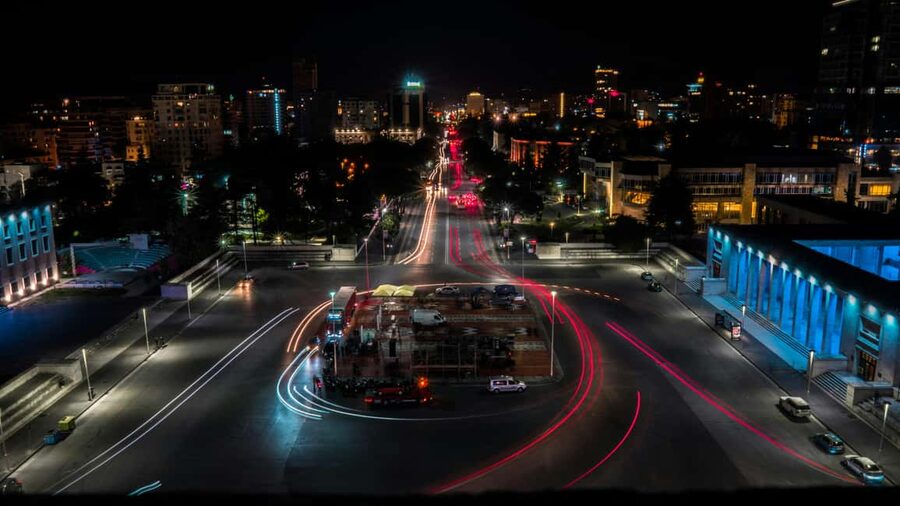
The route then reaches Tirana Castle, a centuries-old structure that survived the communist years and has recently been revitalized.
This stop broadens the tour beyond the dictatorship. Albania’s story did not begin with Hoxha, and Tirana is not only a Cold War city. The castle now combines older architectural traces with modern shops and public spaces, giving you a quick look at how the city reuses its past.
You spend about twenty minutes here, including a guided visit and a photo stop. It is a welcome change of mood after the political memorials and government symbolism. You can see how historic places are adapted for present-day city life rather than preserved as frozen displays.
The castle stop also helps explain why this tour is more useful than a narrow checklist of communist sites. You receive a basic timeline of Tirana, from older urban history through dictatorship and into current redevelopment.
Religion after the world’s first atheist state
The final major section focuses on one of Albania’s most radical communist policies. In 1967, the country was declared the world’s first atheist state. Religious practice was banned, and mosques, churches, and other religious buildings were shut or put to new uses.
The walk passes or stops near three important religious sites:
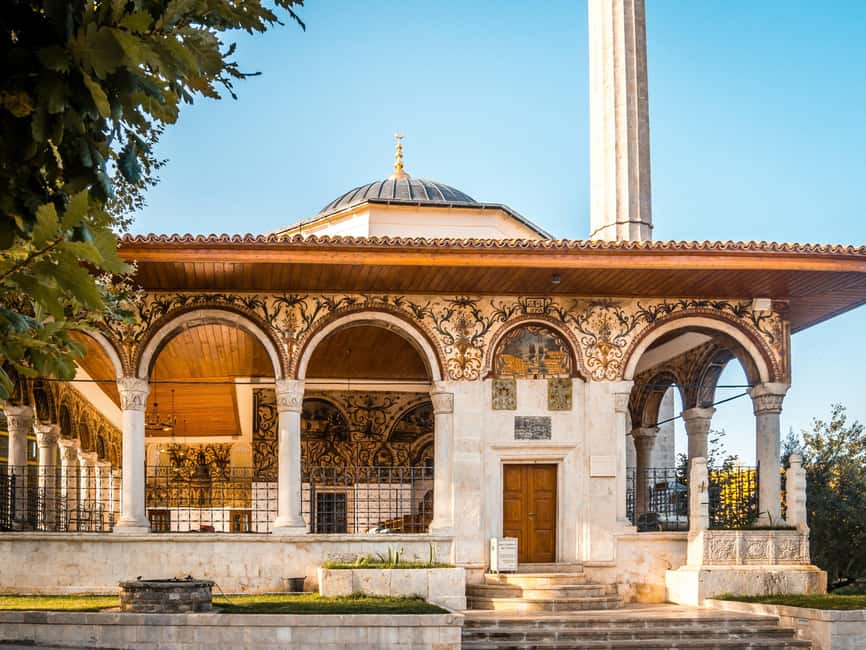
- Namazgah Mosque
- The Orthodox Resurrection Cathedral
- St. Paul’s Catholic Cathedral
At Namazgah Mosque, you have a break, a photo opportunity, and more guided commentary. The route uses these buildings to explain what was lost when religious identity was suppressed, and how religious life returned after communism ended.
This subject adds a personal dimension to the tour. Political history can feel like a story about leaders and buildings, but religion touches families, customs, names, holidays, and private belief. Seeing several faith traditions in the same central area also gives you a useful picture of Albania after the dictatorship.
The tour ends back at the Twin Towers area after this section. Because the walk passes several religious landmarks rather than offering full interior visits, you can return later if you want more time inside any one building.
The pace, group size, and guiding style
The tour lasts two hours and moves at a leisurely pace, according to the supplied experience details. The route includes walking, photo stops, short explanations, and several pass-by locations. You will see a lot, but you should not expect long periods at each site.
The small group limit of eight is one of the strongest features. A guide can respond to questions more easily, and you are less likely to lose the thread of the story in a crowd. It also suits the subject. Communist history benefits from conversation, especially when you want to ask how a policy affected ordinary life.
The guiding team has received especially strong praise for clear explanations, friendly manners, and personal stories. Markel is repeatedly noted for making the subject engaging and easy to follow. Brikena is praised for adding personal knowledge, while Angjelo is credited with linking the past to present-day Tirana. The exact guide depends on the departure, so those names are useful examples rather than a promise.
The tour carries a 4.9 out of 5 score from 59 verified bookings. That points to a consistently strong experience, especially for guide quality and historical explanation. Still, the short format means you should see it as an introduction, not a complete study of Albania under communism.
Is $13 good value?
Yes. At $13 per person, you receive two hours with an English-speaking local guide, a small group setting, a route through several central landmarks, and suggestions for restaurants, cafés, and other things to do afterward.
You are not paying for museum admission, private transportation, or a full-day excursion. That keeps the price low and the route efficient. If you want to enter Bunk’Art 2 or the House of Leaves, you will need to arrange that separately.
The value is strongest for first-time visitors who want context before exploring alone. A self-guided walk can show you the same streets, but it may not explain why Blloku was forbidden, why the square mattered in 1991, or why religious buildings carry such weight in modern Albania.
Who should book this walk?
I would recommend it to first-time visitors, history-minded visitors, and anyone with only a short stay in Tirana. It is also a good choice if you prefer a small group and want the freedom to ask questions.
The tour suits people who want a broad picture rather than a single museum. You move from memorials to neighborhoods, public squares, a bunker, a castle, and religious landmarks. That range makes the city easier to read afterward.
You may want something else if you dislike walking in the sun, need long visits at each site, or already know Tirana’s communist history well. Museum-focused visitors should add separate time for Bunk’Art 2 and the House of Leaves.
Book with free cancellation up to 24 hours before the start, and you can reserve now while paying later. Check the available start time when booking, since departures vary.
Should you book Tirana’s Communist Past?
Book it if you want a well-priced first look at Tirana’s modern history, especially with a guide who can explain the human side of dictatorship and political change. The route is compact, the group is small, and the mix of serious sites with present-day neighborhoods keeps the walk from feeling heavy.
Do not book it expecting a museum tour or an exhaustive account of communism. You will pass several sites rather than enter them. For most first-time visitors, that is a fair trade: two useful hours, a clear introduction, and a better sense of where to spend the rest of your time in Tirana.
FAQ
How long is Tirana’s Communist Past walking tour?
The tour lasts two hours.
How much does the tour cost?
The price is $13 per person.
Where does the tour begin?
The meeting point is outside the Amo Sushi restaurant on the ground floor of Tower 2 of the Twin Towers on Bulevardi Dëshmorët e Kombit, directly opposite the Pyramid of Tirana.
What language is the tour offered in?
The live guided tour is offered in English.
How large is the group?
The tour is limited to eight participants.
Does the tour include entry to Bunk’Art 2 or the House of Leaves?
No. The route passes Bunk’Art 2 and the House of Leaves, but the tour information does not include interior visits to either site.
Can I cancel the booking?
Yes. You can cancel up to 24 hours in advance for a full refund. You can also reserve now and pay later.
Newly listed around Tirana
- Wonderful Sunset and Dinner in the Castel Of Petrela★ 4.6 · 4 reviews
- Zipline Tirana Adventure & Petrela Castle – With Transport★ 4.4 · 10 reviews
- Wine Tasting & Vineyards Escape near Tirana★ 4.9 · 8 reviews
- Walking Tour in Tirana, Albania★ 3.7 · 28 reviews
- Vlora, Dhermi & Llogara Day Trip from Durrës or Golem★ 5.0 · 5 reviews
- Day Tour to Petrela Castle and Zip Line Albania Adventure★ 5.0 · 10 reviews
- From Tirana: Mount Dajti Adventure, Local Vibes & Cable Car opt★ 4.5 · 6 reviews
- Winetasting tour in Alpeta winery – Roshnik village by 1001 Albanian Adventures★ 5.0 · 26 reviews
Communist History Tours, compared.
ATV Guided Tour in Kallm with Secret Bunker Visit
Read our review →
From Albania: Permet /Thermal Baths with Bunker Food Tasting
Read our review →
Full-Day Tour of Albania’s Bunkers and Beaches, from Tirana
Read our review →
Browse the lists this tour appears in