
Reviewed · WALKING TOURS
Gjirokaster walking Tour The Old Baazar, Cfake, Dunavat, Ali Pasha Bridge
The best walks leave the postcard streets behind. This three-hour Gjirokaster tour takes you from Çerçiz Topulli Square through the Old Bazaar, Cfaka, and Dunavat, then out to Ali Pasha Bridge, with a local guide explaining the town’s homes, bridges, religious sites, and daily life. I like the route because it shows Gjirokaster beyond its famous castle, and I like the small group size, capped at 15 people.
The main thing to consider is the walking itself. Gjirokaster is built on steep hills, with uneven cobblestones and old stone paths, so you should wear sturdy shoes and expect a more active outing than a level city stroll. The price is $18.08 per person, but the tour requires at least two people to operate.
In This Review
- Key points to know before booking
- Why this route matters in Gjirokaster
- Starting at Çerçiz Topulli Square
- The Old Bazaar beneath the castle walls
- Crossing the Zerzebili Bridge toward Cfaka
- Cfaka, old homes, and the Bektashi tekke
- Dunavat and the changing view of Gjirokaster
- Ending at Ali Pasha Bridge
- What the $18.08 price gets you
- Who should book this walk
- Practical details for a smoother walk
- Should you book the Gjirokaster Old Bazaar walk?
- FAQ
- Where does the Gjirokaster walking tour begin?
- Where does the tour end?
- How long does the tour last?
- What places are included on the route?
- Is admission included?
- How much does the tour cost?
- Is there a minimum number of participants?
- How large can the group be?
- Can I cancel for a full refund?
Key points to know before booking
- Starts in the center of Gjirokaster: Meet at Çerçiz Topulli Square, a practical point in the old town.
- Explores the parts many sightseeing routes skip: The walk heads into the Old Bazaar, Cfaka, and Dunavat rather than staying around the castle alone.
- Includes old houses and a Bektashi tekke: The route offers more than architecture, with a look at local religious and cultural traditions.
- Finishes at Ali Pasha Bridge: The final stop adds a rural-feeling setting of hills, sheep, and historic stonework.
- Led by a local guide: Past feedback especially praises guides for their local perspective, warmth, history knowledge, and flexibility.
- Runs for about three hours: That gives you time to walk at a useful pace without turning the outing into a full-day commitment.
Why this route matters in Gjirokaster
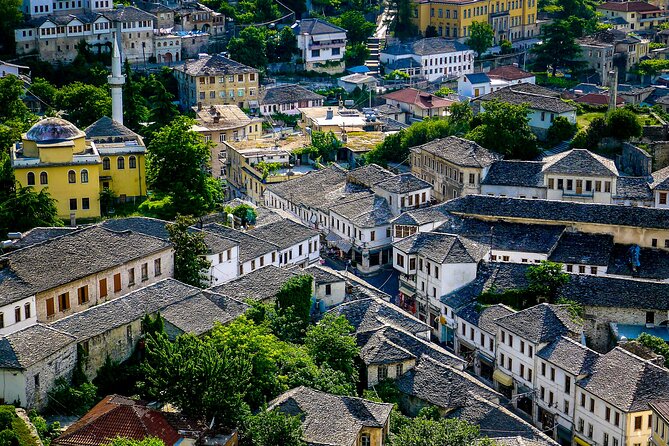
Gjirokaster is often reduced to three things: the castle, the stone roofs, and the steep old streets. Those are worthwhile, but they do not tell the whole story. This walk takes you below and beyond the best-known sights, into neighborhoods where the setting feels less arranged for sightseeing.
I like that the route begins in the old town but does not remain in the busiest part. You start with a familiar meeting point at Çerçiz Topulli Square, then move toward the Old Bazaar, the first neighborhood outside the castle walls. From there, the route continues across older residential areas and eventually reaches a bridge surrounded by hills.
That progression gives the walk a clear shape. You begin with town life, pass through historic neighborhoods, and finish in a quieter setting. It is a useful way to understand how Gjirokaster spreads out from its fortress rather than seeing the castle as an isolated monument.
The guide is a big part of the value. One guide praised in the feedback is Besi, described as warm, curious, passionate, and highly cultured. Another guide was appreciated for explaining the town’s past clearly and for showing genuine affection for his home city. Those details matter because this is not mainly an entry-ticket tour. You are paying for context, interpretation, and local direction while walking through places that may not explain themselves.
More Walking Tours in Gjirokaster
- Gjirokaster walking Tour Baazar – The Castle – Zekate house
★ 4.6 · 21 reviews - Walking Tour Baazar – The Argjiro Castle – Zekate house
★ 4.5 · 18 reviews - Walking Tour “The Old Bazaar, Cfake, Dunavat, Ali Pasha Bridge”
★ 5.0 · 10 reviews
Starting at Çerçiz Topulli Square
The tour begins at Çerçiz Topulli Square, at Sheshi Çerçiz Topulli in Gjirokaster. Since the meeting point is in the center of the old town and near public transportation, it should be relatively straightforward to reach once you are in the central area.
Arrive with your phone confirmation available, since the experience uses a mobile ticket. You should also allow a little extra time to locate the exact meeting point, especially if you are already wandering through the old stone streets.
The square works well as a starting place because it gives you a clear transition from the central town to the older neighborhoods above and below the castle. The guide can establish the route here, and you can ask any practical questions before the walking begins.
This is also the point where you should make your own comfort check. A three-hour route over old cobbles and slopes may feel easy to one person and tiring to another. Wear shoes with good grip, carry water, and avoid bringing bulky luggage. The tour is open to most people, but the supplied information does not promise a step-free or fully accessible route.
The Old Bazaar beneath the castle walls
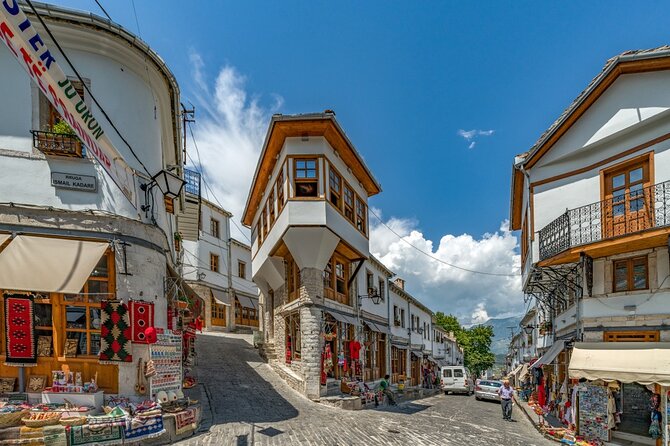
The first neighborhood is the Old Bazaar, located beneath the castle walls. Despite its name, it is no longer a bazaar in the usual sense. That is part of its appeal. Instead of expecting a large market full of stalls, you should expect an old neighborhood with stone lanes, traditional homes, and a strong connection to the castle above.
The cobblestones are one of the defining features. They add character, but they also make the walking slower and less forgiving. Watch your footing, especially on slopes or worn sections. The route is best enjoyed at a measured pace, with time to look up at the houses rather than rushing from one photo point to another.
Some of Gjirokaster’s oldest homes are found in this part of town. A guide can help you notice details you might otherwise miss, including the relationship between the houses and the castle walls. From the street, the area may look like a collection of old stone buildings. With explanation, it becomes easier to understand how the neighborhood fits into the town’s development.
The Old Bazaar section is listed with free admission, so there are no separate entry costs at this stop. The value here comes from walking through the setting and hearing its story, not from entering a paid attraction.
The official stop information gives 15 minutes for the Old Bazaar. The full experience lasts about three hours, so that short figure should not be read as the length of the entire tour. It is more useful to treat it as the approximate time attached to that specific stop, while the route between neighborhoods makes up much of the experience.
Crossing the Zerzebili Bridge toward Cfaka
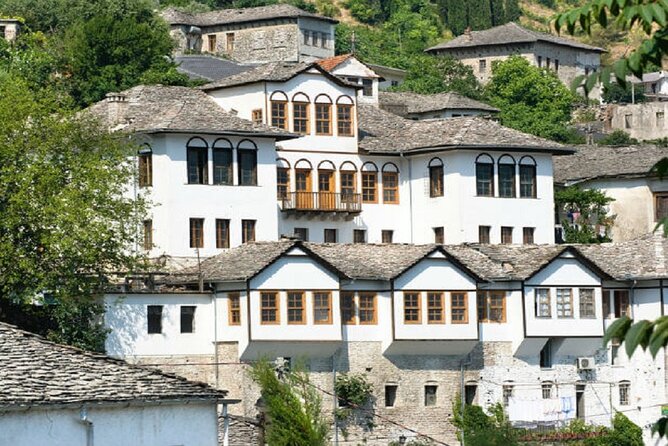
After the Old Bazaar, the route passes over the Zerzebili Bridge and continues toward Cfaka. Bridges can seem like minor details on a city walk, but here the crossing helps mark a change in the character of the route.
You move away from the immediate castle setting and toward another old neighborhood. The walk is not simply a loop around the main sights. It links parts of Gjirokaster that are easy to miss if you only follow the most direct route between the square and the fortress.
Cfaka brings another look at traditional architecture. Several old houses here are first-category monuments, which signals their high cultural and architectural importance. The exact interior access is not included, so you should expect to view these buildings from the route rather than enter them as part of the tour.
That limitation is worth knowing. If you want a series of indoor museum visits, this is not the right format. If you enjoy seeing historic homes in their original streets and learning how they fit into the wider town, the route makes more sense.
The guide’s role is especially useful in Cfaka. Residential architecture can be hard to read without local explanation. A good guide can point out why certain houses matter, how the stone construction shapes the town’s appearance, and how the old neighborhoods relate to one another.
Somewhere else in Albania, a completely different day:
- Saranda: Lekursi Castle, Blue Eye, Gjirokaster, & More Tour
★ 4.9 · 884 reviews - Daily Trip To:Blue Eye,Monastery,Gjirokaster&Lekursi Castle
★ 4.9 · 665 reviews - From Tirana/Durres: Saranda & Ksamil Beach and Gjirokastra
★ 4.9 · 428 reviews - Sarandë: Tour Gjirokaster,Blue Eye & Lekursi Castle
★ 4.7 · 220 reviews
Cfaka, old homes, and the Bektashi tekke
Cfaka is also home to a tekke connected to the Bektashi Order. This adds a religious and cultural layer to the walk. Gjirokaster is not only a town of fortifications and wealthy stone houses. Its identity also includes the traditions and communities that shaped local life.
The tour description does not promise entry into the tekke, a formal ceremony, or a long religious presentation. You should expect the guide to identify and explain the site as part of the walk. That makes the stop compact but meaningful, especially if you want a wider view of Albanian culture.
I appreciate this part of the route because it keeps the focus on lived history. You are not being moved from one famous monument to another. You are walking through a neighborhood where houses, religious buildings, paths, and surrounding hills belong to the same local story.
The pace may also become more relaxed here. The guide feedback emphasizes pleasant conversation, flexibility, and an ability to make the walk feel personal. That is useful in a place like Cfaka, where your questions may shape what you notice. If you are curious about architecture, local customs, or the town’s past, ask directly.
Dunavat and the changing view of Gjirokaster
The route continues through Dunavat, another old area of Gjirokaster. Here, the walk combines built heritage with open hillside views. You may see sheep on the hills, old houses set among the slopes, and a stronger sense of the town’s rural edge.
This contrast is one of the tour’s best features. In a short period, you move from a central square to castle-side lanes, then through older residential quarters and toward open countryside. The changing surroundings help explain why Gjirokaster feels both urban and rural.
Dunavat is also where the physical demands of the route may be most noticeable. The town’s hills and cobbles are part of its character, but they require attention. If you have knee problems, balance concerns, or limited walking stamina, consider that carefully before booking. The information says most people can participate, but it does not describe the route as easy or accessible.
For me, the appeal is the slower view. You get time to see how the old homes sit against the hills rather than viewing Gjirokaster only from a castle terrace. The presence of sheep and open ground gives the walk a grounded, everyday quality that a standard monument circuit may not provide.
Ending at Ali Pasha Bridge
The final destination is Ali Pasha Bridge, a historic stone bridge reached after the walk through Cfaka and Dunavat. It gives the tour a strong closing point because the setting feels removed from the central streets.
The bridge is not presented as a large museum attraction or a site with a separate admission fee. Its appeal is the combination of stone construction, surrounding hills, and the route required to reach it. You are not simply being dropped beside a monument. You walk through older neighborhoods first, so the bridge feels like the end of a small journey across different parts of Gjirokaster.
The tour ends back at the original meeting point. That return is practical, particularly if you have plans afterward in the old town. The exact return method is not specified, so you should expect the walking experience to include a return to Çerçiz Topulli Square rather than ending permanently at the bridge.
Bring enough energy for the full outing. The final stop may be scenic, but it comes after several hours on uneven streets and paths. If you prefer an easy afternoon, consider scheduling this earlier in your trip so you can adjust later plans around it.
What the $18.08 price gets you
At $18.08 per person, this is a low-cost guided experience by the standards of a private cultural walk. The fee includes a guide, but not anything else that is not specifically listed. There are no stated food, drink, transportation, or attraction-entry inclusions.
That structure can be good value if you want orientation and local interpretation rather than a package full of extras. A guide helps you connect the Old Bazaar, Zerzebili Bridge, Cfaka, Dunavat, and Ali Pasha Bridge into one story. Without that context, you could still walk the same streets, but you might not recognize which homes are first-category monuments or understand the importance of the Bektashi tekke.
The price is especially attractive for couples or small groups because the tour requires at least two people. If you are traveling alone, confirm that another person has booked before building your schedule around it. The maximum group size is 15, which keeps it smaller than a large coach outing, though the experience may feel different with two people than with a full group.
The strongest value comes from the guide’s local connection. The feedback describes guides as pleasant, entertaining, flexible, and clearly attached to the history of their own town. Those qualities can turn a basic walk into a more useful introduction to Gjirokaster.
Who should book this walk
I would choose this tour if you have already seen the main central sights or want to look beyond them. It suits you if you enjoy old neighborhoods, historic homes, local religious culture, bridges, and walking routes with changing scenery.
It is also a good fit if you prefer a guide who can answer questions and add personal perspective. The praise for Besi and the other guides focuses on warmth, history, culture, and flexibility, not on theatrical performance or a rapid list of dates. That suggests a walk built around conversation and place.
You may want a different activity if you need frequent transportation, indoor attractions, or a flat route. The tour involves cobblestones and hills, and the supplied information gives no promise of step-free access. It also may not suit you if your main goal is shopping, since the Old Bazaar is described as an old neighborhood rather than a functioning market.
The group limit of 15 is reassuring, but it does not guarantee a private experience. If personal attention matters greatly to you, ask the provider what group size is expected on your date.
Practical details for a smoother walk
Confirmation arrives at booking, and you can use a mobile ticket. The starting and ending point is Çerçiz Topulli Square, with the route lasting about three hours.
The tour is operated by My Tour in Albania. It requires a minimum of two participants, so solo bookers should pay attention to that condition. The experience is available to most people, but the route’s historic surfaces and hills call for sensible footwear and a realistic view of your walking ability.
Free cancellation is available until 24 hours before the start time. If you cancel less than 24 hours ahead, you should not expect a refund, and changes inside that same period are not accepted. Cutoff times follow local time in Albania.
Should you book the Gjirokaster Old Bazaar walk?
Book it if you want Gjirokaster beyond the castle. The route gives you old homes, a bridge, a Bektashi religious site, hillside views, and a final stop at Ali Pasha Bridge for a modest price.
I would be cautious only if steep cobbled walking is a serious problem or if you want a tour built around indoor admissions. For most visitors who want local context and a closer look at the town’s less-visited neighborhoods, this is a smart three-hour choice. The best reason to go is simple: a local guide can show you why the streets between the famous sights matter too.
FAQ
Where does the Gjirokaster walking tour begin?
The tour begins at Çerçiz Topulli Square, also written as Sheshi Çerçiz Topulli, in Gjirokaster, Albania.
Where does the tour end?
The activity ends back at the meeting point at Çerçiz Topulli Square.
How long does the tour last?
The walking tour lasts approximately three hours.
What places are included on the route?
The route includes the Old Bazaar, Zerzebili Bridge, Cfaka, Dunavat, and Ali Pasha Bridge. It also passes old houses and a tekke connected to the Bektashi Order.
Is admission included?
The listed stop has free admission. The tour includes a guide, while anything not specifically listed as included is excluded.
How much does the tour cost?
The price is $18.08 per person.
Is there a minimum number of participants?
Yes. At least two people are required for the tour to take place.
How large can the group be?
The activity has a maximum group size of 15 people.
Can I cancel for a full refund?
Yes, if you cancel at least 24 hours before the experience starts. Cancellations or changes made less than 24 hours before the start time are not accepted for a refund.
Newly listed around Gjirokaster
- Vlora, Llogara & Dhërmi: Albanian Riviera from Durres/Golem★ 4.9 · 7 reviews
- From Vlora: Albanian Riviera, Blue Eye & Gjirokaster Day Trip★ 4.0 · 6 reviews
- Full Day South Albania Expedition Blue Eye & Gjirokaster★ 4.0 · 4 reviews
- Day Tour of Gjirokastra & Blue Eye from Tirana or Durres★ 5.0 · 10 reviews
- Gjirokastra, Full Day Trip from Tirana★ 5.0 · 2 reviews
- Full Day trip to Stone City of Gjirokastra & Blue Eye★ 5.0 · 2 reviews
- Private Day Tour of Gjirokastra from Tirana★ 5.0 · 10 reviews
- Private Tour from Tirana, Gjirokastër , Saranda and South Riviera★ 5.0 · 10 reviews
Walking Tours, compared.
Tirana Center: Magic Walking Tour French/Italian/English Etc
Read our review →
Blue Eye Kayak and walking tour & Lekursi Castle
Read our review →

Browse the lists this tour appears in