
Reviewed · WALKING TOURS
Tirana Walking Tour
Tirana changes before your eyes. This three-hour walk makes sense of the city’s sharp contrasts, from Skanderbeg Square and Ottoman landmarks to communist-era buildings and glossy new architecture. I like the way the tour connects Albania’s past with its fast-moving present, and I like that it ends with time for coffee or a cocktail in Blloku. The main consideration is pace: with so many stops packed into three hours, some explanations may happen while walking, and one past booking found it hard to hear the guide at first.
The tour costs $17 per person, which is a fair price for a guided introduction to central Tirana. Guides such as Ilir, Gloria, Iris, Thomas, and Aron have been praised for clear English, personal stories, and practical restaurant and transport advice. You should still tell your guide early if you prefer a stop, talk, and walk format rather than a running commentary.
In This Review
- Key points to know before booking
- Why Tirana makes such a good walking-tour subject
- Starting at Tirana International Hotel and Skanderbeg Square
- Et’hem Bey Mosque and the old city’s surviving traces
- Tirana Castle, Namazgah Mosque, and Tanners’ Bridge
- The Pyramid and Tirana’s changing public spaces
- Blloku and Enver Hoxha’s former villa
- Religious landmarks and the House of Leaves
- What the guides add to the experience
- Pace, comfort, and group style
- Is $17 a fair price for three hours?
- Who should book this Tirana walk?
- FAQ
- How long does the Tirana Walking Tour last?
- How much does the tour cost?
- What is included in the price?
- Are food and drinks included?
- Which languages are available?
- Is the tour wheelchair accessible?
- Can children join the tour?
- Is museum admission included?
- Where does the tour begin and end?
- Can I cancel the tour?
Key points to know before booking
- A compact route through central Tirana: The walk links Skanderbeg Square, the Et’hem Bey Mosque, Tanners’ Bridge, Blloku, the Pyramid, and several major religious and political landmarks.
- Personal insight matters here: Guides have shared memories of Tirana’s communist years and its rapid changes, giving the city’s buildings more meaning than a photo alone.
- Good value at $17: The price includes the city tour and a qualified guide, while food, drinks, museum admission, and personal expenses are separate.
- A strong first-day activity: The route helps you get your bearings and gives you ideas for restaurants, customs, museums, and later excursions.
- Flexible and accessible: Albanian, English, and Italian guides are available, the tour is wheelchair accessible, and private groups can be arranged.
- Wear sensible shoes: This is a real three-hour walk, not a quick bus circuit.
Why Tirana makes such a good walking-tour subject
Tirana is not a city that explains itself at first glance. Italian government buildings sit near imposing communist blocks. Ottoman traces survive beside new towers and redesigned public spaces. Cafes fill streets where, not long ago, public life was far more controlled.
That contrast is the main reason to take this tour. You are not simply checking off monuments. You are learning how a relatively small capital moved from an Ottoman town to an Italian-influenced city, then through one of Europe’s most isolated communist regimes, and now into a period of fast private construction and international architectural attention.
The tour’s focus on change is especially useful because Tirana can look young and polished in one square, then old and improvised a few minutes later. A guide can explain why those layers sit together instead of leaving you to guess.
I would book it early in a Tirana stay. The route covers enough ground to orient you to the center, Blloku, religious sites, museums, and public squares. Afterward, you can return to the places that deserve more time.
More Walking Tours in Tirana
- Walking Tour of Tirana
★ 5.0 · 646 reviews - Tirana: Express Walking Tour with a Guide
★ 4.8 · 503 reviews - Tirana Center: Magic Walking Tour French/Italian/English Etc
★ 4.9 · 402 reviews
Starting at Tirana International Hotel and Skanderbeg Square
The stated meeting point is in front of the Tirana International Hotel, though the exact point can vary with the option you book. From there, the tour moves into the city’s monumental center.
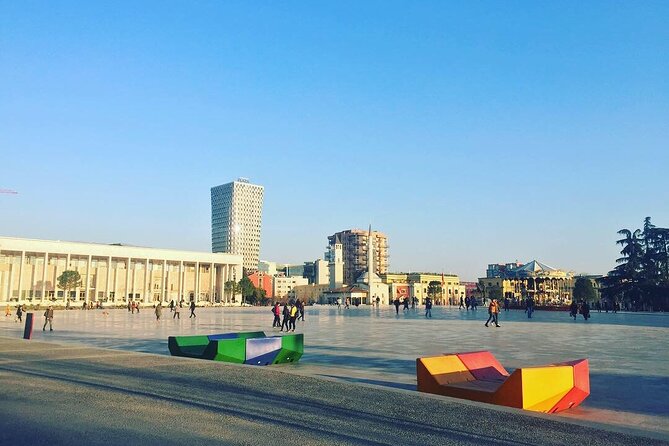
Skanderbeg Square is the natural opening scene. The statue of Albania’s national hero gives the central area its name and serves as a useful reference point throughout your stay. The square also puts the city’s political and architectural history in one frame.
The National History Museum is one of the first major sights. Its broad communist-era facade is hard to miss, and its position beside the Palace of Culture makes the contrast especially clear. The museum can provide useful historical context, but admission and optional activities are not included in the tour price.
The Palace of Culture adds another layer to the square. Together, these buildings represent the scale and visual language of the communist period. Across the center, Italian government buildings from the 1920s reflect an earlier effort to turn Tirana from an Ottoman-influenced town into a more Western-style capital.
Armando Brasini, an Italian architect, designed several of those earlier government buildings. Seeing them near later communist construction helps you read the city as a series of political projects, not as one uniform architectural style.
Et’hem Bey Mosque and the old city’s surviving traces
The Et’hem Bey Mosque is among the most important historic stops on the walk. Its presence near the main square recalls Tirana’s Ottoman-era growth and gives you a quieter counterpoint to the large modern buildings nearby.
The Watch Tower, associated with the city’s nineteenth-century expansion, is close by. The mosque and tower together show that Tirana had an urban life long before the twentieth-century capital took shape.
The route also includes Bunk’Art 2. This site relates to the communist period and the system of political control that shaped everyday life in Albania. The tour can help explain the site’s place in the city, but you should not assume that an indoor museum ticket is part of the $17 price. Optional activity costs are listed separately.
The old bazaar area is another useful stop because it points to Tirana’s earlier commercial life. Much of the historic heart has changed, yet the idea of the bazaar remains important when you are trying to understand how the city developed before the major twentieth-century rebuilding projects.
Tirana Castle, Namazgah Mosque, and Tanners’ Bridge
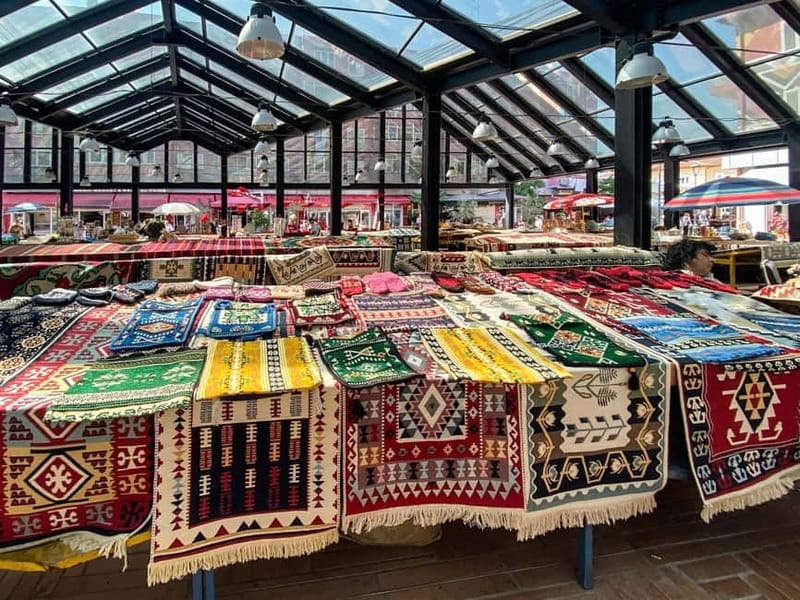
Tirana Castle offers a different kind of pause. The site has been reopened and now includes time for photos, a break, and possible shopping. It is not a medieval fortress experience in the grand European sense, so you should think of it as a renovated urban site connected to the city’s older core.
The route then reaches Namazgah Mosque, one of the city’s religious landmarks. Along with the Et’hem Bey Mosque, Saint Paul’s Cathedral, and the Resurrection of Christ Orthodox Cathedral, it helps show the mix of religious traditions present in Tirana.
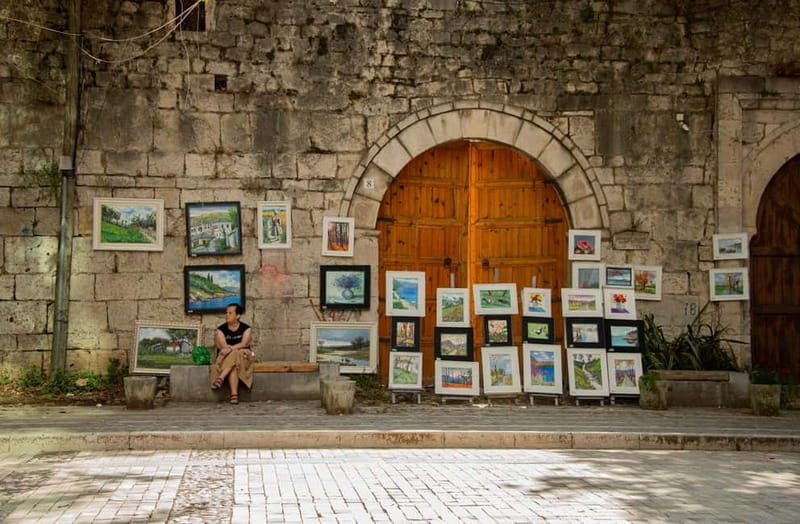
Tanners’ Bridge is one of the more distinctive historic details on the route. This stone footbridge recalls the period when the city had a more modest scale and a stronger connection to local crafts and waterways. It is a small stop, but it helps break up the procession of large public buildings.
Saint Paul’s Cathedral adds a modern religious note. The tour’s sequence of mosques, churches, and civic buildings gives you a useful introduction to Albania’s religious and cultural variety without requiring separate transport across town.
Somewhere else in Albania, a completely different day:
- From Tirana: Bovilla Lake & Gamti Mountain Hiking Day Trip
★ 4.9 · 4,397 reviews - From Tirana: Bovilla Lake & Gamti Mountain Hiking Tour
★ 4.9 · 3,003 reviews - From Tirana: Bovilla Lake & Gamti Mountain Viewpoint Hike
★ 4.8 · 2,053 reviews - Tirana/Durres/Golem: Saranda, Ksamil, Blue Eye Day Trip
★ 4.8 · 1,584 reviews
The Pyramid and Tirana’s changing public spaces
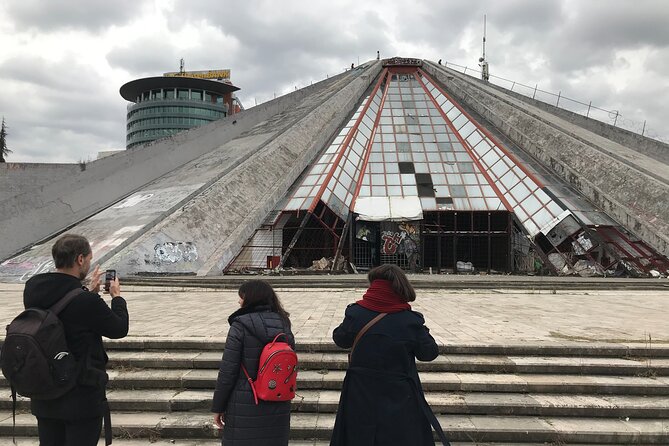
The Pyramid of Tirana is one of the city’s most recognizable and debated buildings. Built during the communist era and associated with Enver Hoxha, it has since been repurposed. The tour includes a quick stop, so you will get the building’s story and a chance to see its new role, but not necessarily the time for a long independent visit.
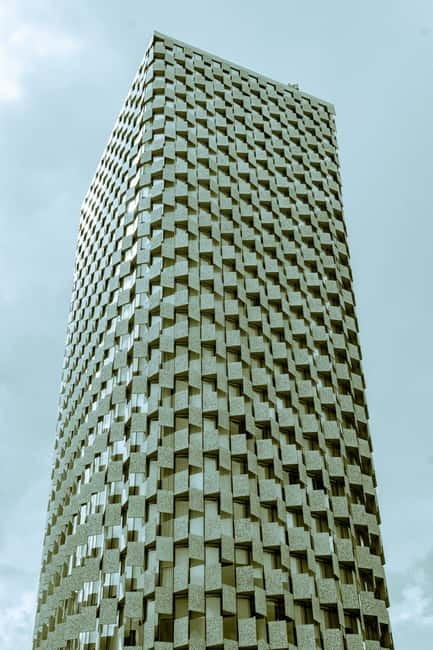
This is one of the places where Tirana’s transformation is easiest to see. A structure tied to a dictator’s period has been given a new public life, while the surrounding city continues to add contemporary buildings and redesigned spaces.
The route also includes Mother Teresa Square. Its formal scale and institutional surroundings feel different from the cafe streets of Blloku. You can use this part of the walk to see how Tirana separates ceremonial, educational, religious, and social spaces.
Postbllok, or Checkpoint, is another powerful communist-era reminder. The name itself suggests surveillance and restriction, while the site gives the guide an opening to discuss the effect of the regime on ordinary life. I would listen closely here, since the historical meaning matters more than the size of the monument.
Blloku and Enver Hoxha’s former villa
Blloku is where the tour shifts tone. Today it is known for cafes, restaurants, and a fashionable evening atmosphere, but during the communist period it was associated with the political elite and was not an ordinary neighborhood open to everyone.
The former villa of Enver Hoxha makes that contrast personal. The building is not just another architectural stop. It points to the separation between those who held power and the wider population during Albania’s dictatorship.
This is also the part of the walk where practical advice becomes especially useful. Guides have recommended restaurants, explained local customs, and answered questions about what to eat and how to get around. Thomas, in particular, has been praised for helping with restaurant choices, taxis, shops, and other practical needs after the formal tour.
The cafe stop in Blloku is a welcome feature. Your drink is not included, but the pause gives you time to ask about Albania’s history, current changes, restaurants, customs, or plans for the rest of your trip. It also prevents the tour from feeling like three hours of standing beside plaques.
Religious landmarks and the House of Leaves
The Resurrection of Christ Orthodox Cathedral is another central landmark included on the route. Seeing it alongside the city’s mosques and Catholic cathedral gives you a better sense of Tirana as a capital with several religious traditions in close proximity.
The House of Leaves Museum is tied to surveillance during the communist period. As with Bunk’Art 2 and the National History Museum, you should confirm what you want to enter and budget separately for any admission. The included service is the guided city tour, not a package of museum tickets.
The itinerary includes sightseeing and guided stops at these places, but the exact amount of interior access can depend on opening hours and the option booked. One Monday tour became an outdoor sightseeing walk because the museums were closed. That is not necessarily a problem, but museum access matters if it is central to your plans.
What the guides add to the experience
The strongest part of this tour is the guide. The repeated praise is not just for facts, but for the way guides connect those facts to life in Tirana.
Ilir has been described as friendly, fluent in English, and good at answering questions. He has led tours in poor weather and even helped keep a guest dry with an umbrella. Gloria has been praised for explaining history, culture, customs, and everyday behavior in a warm way.
Iris brings particular strength in Tirana’s political history and recent changes. Thomas has offered personal perspective as an Albanian American and has used old photographs to show how streets and buildings looked in earlier periods. Aron has been praised for putting Albania into a wider Balkan and religious context.
Guide assignments can vary, so you cannot book based on a guarantee of one particular person unless the provider confirms it. Still, the pattern is clear: this tour works best when you ask questions and explain what interests you.
One useful tip comes from a past experience in which the guest found it difficult to hear while walking. If you are in a larger group or near traffic, ask the guide to stop before explaining an important point. The guide adjusted well when asked, and you can do the same from the start.
Pace, comfort, and group style
Three hours is enough for a strong city introduction, but it is a full walking session. Comfortable shoes are essential. Tirana’s route includes squares, streets, historic bridges, public spaces, and cafe areas, so you should not plan it as a relaxed indoor museum visit.
The tour is wheelchair accessible, which is helpful, though the exact ease of every surface and stop can vary in an old city center. If access needs are important to you, raise them when booking so the guide can plan the route properly.
A private group option is available. That can be worthwhile if you want to stop often, ask many questions, or shape the conversation around architecture, communist history, food, or politics.
Small groups can also make the tour feel personal. The provider has run tours even when only one person arrived, including in rainy weather. That is useful to know if you are visiting outside the busiest season.
Weather will affect comfort. Summer heat can make a long outdoor route tiring, while rain can reduce the pleasure of photography and museum entrances. Guides have adapted by choosing shade and offering beverage stops, but you should still carry suitable clothing and water.
Is $17 a fair price for three hours?
At $17 per person, this is a strong-value introduction to Tirana. You receive three hours with a qualified guide, and the route covers many of the city center’s main sights without requiring taxis or a separate orientation walk.
The value rises if you are visiting Tirana for only a short stay. In one morning or afternoon, you can identify the National History Museum, Palace of Culture, Et’hem Bey Mosque, Pyramid, Blloku, major cathedrals, Tanners’ Bridge, and communist-era memorials.
The price is less of a bargain if you expect a museum package, a meal, or private transport. Drinks, food, personal spending, optional activities, and hotel pickup or drop-off are not included.
You can reserve now and pay later, and cancellation is free up to 24 hours before the start for a full refund. Those terms help if your Albania plans are still moving around, but the main reason to book is the guide-led context, not luxury or extras.
Who should book this Tirana walk?
I would recommend it to first-time visitors, history fans, architecture fans, and anyone who wants help understanding Albania’s twentieth century. It is also a good fit if you like asking questions rather than reading every fact from a guidebook.
You will get the most from it if you arrive curious about how Tirana changed from a controlled communist capital into a cafe-filled city with ambitious new construction. The guide’s personal memories can make that shift easier to grasp.
It may be less suitable if you want a slow photo walk, extensive time inside every museum, or a food tour. The route covers a lot, and some stops are brief.
Book it for your first day, wear comfortable shoes, and ask for regular stops if you prefer careful explanations. I would also keep the rest of that day flexible so you can return to the Pyramid, museums, or Blloku after learning which places deserve more time.
FAQ
How long does the Tirana Walking Tour last?
The tour lasts three hours.
How much does the tour cost?
The listed price is $17 per person.
What is included in the price?
The price includes a city tour of Tirana and a qualified guide.
Are food and drinks included?
No. Meals, drinks, and personal expenses are not included. The tour includes time for a coffee or cocktail in Blloku, but you pay for your own order.
Which languages are available?
Guides are available in Albanian, English, and Italian.
Is the tour wheelchair accessible?
Yes, the activity is listed as wheelchair accessible.
Can children join the tour?
Children must be accompanied by an adult, and unaccompanied minors are not allowed.
Is museum admission included?
Museum admission is not listed among the included services. Optional activity costs are separate, and museum opening hours can affect whether you visit inside or see the building from outside.
Where does the tour begin and end?
The standard meeting and finish point is Tirana International Hotel, though the meeting point may vary with the option booked.
Can I cancel the tour?
Yes. You can cancel up to 24 hours in advance for a full refund. You can also reserve now and pay later.
Newly listed around Tirana
- Wonderful Sunset and Dinner in the Castel Of Petrela★ 4.6 · 4 reviews
- Zipline Tirana Adventure & Petrela Castle – With Transport★ 4.4 · 10 reviews
- Wine Tasting & Vineyards Escape near Tirana★ 4.9 · 8 reviews
- Walking Tour in Tirana, Albania★ 3.7 · 28 reviews
- Vlora, Dhermi & Llogara Day Trip from Durrës or Golem★ 5.0 · 5 reviews
- Day Tour to Petrela Castle and Zip Line Albania Adventure★ 5.0 · 10 reviews
- From Tirana: Mount Dajti Adventure, Local Vibes & Cable Car opt★ 4.5 · 6 reviews
- Winetasting tour in Alpeta winery – Roshnik village by 1001 Albanian Adventures★ 5.0 · 26 reviews
Walking Tours, compared.
Tirana Center: Magic Walking Tour French/Italian/English Etc
Read our review →
Blue Eye Kayak and walking tour & Lekursi Castle
Read our review →
Browse the lists this tour appears in