
Reviewed · MARKETS
Walking Tour “The Old Bazaar, Cfake, Dunavat, Ali Pasha Bridge”
Gjirokaster has stories beyond its castle walls. I like this three-hour walk because it leads into older neighborhoods that many visitors skip, and I like the local flavor added by guides such as Arli, Viki, Marco, and Mario. The walk also offers a useful look at daily life in Gjirokaster, not just its famous monuments. The main drawback is the rough terrain, especially near Ali Pasha Bridge, so comfortable sneakers are essential.
At $18.06 per person, this is a fair price for a guided morning walk in English. You get a small piece of Gjirokaster that is easy to miss on your own, though a group of up to 30 people may feel less personal than a private tour.
In This Review
- Key details before you book
- Starting in Çerçiz Topulli Square
- What the Old Bazaar really offers
- Crossing Zerzebili Bridge into Cfaka
- The Bektashi tekke and the value of local guidance
- Ali Pasha Bridge and the difficult final approach
- A three-hour walk with real physical demands
- How the guides shape the experience
- Is $18.06 good value?
- Who should book this walk?
- Final verdict: book it for the parts beyond the castle
- FAQ
- Where does the walking tour start?
- What time does the tour begin?
- Where does the tour end?
- How long does the walk take?
- Is the tour offered in English?
- What should I wear?
- Is Ali Pasha Bridge easy to reach?
- What happens if the weather is poor?
Key details before you book
- The route starts in Çerçiz Topulli Square: You meet at Experience Gjirokastra on Rruga Gjin Zenebisi at 9:30 am and finish back at the same place.
- The Old Bazaar is now a historic neighborhood: Do not expect rows of active market stalls. The appeal is the cobblestone lanes, castle-side setting, and old houses.
- Cfaka adds a quieter side of town: You pass first-category monument houses and a Bektashi tekke, with open views and hills nearby.
- Ali Pasha Bridge may be viewed rather than reached: The route toward the bridge can be difficult, and the guide may lead you to a strong viewing point instead.
- The guide shapes the experience: Arli is praised for clear explanations, while Viki is noted for adjusting the walk to personal interests.
- Plan for roughly three hours outside: The walk requires good weather and steady footing. Free cancellation is available up to 24 hours before departure.
Starting in Çerçiz Topulli Square
The tour begins at Experience Gjirokastra on Rruga Gjin Zenebisi, with a 9:30 am start. That early timing works well in Gjirokaster, where a morning walk lets you see the town before the day feels too warm or crowded.
You start from Çerçiz Topulli Square, one of the natural meeting points in the old town. From here, the route heads toward the Old Bazaar and then farther into the neighborhoods below the castle. I like this direction because you are not simply being led from one postcard view to another. You are moving through the town’s older residential fabric.
The meeting point is also near public transportation, and the activity ends back where it begins. That makes the tour easy to fit around other plans, particularly if you are using the walk to get oriented on your first morning in Gjirokaster.
The group can include as many as 30 people. That is a reasonable capacity for an affordable walking tour, but the experience may feel less conversational at the upper limit. If you want a more personal exchange with the guide, arrive ready to stay near the front and ask questions as you walk.
More Walking Tours in Gjirokaster
- Gjirokaster walking Tour Baazar – The Castle – Zekate house
★ 4.6 · 21 reviews - Walking Tour Baazar – The Argjiro Castle – Zekate house
★ 4.5 · 18 reviews - Gjirokaster Walk Tour: Old Bazaar, Cfake, Dunavat, AliPasha!
★ 4.2 · 9 reviews
What the Old Bazaar really offers
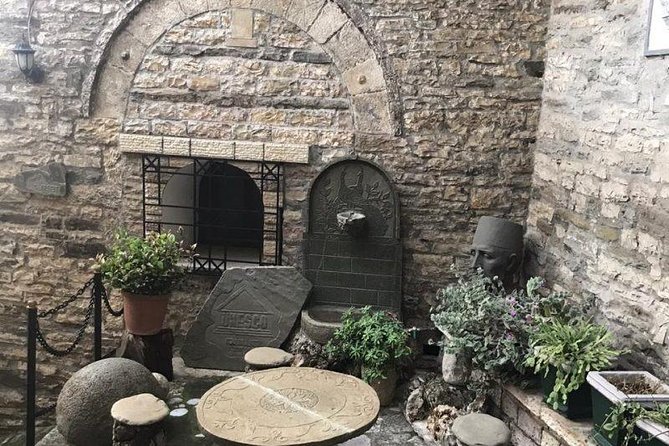
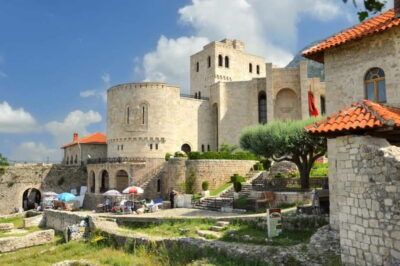
The name can set the wrong expectation. This Old Bazaar is not functioning as a traditional market today. Instead, it is the first neighborhood outside the castle walls, running beneath the fortress and marked by cobblestone lanes and some of the oldest houses in town.
That distinction matters. You come here for the setting and the buildings, not for shopping. The route gives you a chance to see how Gjirokaster grew around the castle, with homes and streets pressed into the steep ground below it.
I especially like this part for visitors who have already seen the castle and want a change of pace. The fortress is the big attraction, but the neighborhood below helps explain the town’s shape. You get a more grounded view of Gjirokaster, with stone houses, sloping lanes, and the feel of an old community rather than a single monument.
The cobbles are part of the charm, but they are also an early warning about the walk. Wear shoes with firm soles and good grip. Sandals or smooth casual shoes will make the route harder than it needs to be.
Crossing Zerzebili Bridge into Cfaka
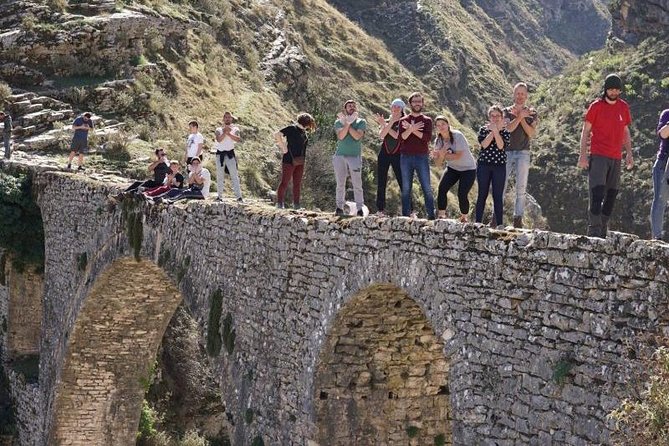
After the Old Bazaar, the route passes over Zerzebili Bridge and enters Cfaka, another ancient neighborhood. This transition is one of the most useful parts of the walk because it takes you away from the center and into a quieter area with a different rhythm.
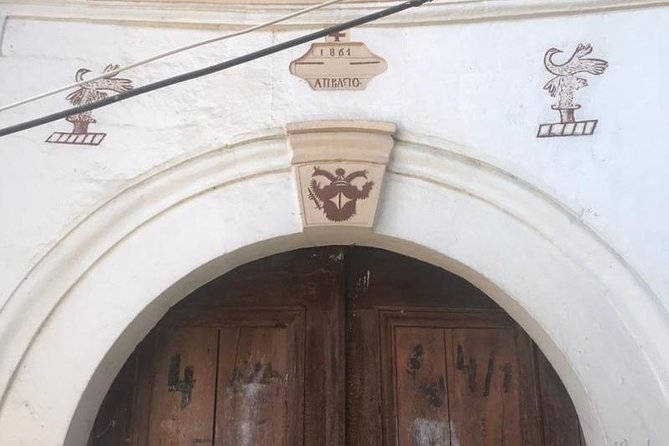
In Cfaka, you pass old houses classified as first-category monuments. That designation points to their high cultural value, but the guide is important here because a classification alone does not tell you why a house matters. Arli, for example, is praised for explaining the neighborhoods and their importance as the walk continues.
You also visit a tekke connected with the Bektashi Order. This adds a religious and cultural layer to the route. Rather than focusing only on stonework and old lanes, the tour shows how faith and community life have shaped Gjirokaster.
The route through Cfaka combines homes, religious heritage, and open countryside. Sheep can be seen on the hills, and the old houses sit against a setting that feels far removed from the central square. I like this contrast. You get architectural detail, but you also get space and views.
Keep your expectations practical. This is not described as a polished path or an easy stroll. The route crosses uneven ground, and the walk to the bridge area can be difficult. The reward is a broader view of Gjirokaster, but the path itself is part of the challenge.
The Bektashi tekke and the value of local guidance
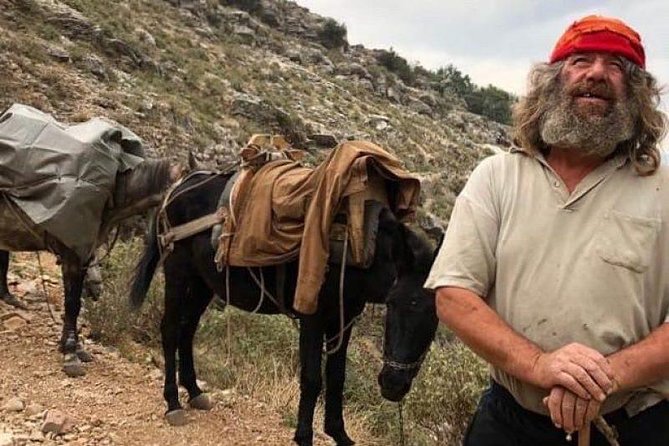
The tekke is a brief but meaningful part of the itinerary. The Bektashi Order is an important part of Albania’s religious culture, and seeing a place tied to that tradition gives the tour more depth than a standard old-town walk.
This is also where the guide’s style can make a real difference. The strongest feedback about the tour centers on guides who explain the past while also talking about life in Gjirokaster today. Marco and Mario are praised for making the walk feel like time with well-informed local friends, while Viki is praised for using personal experience and adapting the route to individual interests.
That kind of guidance is valuable in a place where the buildings can look similar at first glance. A local guide can point out why one house has special status, explain the role of a neighborhood, or connect a religious site to the wider town.
The tour is offered in English. The feedback also highlights clear English and lively storytelling, including humor and personal experience from a young local guide. I would choose this walk if you prefer conversation and context over a formal lecture.
Somewhere else in Albania, a completely different day:
- Saranda: Lekursi Castle, Blue Eye, Gjirokaster, & More Tour
★ 4.9 · 884 reviews - Daily Trip To:Blue Eye,Monastery,Gjirokaster&Lekursi Castle
★ 4.9 · 665 reviews - From Tirana/Durres: Saranda & Ksamil Beach and Gjirokastra
★ 4.9 · 428 reviews - Sarandë: Tour Gjirokaster,Blue Eye & Lekursi Castle
★ 4.7 · 220 reviews
Ali Pasha Bridge and the difficult final approach
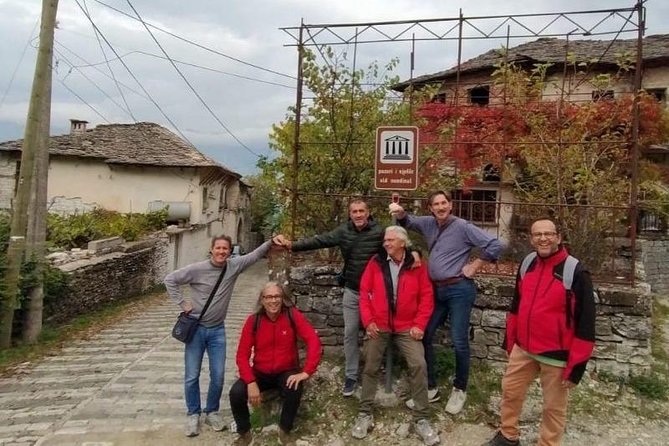
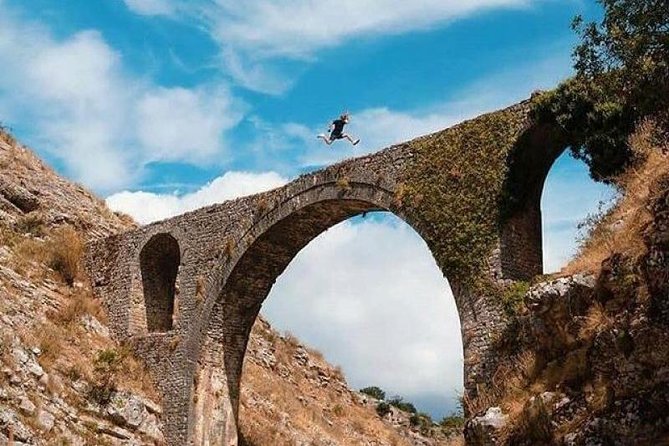
The final destination is Ali Pasha Bridge, a surviving section of the aqueduct built more than 200 years ago by Ali Pasha Tepelena to carry water to the castle.
The bridge is not just a scenic stop. Its original purpose links the countryside to the castle above, showing how water supply supported life inside the fortress. That practical function makes the structure more interesting than a bridge viewed only as a photo subject.
You should read the route description carefully, though. The terrain leading to the actual bridge can be difficult. One guide, Arli, adjusted the route and took the group through neighborhoods to a spectacular view of the bridge rather than forcing everyone onto the hardest section.
That is a sensible approach. The best part of a walking tour is not proving that you can reach every stone at any cost. It is understanding what you are seeing while staying safe and comfortable. Your exact view or approach may depend on conditions and the group’s ability.
If Ali Pasha Bridge is your main reason for booking, ask the guide at the start what the current route allows. The experience is still worthwhile if you see the bridge from a strong viewpoint, but you should not assume that the walk guarantees an easy visit directly onto the structure.
A three-hour walk with real physical demands
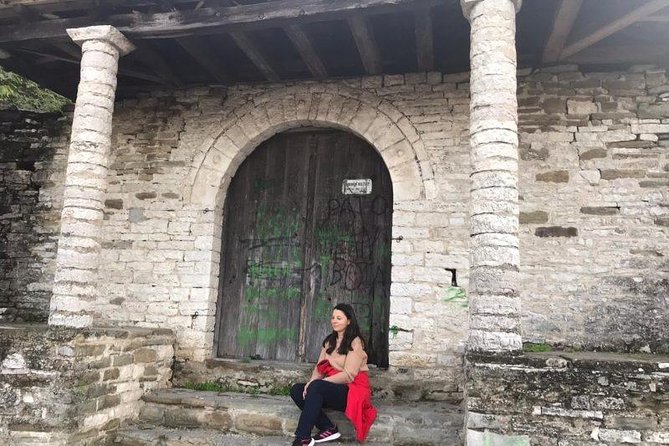
The total duration is about three hours. That is long enough to move beyond the central sights without taking up an entire day, but it is not a casual 30-minute stroll.
The key phrase is not so comfortable terrain. Expect cobblestones, slopes, and uneven ground. The route passes through old neighborhoods and toward a bridge area, so you should be prepared for a walk that tests your footing more than your pace.
The operator recommends sneakers, and I agree with that advice. Bring water as well, although the tour details do not specify whether refreshments are provided. Since the route depends on good weather, a dry morning will make a noticeable difference.
Most people can participate, and service animals are allowed. Still, the general statement that most people can take part does not remove the need to judge your own mobility. If you have trouble with steep or uneven surfaces, contact the provider before booking and ask about the current route.
How the guides shape the experience
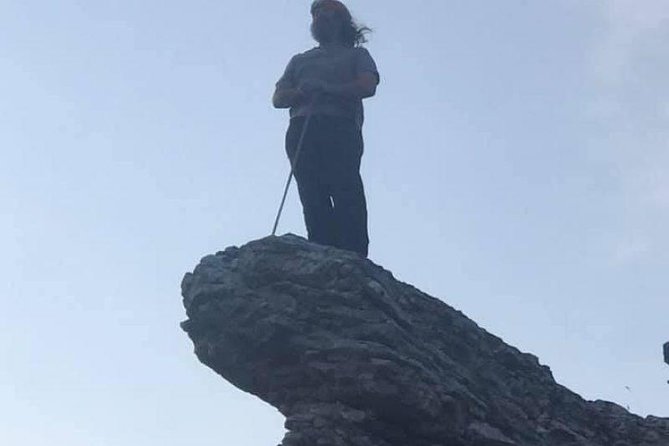
The guide is included in the price, and the guide is the main reason this walk earns strong praise.
Arli is singled out for explaining the town’s neighborhoods and the significance of Ali Pasha Bridge, while also making a practical adjustment when the approach became difficult. Viki is praised for her local connection, courtesy, and ability to tailor the schedule to personal interests. Marco and Mario are praised for combining town history with what it is like to live in Gjirokaster today.
These details tell you what to look for. This tour works best when you ask questions and show interest in the town beyond its monuments. The strongest version of the experience is not just a route through old houses. It is a conversation about how the city developed, how people use these neighborhoods, and what remains important today.
Guide quality can vary from one departure to another, as it does with any guided experience. The positive feedback is consistent about clear English, humor, personal stories, and strong explanations, but your guide will determine the exact tone and level of detail.
Is $18.06 good value?
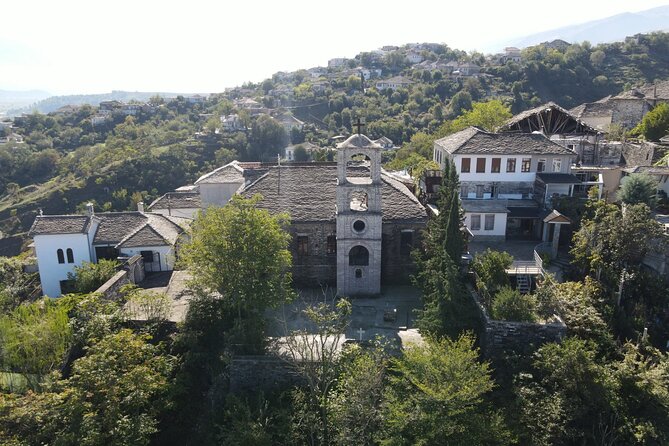
At $18.06 per person, I consider this good value if you want a guided look at Gjirokaster beyond the castle. The price covers the guide and about three hours of walking, which works out well for visitors who would otherwise spend their time wandering without knowing what they are seeing.
The value is strongest for first-time visitors. You get a route, local context, and an explanation of places that are easy to pass without noticing. The walk also helps you understand the relationship between the castle, the old neighborhoods, the tekke, and the aqueduct remains.
The value is less obvious if you only want the central bazaar or a quick bridge photo. The route is longer, the ground is harder, and the Old Bazaar is not a working bazaar. You are paying for access to overlooked corners and local interpretation, not for shopping or a polished attraction.
Gratuities are not included. The booking terms allow free cancellation up to 24 hours before the 9:30 am start. If bad weather cancels the tour, you can receive another date or a full refund. A minimum number of participants is required, and if that minimum is not reached, you will be offered another option or a refund.
Who should book this walk?
I would recommend it to you if you enjoy old neighborhoods, local stories, religious heritage, and views reached by foot. It suits people who want to see more than Gjirokaster’s best-known sites and who do not mind an uneven route.
It is also a good choice if you like a guide who can respond to your interests. The experience appears strongest when the guide explains the town in a relaxed, personal way rather than reciting facts.
I would think twice if your priority is an easy, flat walk or guaranteed access to the base of Ali Pasha Bridge. The terrain may be difficult, and the bridge may be viewed from a nearby route depending on conditions and the group.
Final verdict: book it for the parts beyond the castle
Book this tour if you want Gjirokaster to feel like a living town rather than only a fortress and a postcard. The Old Bazaar’s stone lanes, Cfaka’s old houses, the Bektashi tekke, and the aqueduct remains give you a fuller sense of the place.
The walk is affordable, the guides can add real local character, and the route reaches areas many visitors skip. Just wear sturdy sneakers, allow three hours, and treat Ali Pasha Bridge as a destination that may require a difficult approach or a carefully chosen viewpoint.
FAQ
Where does the walking tour start?
It starts at Experience Gjirokastra, Rruga Gjin Zenebisi, in Gjirokastër, Albania.
What time does the tour begin?
The tour starts at 9:30 am.
Where does the tour end?
The activity ends back at the meeting point.
How long does the walk take?
The full experience takes approximately three hours.
Is the tour offered in English?
Yes. The tour is offered in English.
What should I wear?
You should wear sneakers because the route includes uneven and uncomfortable terrain.
Is Ali Pasha Bridge easy to reach?
The terrain leading to the actual bridge can be difficult. Depending on conditions, the guide may take you through nearby neighborhoods to a good view of the bridge.
What happens if the weather is poor?
The experience requires good weather. If it is canceled because of poor weather, you will be offered another date or a full refund.
More Markets in Gjirokaster
- From Durres/Golem: Kruja Castle & Old Bazaar Day Tour
★ 4.9 · 1,317 reviews - Durres/Golem: Kruja Castle & Bazaar with Traditional Lunch
★ 5.0 · 632 reviews - Kruja castle, the old Bazaar & Sarisalltik- Departure from Tirana
★ 5.0 · 592 reviews - From Tirana/Golem/Durres: Kruja, Bazaar, Sari Salltik Tour
★ 4.8 · 471 reviews
More Shopping Tours in Gjirokaster
- Gjirokaster: Old Bazaar and Castle Private Walking Tour
★ 5.0 · 6 reviews - Old Bazaar-Cfake-Dunavat-Ali Pasha Bridge Walking Tour
★ 4.6 · 5 reviews - Blue Eye & Gjirokaster: 4×4 Tour and Old Bazaar
★ 5.0 · 3 reviews - From Tirana: Kruja Castle, Old Bazaar & Sari Salltik View
★ 4.8 · 2,171 reviews
Newly listed around Gjirokaster
- Vlora, Llogara & Dhërmi: Albanian Riviera from Durres/Golem★ 4.9 · 7 reviews
- From Vlora: Albanian Riviera, Blue Eye & Gjirokaster Day Trip★ 4.0 · 6 reviews
- Full Day South Albania Expedition Blue Eye & Gjirokaster★ 4.0 · 4 reviews
- Day Tour of Gjirokastra & Blue Eye from Tirana or Durres★ 5.0 · 10 reviews
- Gjirokastra, Full Day Trip from Tirana★ 5.0 · 2 reviews
- Full Day trip to Stone City of Gjirokastra & Blue Eye★ 5.0 · 2 reviews
- Private Day Tour of Gjirokastra from Tirana★ 5.0 · 10 reviews
- Private Tour from Tirana, Gjirokastër , Saranda and South Riviera★ 5.0 · 10 reviews
Markets, compared.
Kruja castle, the old Bazaar & Sarisalltik- Departure from Tirana
Read our review →
Browse the lists this tour appears in