
Reviewed · COOKING CLASSES
Cooking Class
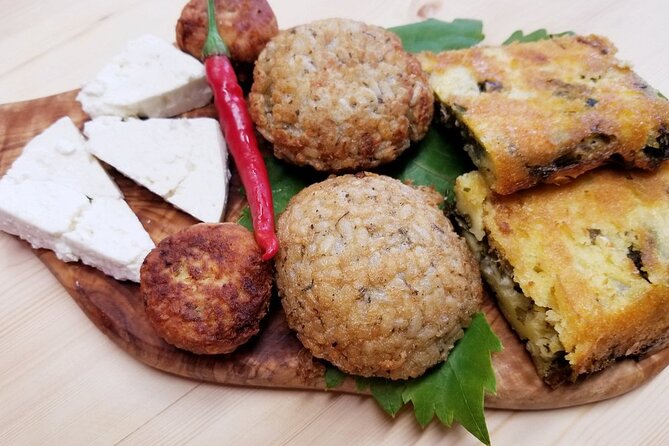
Food tells Gjirokaster’s story. This private class turns the city’s old recipes into a hands-on meal, with qifqi riceballs, traditional OSA pasta with lamb, and hasude for dessert. I like the personal setting and the chance to eat what you prepare, rather than watching a chef work from a distance. I also like the family traditions, mountain spices, teas, and folklore woven into the cooking.
The main drawback is organization. The meeting address has caused confusion, and the host may not always have the booking details at hand. The class can also feel shorter than the advertised two hours, especially if the cooking moves quickly or only one dish is prepared.
In This Review
- Key points to know before booking
- Cooking Gjirokaster’s story in the medieval bazaar
- What happens at the Gjirokaster Bazaar meeting point
- Preparing qifqi, Gjirokaster’s famous riceballs
- Making OSA pasta with lamb
- Finishing with hasude and a shared meal
- Why the private format matters
- Is $54.19 a fair price?
- Timing, language, and practical planning
- Who will enjoy this class most?
- Should you book the Gjirokaster cooking class?
- FAQ
- Where does the cooking class start?
- How long does the cooking class last?
- What dishes are included?
- Is the class private?
- Is the experience offered in English?
- Do I eat the food I prepare?
- Are recipes provided?
- Is the meeting point close to public transportation?
- Can I cancel for a full refund?
Key points to know before booking
- Three classic dishes: The planned menu includes qifqi riceballs, OSA pasta with lamb, and hasude, a sweet made with starch, butter, and walnuts.
- Private instruction: Your group takes part alone, allowing for direct help and a more relaxed family-style setting.
- In Gjirokaster’s bazaar: The class meets on Rruga Gjin Shpata, near the town’s medieval bazaar and public transportation.
- A meal, not just a lesson: Appetizers and drinks accompany the cooking, and you eat the food at the end.
- Bring a little patience: The listed address may be inaccurate, and advance contact can help prevent a wasted trip.
- Good for food-focused visitors: You receive written recipes and can take what you cooked home.
Cooking Gjirokaster’s story in the medieval bazaar
Gjirokaster is best understood at walking speed, with stone streets, old houses, and small family businesses providing the setting. This cooking class fits that rhythm. You meet in the heart of the medieval bazaar, where the open doors and welcoming atmosphere are part of the experience.
The class is operated by Edua.gjirokaster and is private, so only your party takes part. That matters here. A private class gives you room to ask questions, repeat a technique, or slow down if you are not used to preparing Albanian food.
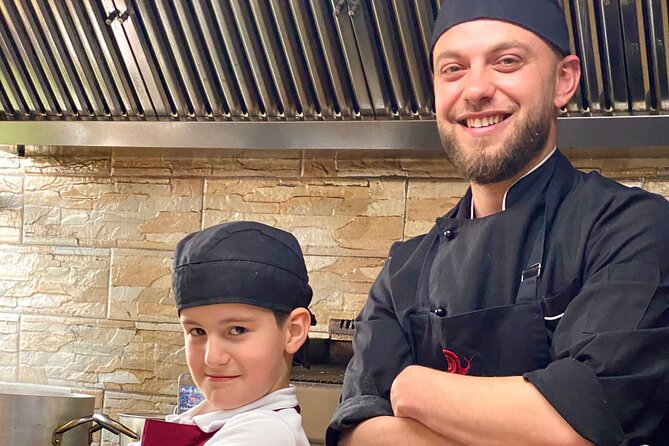
The experience is offered in English, but the instruction may not always come directly from an English-speaking chef. One account describes the chef communicating through demonstrations and a family member translating. That can make the class feel less polished, but it also keeps the exchange personal. You are not being processed through a large cooking school. You are being shown family methods by people who use them.
I would treat the class as a cultural meeting with food at its center. You learn recipes, but you also hear about local customs, inherited ingredients, and the role of spices and mountain teas. That extra conversation is one of the strongest reasons to choose this over a standard restaurant meal.
More Cooking Classes in Gjirokaster:
- Gjirokastër: Traditional Albanian Vegetarian Cooking Class
★ 4.4 · 17 reviews - Vegetarian Cooking Class @Teta Marjeta
★ 5.0 · 11 reviews - Cook Like a Local – Authentic Cooking Class in Gjirokastra
★ 3.2 · 4 reviews
What happens at the Gjirokaster Bazaar meeting point
The stated starting point is Rruga Gjin Bshpata in Gjirokastër, with the activity ending at the same place. It is near public transportation and in a central part of town, which makes it practical if you are already exploring the bazaar.
There is one important warning: the address shown during booking has been reported as incorrect. The actual location has been identified as the Edua restaurant in town. A host may also be able to arrange the class from the shopfront.
I would contact the provider through WhatsApp before setting out, especially if your schedule is tight. One booking did not appear to be known by the host on arrival, and the participant had to return several hours later. Another account describes a similar payment-record problem. Keep your booking confirmation and proof of payment on your phone. This is simple insurance and may save an awkward conversation.
The class is mobile-ticket friendly, but that does not remove the value of confirming the location. Gjirokaster’s old town is easy to explore, yet its streets and business fronts can make a wrong address costly in time.
Preparing qifqi, Gjirokaster’s famous riceballs
The planned starter is qifqi, a local specialty made from rice. These small riceballs are among the foods most closely associated with Gjirokaster, and preparing them gives you an immediate connection to the city’s home cooking.
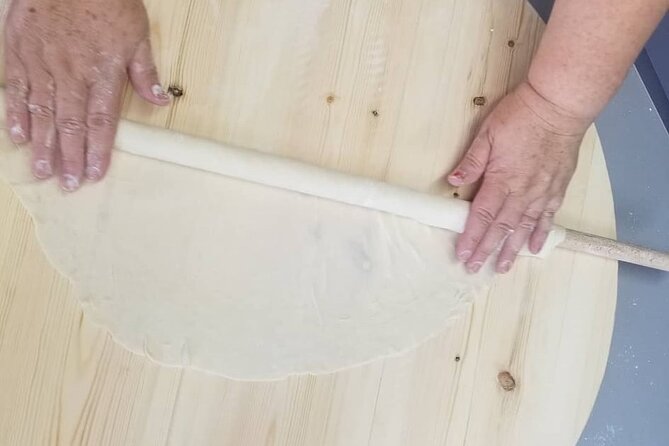
The point is not just to copy a recipe. You learn the process step by step, including how local spices are used and how the mixture is shaped. The class also introduces mountain herbs and teas, along with explanations of their uses and claimed benefits.
The cooking is described as hands-on. You should expect to work with the ingredients rather than simply watch a demonstration. A previous participant found the techniques easy enough to repeat at home, which is useful if you want a souvenir that lasts beyond the meal.
The exact amount of time spent on qifqi can vary. Some sessions have been described as roughly one hour, while the experience is advertised at about two hours. If learning each dish matters to you, ask at the beginning how many recipes will be prepared and how the timing will work.
Making OSA pasta with lamb
The main course is traditional OSA pasta with lamb meat. This is the most substantial part of the sample menu and the dish that gives the class its strongest cooking lesson.
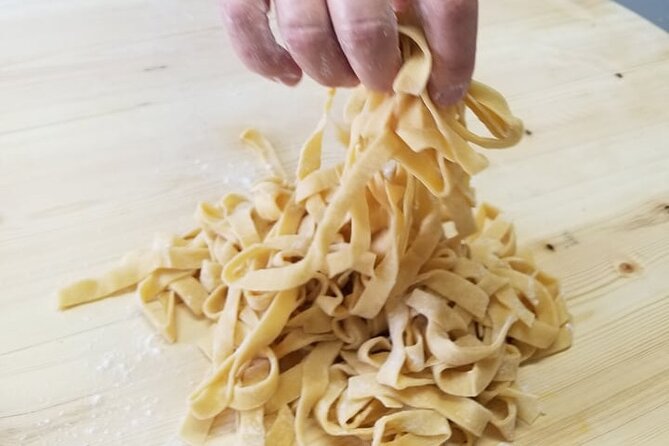
You work with artisanal pasta and learn how it is prepared alongside the lamb. The method is presented as an old Gjirokaster recipe, passed down through family tradition. The class also promises a secret ingredient, described as something inherited from one generation to the next.
The OSA lesson has received especially strong praise for its teaching method. It is described as interesting, clear, and easy to follow, with the instructor leading by example. Even if you are too eager to wait for every verbal instruction, the visual approach helps.
The main caution is that the advertised three-dish format may not always be delivered in full. In one session, the class ended after the OSA pasta, despite the expectation of a starter, main course, and dessert. This may have been an organizational mix-up, but you should confirm the full menu when you arrive.
A few more Gjirokaster trips worth comparing
- Saranda: Lekursi Castle, Blue Eye, Gjirokaster, & More Tour
★ 4.9 · 884 reviews - Daily Trip To:Blue Eye,Monastery,Gjirokaster&Lekursi Castle
★ 4.9 · 665 reviews - From Tirana/Durres: Saranda & Ksamil Beach and Gjirokastra
★ 4.9 · 428 reviews - Sarandë: Tour Gjirokaster,Blue Eye & Lekursi Castle
★ 4.7 · 220 reviews
Finishing with hasude and a shared meal
Dessert is hasude, made with starch, butter, and walnuts. It is a simple traditional sweet, but it completes the class in a useful way because you leave with a full meal rather than a single cooking exercise.
After preparing the dishes, you eat what you have made. Traditional appetizers and various drinks are also included in the experience description. The setting is meant to feel informal and welcoming, with local stories and folklore mixed into the meal.
There has been some uncertainty about drinks. One participant was asked to pay separately for a glass of wine and beer, even though drinks were understood to be included. I would ask what is covered before ordering alcohol. That small question can prevent an uncomfortable surprise at the table.
Eating your own work gives the class a satisfying finish. You can see how the ingredients come together, compare the dishes, and decide which recipes are realistic for your own kitchen. You also receive the written recipes and can take what you cooked home, adding practical value to the experience.
Why the private format matters
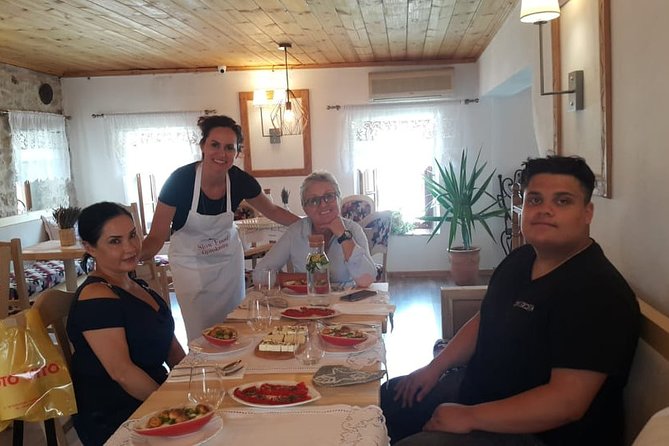
A private cooking class is usually more expensive than joining a larger group, but the difference here is not only comfort. You have direct access to the instructor and family members involved in the translation and storytelling.
If you have dietary questions, limited cooking experience, or a strong interest in local food, a private session gives you a better chance to address those needs. You can ask about the use of lamb, the spices in qifqi, or the texture of the pasta without competing with a room full of people.
The setting also suits couples, families, or a small group of friends who want a shared activity. It is less ideal if you are looking for a highly polished school with precise timing, formal instruction, and professional kitchen presentation. The charm comes from the local, family-run character, and that character can bring a little uncertainty with it.
The chef may not speak English directly, but a family translator can help. Demonstration plays a large role, so you do not need perfect language skills to follow along. Still, I would not book this expecting a long lecture on culinary theory. It is more about doing, tasting, and hearing the stories attached to the food.
Is $54.19 a fair price?
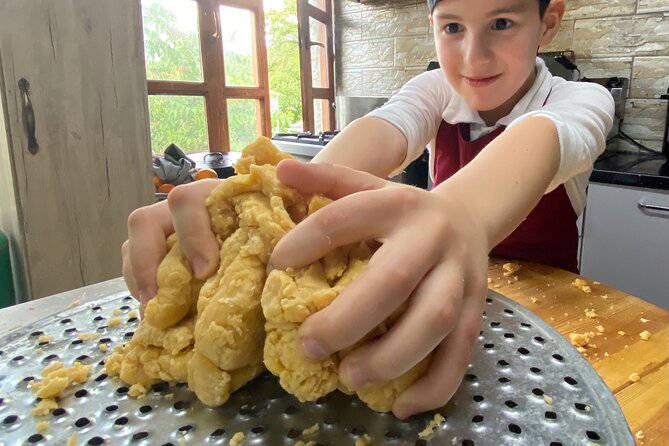
At $54.19 per person, the class is not priced like an ordinary Albanian lunch. If you only want to eat qifqi, pasta, and dessert, you may find cheaper ways to do that in Gjirokaster.
The value comes from the private instruction, the food preparation, the cultural explanation, the drinks and appetizers described as part of the experience, and the written recipes. You are paying for time with a local family and a meal that you helped create, not simply for ingredients.
The value becomes weaker if the class lasts only about an hour or stops after one dish. It also takes a knock if drinks are charged separately or if you must return later because the booking was not properly communicated.
For me, the price makes sense for someone who values a personal food experience and wants to learn recipes that can be made again at home. It is less convincing for a strict budget traveler focused mainly on meal cost. Confirm the menu, duration, meeting place, and included drinks before you commit.
Timing, language, and practical planning
The experience lasts approximately two hours, although the actual session may be shorter. I would avoid booking it immediately before a bus, transfer, or other fixed appointment. The class is best placed on a flexible afternoon or evening.
It is offered in English, but translation may be needed during the cooking. The hands-on format helps, yet you should expect some gestures and demonstrations alongside spoken instructions.
The meeting point is near public transportation, and the activity returns to that same point. Service animals are allowed. Since this is a private activity, only your own group participates.
The cancellation terms are straightforward: you can receive a full refund if you cancel at least 24 hours before the start time. Changes or cancellations made within 24 hours are not accepted for a refund. Confirmation is normally sent at booking, though reservations made within one day of travel may require additional time and depend on availability.
Who will enjoy this class most?
I would recommend it to you if you enjoy food as a way to understand a place. It suits people who want a small-scale experience, enjoy meeting local hosts, and like the idea of preparing dishes that have been passed through a family.
It is also a good match for home cooks who want usable recipes. The qifqi, OSA pasta, and hasude are not presented as restaurant tricks. The techniques are described as manageable, and the written recipes give you a chance to repeat them later.
Families and couples may appreciate the private format. The class can also work well for solo visitors, though the value depends on whether you are comfortable paying the private-tour rate alone.
I would hesitate if you need exact timing, flawless booking coordination, or a guaranteed professional English-speaking chef. I would also confirm the full three-course menu if dessert and the starter are important to you.
Should you book the Gjirokaster cooking class?
Book it if you want a friendly, personal introduction to Gjirokaster through its food. The best parts are the warm family setting, the hands-on cooking, the local stories, and the chance to sit down to a meal you helped make.
Before booking, message Edua.gjirokaster to confirm the restaurant location, the start time, the three dishes, the included drinks, and the payment record. With those details settled, this can be a memorable two hours in the bazaar and a useful break from sightseeing.
Skip it if your priority is the lowest-cost meal or a tightly managed cooking school. The experience’s appeal lies in its local character, and that means you should allow room for a little flexibility.
FAQ
Where does the cooking class start?
It starts on Rruga Gjin Bshpata in Gjirokastër, in the area of the medieval bazaar. The activity ends back at the meeting point.
How long does the cooking class last?
The advertised duration is approximately two hours. Some sessions have taken closer to one hour, so confirm the expected timing when you arrive.
What dishes are included?
The sample menu includes qifqi riceballs as a starter, traditional OSA pasta with lamb meat as the main course, and hasude for dessert.
Is the class private?
Yes. Only your group participates in the activity.
Is the experience offered in English?
Yes, the experience is offered in English. The chef may communicate partly through demonstrations, with a family member translating when needed.
Do I eat the food I prepare?
Yes. The experience includes eating the meal you have cooked, along with traditional appetizers and various drinks as described.
Are recipes provided?
Yes. You receive the written recipes, and you can take what you cooked home.
Is the meeting point close to public transportation?
Yes. The meeting point is near public transportation in Gjirokaster.
Can I cancel for a full refund?
Yes, if you cancel at least 24 hours before the experience’s start time. Cancellations or changes made less than 24 hours before the start time are not accepted for a refund.
Newly listed around Gjirokaster
- Vlora, Llogara & Dhërmi: Albanian Riviera from Durres/Golem★ 4.9 · 7 reviews
- From Vlora: Albanian Riviera, Blue Eye & Gjirokaster Day Trip★ 4.0 · 6 reviews
- Full Day South Albania Expedition Blue Eye & Gjirokaster★ 4.0 · 4 reviews
- Day Tour of Gjirokastra & Blue Eye from Tirana or Durres★ 5.0 · 10 reviews
- Gjirokastra, Full Day Trip from Tirana★ 5.0 · 2 reviews
- Full Day trip to Stone City of Gjirokastra & Blue Eye★ 5.0 · 2 reviews
- Private Day Tour of Gjirokastra from Tirana★ 5.0 · 10 reviews
- Private Tour from Tirana, Gjirokastër , Saranda and South Riviera★ 5.0 · 10 reviews
Cooking Classes, compared.
Traditional Cooking Class with Wine & Raki Tasting
Read our review →
Cooking Classes and Traditional food tasting in Tirana
Read our review →
Traditional Albanian Cooking Class in Tirana & Raki Tasting
Read our review →
Traditional Albanian Cooking Class in Tirana with Raki Tasting
Read our review →
Berat Cooking Class- Traditional Albanian Cooking Class /By Vato
Read our review →
Savor Albanian Cuisine Cooking Class with Mama Nina Berat Castle
Read our review →
Tirana Cooking Class – Traditional Albanian Recipes
Read our review →Browse the lists this tour appears in