
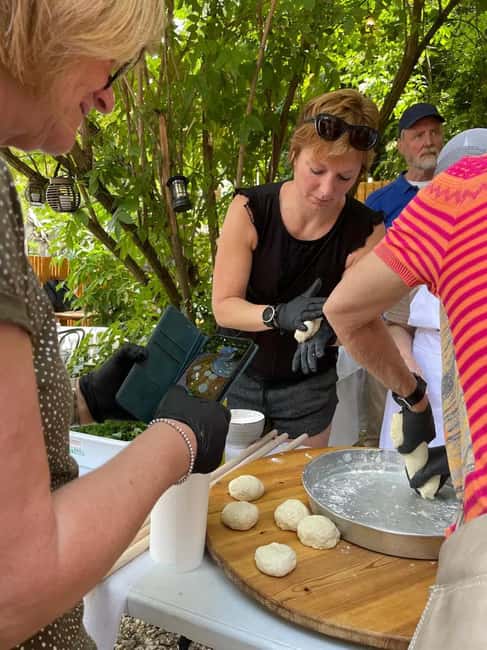
Reviewed · COOKING CLASSES
Cook Like a Local – Authentic Cooking Class in Gjirokastra
Gjirokastra puts its best stories on a plate. This two-hour class brings you into the Old Bazaar to prepare southern Albanian dishes with a local cook, and I like the setting as much as the menu. Qifqi, herb-scented rice balls fried in a traditional cast-iron mold, is a dish you are unlikely to find in an ordinary restaurant. I also like that the class ends with a full meal, drinks, and written recipes rather than stopping when the cooking is done.
The main consideration is the price: at $73 per person, this is not a bargain lunch. You are paying for instruction, food, drinks, and a personal look at family cooking traditions. The class also is not suitable for wheelchair users or people with mobility impairments, a serious point in an old bazaar reached through cobbled lanes.
In This Review
- Key points at a glance
- Cooking Southern Albania in Gjirokastra’s Old Bazaar
- Qifqi and the cast-iron mold
- Hand-rolled pasta with slow-cooked lamb
- A seasonal dessert and a table shared with your host
- Stories, folklore, and family recipes
- What the two-hour schedule means
- Is $73 a fair price?
- Practical points before you book
- Who will enjoy this class most?
- Should you book Cook Like a Local?
- FAQ
- Where does the cooking class take place?
- How long does the experience last?
- What dishes will I prepare?
- What dessert is included?
- Is lunch included?
- Are drinks included?
- What languages are available?
- Is the class suitable for wheelchair users?
- Can I cancel for a full refund?
- Can I reserve now and pay later?
Key points at a glance
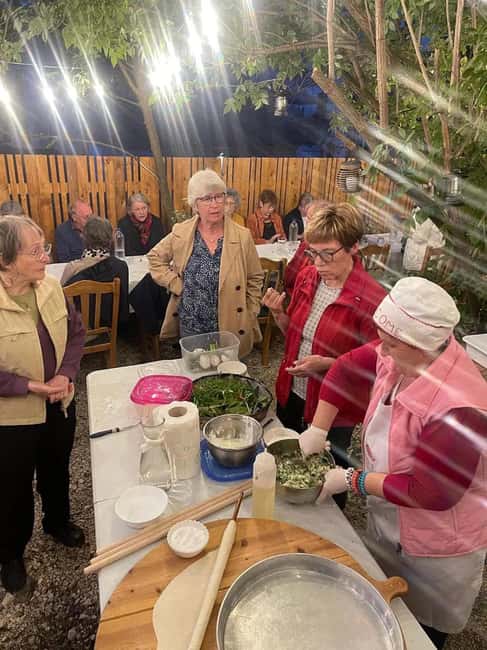
- Qifqi gives you a taste of Gjirokastra you can make at home: These small savory rice balls use fresh herbs and a regional cast-iron mold.
- The setting is part of the meal: Cooking takes place in or near the historic Old Bazaar, among cobblestones and Ottoman-era buildings.
- You prepare two substantial Albanian dishes: The menu includes qifqi and hand-rolled pasta with slow-cooked lamb.
- The class feels personal rather than factory-made: A German participant described it as a very private cooking course, while a Dutch participant praised the friendly host, food, and class.
- The menu changes with the season: Dessert may be fruit compote with honey and nuts or a sweet such as sheqerpare.
- Your recipes come home with you: The recipe cards make this more useful than a meal you simply remember.
Cooking Southern Albania in Gjirokastra’s Old Bazaar
Gjirokastra is one of Albania’s most atmospheric historic towns. Its Old Bazaar is a UNESCO World Heritage site, with stone buildings, narrow cobbled paths, and Ottoman-era architecture. That backdrop gives the class a clear sense of place before you touch a cooking spoon.
The exact cooking room may be an old stone house or a family-run guesthouse in the bazaar. The supplied information does not specify one fixed address or room, so you should expect the venue to have a traditional, home-style feel rather than a polished restaurant kitchen.
That matters because this experience is built around food as part of daily life. You are not simply shown a plate and told its ingredients. You learn how dishes fit into Albanian hospitality, how herbs are dried and stored, and how recipes survive inside families.
The class is offered in English, Italian, Greek, and Albanian. That gives you a fair chance of following the instruction even if you do not speak Albanian. Still, cooking classes often rely on gestures, demonstrations, and shared work, so you will not need perfect language skills to take part.
More Cooking Classes in Gjirokaster:
- Gjirokastër: Traditional Albanian Vegetarian Cooking Class
★ 4.4 · 17 reviews - Cooking Class
★ 4.5 · 12 reviews - Vegetarian Cooking Class @Teta Marjeta
★ 5.0 · 11 reviews
Qifqi and the cast-iron mold
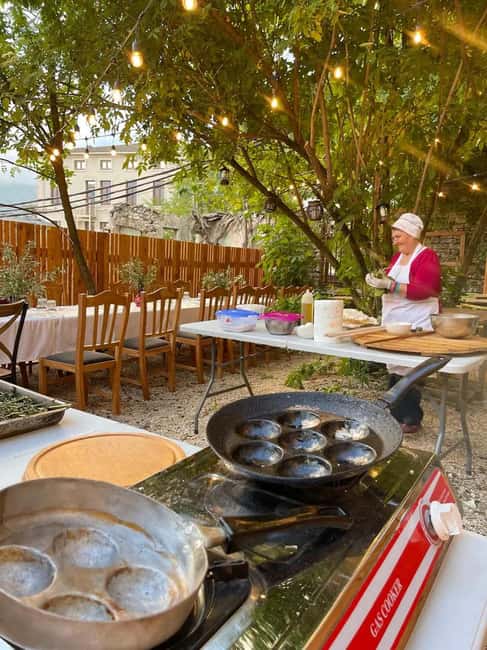
The first dish, qifqi, is one of the best reasons to book this class. These are savory rice balls mixed with fresh herbs such as mint and oregano. They are fried in a traditional cast-iron mold associated with Gjirokastra.
That mold is more than a kitchen tool. It connects the cooking lesson to the town itself. You see how a regional dish depends not just on ingredients, but also on a particular method and piece of equipment. A restaurant can serve you qifqi, but here you get to see how the shape is made and how the mixture becomes crisp and golden.
You will probably find this part especially enjoyable if you like hands-on work. The recipe is distinctive enough to be memorable, yet practical enough to attempt again at home. The recipe cards you receive afterward should help, although the supplied details do not say whether they include exact measurements or only the basic method.
Fresh herbs are an important part of the lesson. Mint and oregano give the rice balls their character, and the host explains how local herbs and spices are dried, preserved, and blended. This is useful knowledge for home cooks because it explains the flavor behind the dish, not just the name of the dish.
Hand-rolled pasta with slow-cooked lamb
The main course is osa me mish qengji, a hearty dish of hand-rolled pasta with tender lamb. It is seasoned with local spices and reflects the cooking of Albania’s mountainous south.
This is the more substantial part of the meal. Qifqi gives you a small regional specialty, while the lamb and pasta provide the comfort-food center of the class. You prepare the pasta by hand, then learn how it is paired with lamb that has been cooked slowly until tender.
The dish also shows why local cooking traditions often favor patient preparation. Hand-rolled pasta takes time, and slow-cooked lamb is not built for a rushed kitchen. The class lasts two hours, so the preparation is likely organized to fit the schedule. You should not expect an all-day workshop or a long series of separate recipes. Instead, you get two main dishes with enough time to learn their key techniques.
The meal includes a seasonal salad, which adds a fresh counterpoint to the pasta and lamb. The exact salad ingredients are not specified, so the contents may change with local availability.
A seasonal dessert and a table shared with your host
Dessert depends on the time of year and the ingredients available. You might prepare fruit compote with local honey and nuts, or a traditional sweet such as sheqerpare.
That seasonal approach is a plus. It keeps the class tied to what is available rather than forcing the same dessert into every month. It also gives you a small lesson in Albanian pantry cooking, where fruit, honey, and nuts can become a simple but satisfying finish.
After the cooking, you sit down to eat what you have prepared. Lunch includes the lamb pasta, qifqi, seasonal salad, and dessert. Drinks are included too, with tea or raki available.
Raki is a traditional Albanian spirit, so it adds a local touch to the meal. If you prefer something gentler, tea is also provided. The information does not specify a wider drinks menu, so you should not book this expecting a full wine tasting or a broad selection of beverages.
The shared table is one of the strongest parts of the experience. Food tastes different when you know how it was made, and the meal gives you time to talk with the host and other food lovers. The class is described as friendly and very private in the available feedback, which suggests a more personal format than a large demonstration with a crowd.
A few more Gjirokaster trips worth comparing
- Saranda: Lekursi Castle, Blue Eye, Gjirokaster, & More Tour
★ 4.9 · 884 reviews - Daily Trip To:Blue Eye,Monastery,Gjirokaster&Lekursi Castle
★ 4.9 · 665 reviews - From Tirana/Durres: Saranda & Ksamil Beach and Gjirokastra
★ 4.9 · 428 reviews - Sarandë: Tour Gjirokaster,Blue Eye & Lekursi Castle
★ 4.7 · 220 reviews
Stories, folklore, and family recipes
The host does more than explain technique. As you cook, you hear about the stories behind the dishes, the role of food in Albanian hospitality, and the way recipes pass through families.
This cultural context gives the class more weight than a standard lunch. You learn why certain ingredients matter and how cooking connects to family gatherings and local customs. The host may also discuss the symbolism of particular ingredients and how older methods have changed while remaining tied to tradition.
The supplied details do not name the individual instructor. The experience is operated by Kalemi Travel & Tours, and instruction is available in English, Italian, Greek, and Albanian. If having a specific chef or named teacher matters to you, confirm that when booking.
I particularly like the focus on preservation. Learning how herbs are dried and stored is a small detail, but it helps you understand the flavor profile of southern Albanian cooking. You begin to see the meal as the result of a season, a pantry, and a family habit, not just a list of ingredients.
What the two-hour schedule means
Two hours is a compact format. It works well if you want a practical food experience without giving up half a day of sightseeing in Gjirokastra.
You can expect the session to move through preparation, cooking, and the shared meal in one continuous visit. The exact order may vary depending on cooking times and the seasonal dessert. Since lamb and pasta are both included, the class will need to keep a steady pace.
This timing suits beginners and curious eaters. You get enough activity to feel involved, but you are not signing up for a lengthy professional course. If you are an experienced cook hoping to master several complex regional dishes, the short schedule may feel limited.
The class is also a good match for people who want conversation. The available feedback includes one verified three-star comment describing the course as very private and friendly, and one verified five-star comment praising the friendly host, lovely class, and food. The overall rating is 3.2 from four reviews, so I would keep expectations measured. The praise points toward warmth and food quality, but the small number of reviews does not establish a complete picture.
Is $73 a fair price?
The $73 price includes the cooking class, lunch, a seasonal salad, dessert, and drinks. You also receive recipes to take home. That is a fairer deal than comparing the price with a simple restaurant lunch, because you are buying an activity and a meal together.
The value depends on what you want from Gjirokastra. If you only want to eat local food as cheaply as possible, a restaurant will likely cost less. If you want to understand how the food is made, take part in the preparation, and spend time with a local host, the price becomes easier to justify.
The class is strongest for you if you value small, personal experiences. Qifqi is a local specialty, the lamb pasta is filling, and the recipe cards give the experience some life after you leave Albania. Those details help the class earn its price.
I would be more cautious if you are traveling on a tight budget or already have several paid food activities planned. The menu is substantial, but the experience lasts only two hours. You are paying for access and instruction rather than a long culinary program.
Practical points before you book
The Old Bazaar is made up of cobbled lanes and historic buildings. Since the activity is not suitable for people with mobility impairments or wheelchair users, consider the physical approach before reserving. The class itself may take place in an old stone house or family-run guesthouse, and no accessibility features are listed.
You can cancel free of charge up to 24 hours before the activity for a full refund. You can also reserve now and pay later, which is useful if your Gjirokastra schedule is still changing.
Starting times are not fixed in the information provided. Check availability for the date you want, especially if you are planning the class around a castle visit, a bus connection, or another scheduled activity.
The class is best placed when you can eat afterward without rushing. Although the cooking and meal fit within two hours, you will get more from the stories and conversation if you are not watching the clock.
Who will enjoy this class most?
I would recommend it to:
- First-time visitors who want a local food experience rather than another sightseeing stop
- Couples, families, and small groups who enjoy cooking together
- Beginners who want clear, practical recipes
- Food-focused visitors interested in regional dishes rarely seen outside Gjirokastra
- Anyone who likes taking home a skill, not just a photograph
It may be less suitable for visitors with mobility difficulties, strict dietary needs, or little interest in meat. The main course centers on lamb, and the included menu is specifically built around lamb pasta, qifqi, salad, and dessert. No vegetarian, vegan, allergy, or substitution information is provided, so ask before booking if that matters to you.
Should you book Cook Like a Local?
Book this class if you want a friendly, compact introduction to Gjirokastrian food in a historic setting. The strongest reasons are the unusual qifqi preparation, the hand-rolled pasta with lamb, the personal stories, and the chance to sit down with the person who taught you.
Skip it if you want a cheap meal, a long professional cooking course, or a fully accessible activity. At $73, it is best viewed as a cultural experience with lunch included. For the right visitor, the recipe cards and the knowledge of how qifqi is made may be worth more than another restaurant meal.
FAQ
Where does the cooking class take place?
The class takes place in Gjirokastra’s atmospheric Old Bazaar, a UNESCO World Heritage site. The cooking space may be an old stone house or a family-run guesthouse within the bazaar.
How long does the experience last?
The cooking class lasts two hours. Starting times vary, so you need to check availability for your chosen date.
What dishes will I prepare?
You will prepare qifqi, savory rice balls with herbs, and osa me mish qengji, hand-rolled pasta served with slow-cooked lamb. You will also prepare a seasonal Albanian dessert.
What dessert is included?
The dessert depends on the season and fresh ingredients. It may be fruit compote with local honey and nuts, or a traditional sweet such as sheqerpare.
Is lunch included?
Yes. Lunch includes pasta with lamb, qifqi, seasonal salad, and dessert.
Are drinks included?
Yes. Drinks include tea or raki.
What languages are available?
The class is offered in English, Italian, Greek, and Albanian.
Is the class suitable for wheelchair users?
No. The activity is not suitable for wheelchair users or people with mobility impairments.
Can I cancel for a full refund?
Yes. You can cancel up to 24 hours in advance for a full refund.
Can I reserve now and pay later?
Yes. You can reserve your place and pay later, which keeps your plans flexible.
Newly listed around Gjirokaster
- Vlora, Llogara & Dhërmi: Albanian Riviera from Durres/Golem★ 4.9 · 7 reviews
- From Vlora: Albanian Riviera, Blue Eye & Gjirokaster Day Trip★ 4.0 · 6 reviews
- Full Day South Albania Expedition Blue Eye & Gjirokaster★ 4.0 · 4 reviews
- Day Tour of Gjirokastra & Blue Eye from Tirana or Durres★ 5.0 · 10 reviews
- Gjirokastra, Full Day Trip from Tirana★ 5.0 · 2 reviews
- Full Day trip to Stone City of Gjirokastra & Blue Eye★ 5.0 · 2 reviews
- Private Day Tour of Gjirokastra from Tirana★ 5.0 · 10 reviews
- Private Tour from Tirana, Gjirokastër , Saranda and South Riviera★ 5.0 · 10 reviews
Cooking Classes, compared.
Traditional Cooking Class with Wine & Raki Tasting
Read our review →
Cooking Classes and Traditional food tasting in Tirana
Read our review →
Traditional Albanian Cooking Class in Tirana & Raki Tasting
Read our review →
Traditional Albanian Cooking Class in Tirana with Raki Tasting
Read our review →
Berat Cooking Class- Traditional Albanian Cooking Class /By Vato
Read our review →
Savor Albanian Cuisine Cooking Class with Mama Nina Berat Castle
Read our review →
Tirana Cooking Class – Traditional Albanian Recipes
Read our review →Browse the lists this tour appears in