
Reviewed · WALKING TOURS
Small Group Walking Tour of Tirana 2.5 Hours Main LandMarks
Tirana tells its story in layers. This affordable walking tour links Ottoman landmarks, communist symbols, markets, and modern neighborhoods in one well-paced route. I especially like the small maximum of 15 people and the way the tour connects old Tirana with its difficult communist past. The guide, Skerdi, is also praised for clear explanations, friendly conversation, and useful cafe and restaurant tips.
The main limitation is simple: you see every major site from the outside. Museum and attraction admission is not included, so this is best viewed as a city introduction rather than a tour of Tirana’s interiors. Still, at about $12.04 per person, it offers a lot of context for very little money.
In This Review
- Key points to know before you book
- Why this 2.5-hour walk works well in Tirana
- Starting at Skanderbeg Square
- The National Historical Museum and its giant mosaic
- Et’hem Bey Mosque and Bunk’Art 2
- The New Bazaar and everyday Tirana
- Tanners’ Bridge and the Castle of Tirana
- Martyrs’ Boulevard and the Pyramid
- Mother Teresa Square and the Polytechnic University
- Blloku, the Orthodox Church, and modern Tirana
- Pace, group size, and what is not included
- What the guide adds
- Should you book this Tirana walking tour?
- FAQ
- How long does the Tirana walking tour last?
- Where does the tour begin and end?
- Are entrance tickets included?
- Is the National Historical Museum included inside the tour?
- How many people can join the tour?
- Is the tour offered in English?
Key points to know before you book
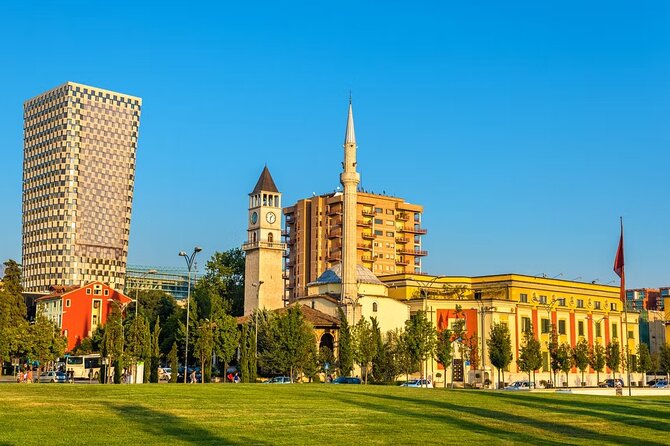
- A full central Tirana route: The walk covers Skanderbeg Square, the New Bazaar, Tanners’ Bridge, the Castle of Tirana, the Pyramid, Mother Teresa Square, and Blloku.
- Small-group attention: The group is capped at 15 people, making it easier to ask questions and hear the guide.
- History from Ottoman rule to communism: The route explains religious buildings, socialist architecture, Cold War bunkers, and Albania’s post-communist changes.
- Exterior sightseeing only: You do not enter the National Historical Museum, Et’hem Bey Mosque, Bunk’Art 2, or other interiors.
- Useful local advice: Skerdi has shared recommendations for cafes, bars, and restaurants, along with personal stories about Albania.
- Easy start and finish: The walk begins and ends at Skanderbeg Square and lasts about 2 hours and 30 minutes.
Why this 2.5-hour walk works well in Tirana
Tirana is compact enough to explore on foot, but its story is not always obvious. A grand square may reflect Ottoman planning, Italian influence, socialist building styles, and modern redevelopment all at once. Without some explanation, you can walk past the city’s major sights and miss what makes them important.
This tour gives you that framework. The route moves from central Tirana toward the New Bazaar, then through older parts of the city and down the main boulevard toward the Pyramid, Mother Teresa Square, and Blloku. You get a broad introduction instead of spending the whole morning at one museum.
I like the pace on paper. Most stops last between 5 and 15 minutes, with time for the guide to explain the setting without turning every building into a long lecture. A 2.5-hour walk is long enough to cover the main center but short enough to fit around lunch, an afternoon visit, or another activity.
The small group matters here. With no more than 15 people, you should have a better chance of hearing the guide in busy public spaces and asking about places that interest you. Skerdi is praised for answering general questions about Albania as well as explaining the formal history, which is useful if this is your first visit.
More Walking Tours in Tirana
- Walking Tour of Tirana
★ 5.0 · 646 reviews - Tirana: Express Walking Tour with a Guide
★ 4.8 · 503 reviews - Tirana Center: Magic Walking Tour French/Italian/English Etc
★ 4.9 · 402 reviews
Starting at Skanderbeg Square

The tour begins at Skanderbeg Square, Tirana’s main public space. This is the right starting point because it gives you an immediate sense of the capital’s scale and civic identity.
The guide introduces Albania’s history and culture here, then explains how the square changed over time and helped shape the city’s growth. You will also hear about the buildings around it, including the National Historical Museum, the Opera House, and the former Parliament building.
Look around as you listen. The square is not just an open meeting place. Its surrounding buildings show the different periods that shaped Tirana, from Ottoman influence to communist-era planning and more recent changes. The guide’s job is to help you read those layers.
The walk later returns here, so you can use the opening explanation to get your bearings and the final stop to think back over the route. The meeting point is listed as Sheshi Skënderbej, making it a straightforward place to find the group.
The National Historical Museum and its giant mosaic
The National Historical Museum is an exterior stop only. You do not enter, and an admission ticket is not part of the tour.
The reason to pause here is the large facade mosaic called The Albanians. The guide explains its figures and symbolism, including the way the artwork presents Albania’s history and national unity. That context gives the building more meaning than a quick photograph would provide.
This is one of the tour’s useful choices. The museum itself could take considerable time, but the walk gives you an introduction without requiring you to commit to an indoor visit. If you later decide you want more historical detail, you can return on your own, subject to opening arrangements and admission costs.
The exterior-only format is also the first reminder to set realistic expectations. You are receiving interpretation of the landmarks, not guided entry into them.
Et’hem Bey Mosque and Bunk’Art 2
The Et’hem Bey Mosque is another outside visit. Dating from the late 18th century, it is presented as one of Tirana’s most attractive historic buildings. The guide explains its Ottoman-era role, its religious importance, and its reopening after the communist period.
That reopening has symbolic weight. The mosque represents a part of Albania’s religious life that survived a period when the communist government restricted religious practice. Even from outside, the building helps show how sharply Albania’s political story changed.
Next comes Bunk’Art 2, also viewed from the outside. This former nuclear bunker was built during Enver Hoxha’s rule, when Albania was highly isolated and prepared for possible conflict. The guide explains why such a structure existed and what it says about the fear and survival thinking of the Cold War era.
If you want to enter Bunk’Art 2, you will need to arrange that separately. This tour only provides the background. For many people, that is enough for a first orientation, but history-focused visitors may want extra time inside the museum afterward.
Somewhere else in Albania, a completely different day:
- From Tirana: Bovilla Lake & Gamti Mountain Hiking Day Trip
★ 4.9 · 4,397 reviews - From Tirana: Bovilla Lake & Gamti Mountain Hiking Tour
★ 4.9 · 3,003 reviews - From Tirana: Bovilla Lake & Gamti Mountain Viewpoint Hike
★ 4.8 · 2,053 reviews - Tirana/Durres/Golem: Saranda, Ksamil, Blue Eye Day Trip
★ 4.8 · 1,584 reviews
The New Bazaar and everyday Tirana
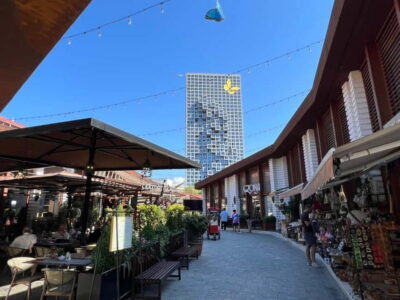
The route then reaches Pazari i Ri, or the New Bazaar. This is a welcome change from monumental squares and official buildings.
The guide explains how the area functioned as a trading center and how its revitalization changed its role in present-day Tirana. You get a look at the local market atmosphere and a chance to understand how the district fits into daily city life.
This stop helps balance the political history. Albania is more than museums, statues, and government buildings. Market areas show how people shop, meet, and use the city in ordinary ways. The scheduled stop is about 15 minutes, so do not expect a long independent market visit, but it should give you enough time to take in the setting.
The guide’s food and drink suggestions are particularly useful here and later in Blloku. Skerdi is praised for offering recommendations for cafes, bars, and restaurants, so this is a good point to ask for practical advice about where to go after the walk.
Tanners’ Bridge and the Castle of Tirana
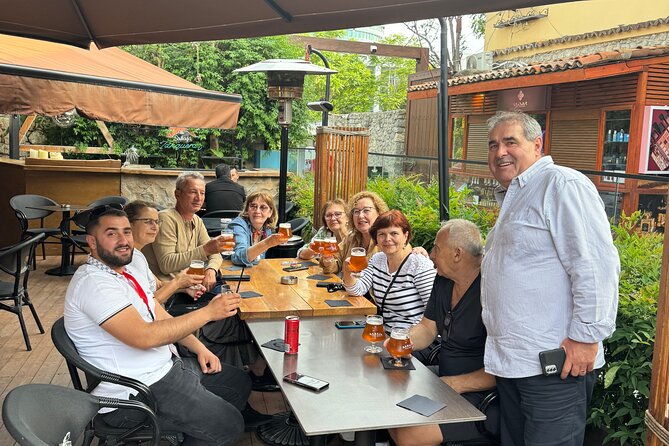
At Tanners’ Bridge, the guide shifts the focus to Tirana’s early beginnings. You hear how the bridge was connected to the city’s growth and how it linked different parts of the area in earlier times.
Do not expect a large, dramatic bridge complex. The appeal is the story and the sense of scale. This stop shows that Tirana’s origins were not confined to the grand center you see today.
The walk continues to the Castle of Tirana, identified as Kalaja Tiranes Familja Topitani. This is not presented as a conventional fortified attraction with a large preserved structure. Instead, its remaining elements offer clues about the city’s early development.
That makes the guide’s explanation important. Without context, the castle area could seem modest. With the history filled in, it becomes part of the longer story of how Tirana grew into Albania’s capital.
Martyrs’ Boulevard and the Pyramid
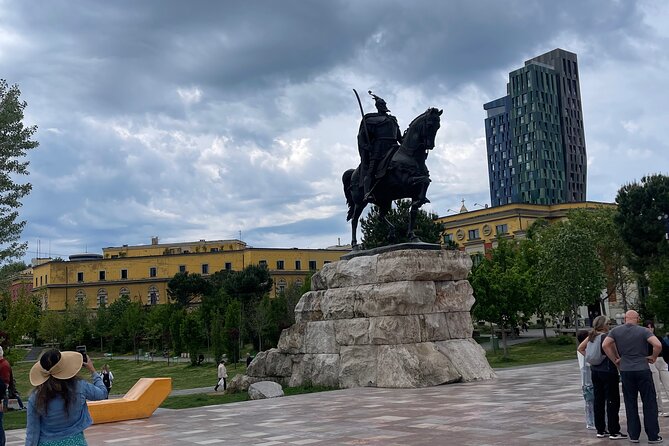
The route then follows Martyrs of the Nation Boulevard, one of Tirana’s most important ceremonial and political streets. Here, the guide discusses the country’s political evolution, its struggle for freedom, and key events connected with the boulevard.
The street links several important parts of the capital, so this section gives you a sense of how Tirana presents national memory through public space. It is also a good place to notice the contrast between formal avenues and the more informal market and neighborhood areas visited earlier.
The Pyramid of Tirana is the major stop in this part of the walk. Built during the communist era, the Pyramid had an original purpose connected to Enver Hoxha and the country’s political system. Its later history reflects the changes Albania faced after communism.
The Pyramid is fascinating partly because it has never settled into one simple meaning. It can be read as a former political symbol, an unusual piece of architecture, and a sign of Tirana’s effort to reshape its recent past. The guide explains that background while you view the building from outside.
This is one of the places where a good guide adds real value. The structure itself is memorable, but the political story behind it helps you understand why it remains such a talked-about part of Tirana.
Mother Teresa Square and the Polytechnic University
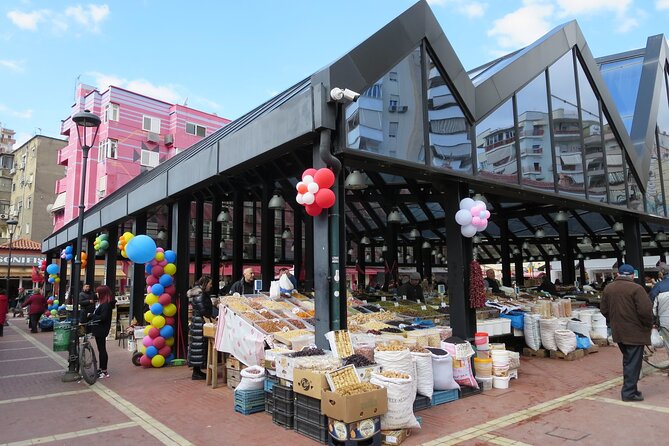
Mother Teresa Square brings you into a more formal and spacious part of the city. The guide explains why it was named for the Albanian-born Saint Teresa and points out the institutions around it.
The square reflects national pride and modern civic planning. It also shows a different side of Tirana from the market streets and central commercial areas. The stop is brief, about five minutes, so the main benefit is orientation and context rather than a long visit.
The nearby Polytechnic University of Tirana was built in the 1950s in a socialist-realist style. The guide connects it with Albania’s postwar focus on education and scientific progress.
Architecture can be difficult to understand without knowing the political setting in which it was built. This explanation helps you see the university as more than a large institutional building. It represents the priorities of a state trying to organize society around education, science, and socialist ideals.
Blloku, the Orthodox Church, and modern Tirana
The final major neighborhood is Blloku, once a restricted district reserved for government officials during communist rule. Ordinary residents could not freely enter the area in the same way they can today.
Now Blloku is known for cafes, bars, and active local life. The contrast is one of the clearest examples of Tirana’s post-communist transformation. A neighborhood once associated with political privilege has become one of the city’s popular social districts.
The tour also includes the Orthodox Church and explains how the area fits into Tirana’s changing identity. This portion is especially helpful if you want to know where to spend time after the tour. Ask the guide for current suggestions, since Skerdi has been praised for practical recommendations.
The 15-minute stop gives you an introduction, not an evening in Blloku. If the neighborhood interests you, return later and explore it at your own pace.
Pace, group size, and what is not included
The tour lasts about 2 hours and 30 minutes and keeps a comfortable walking pace. The route includes many stops, but most explanations are short, usually 5 to 15 minutes.
You should still wear comfortable shoes. The activity is a city walk with repeated standing and walking between districts, not a vehicle-based sightseeing trip. Most people can participate, and the route is near public transportation. Service animals are allowed.
The maximum group size is 15. Group discounts are available, and the tour is offered in English with a mobile ticket. Coffee, tea, food, and other drinks are not included, so plan to buy refreshments separately if you need them.
The biggest point to understand is the exterior format. You stop at the National Historical Museum, Et’hem Bey Mosque, and Bunk’Art 2, but you do not go inside. The same principle applies to the other landmarks. You are paying for a guide’s explanation, route planning, and local advice, not admission to attractions.
At $12.04, I think the value is strong. A private guide would cost much more, while a self-guided walk would leave you to research the meaning of the sites yourself. The tour makes the most sense on your first day in Tirana, when context and orientation are worth more than a long indoor visit.
What the guide adds
The strongest part of this experience is the human explanation. Skerdi is repeatedly described as friendly, professional, patient, and well informed about Albania’s history. He has also contacted people before the walk to confirm the exact meeting location, a small but helpful touch in an unfamiliar city.
You can expect coverage of the Middle Ages, Ottoman rule, the communist period, the Cold War, and the post-communist changes that shaped modern Tirana. The value is not only in hearing dates. It is in connecting a mosque, bunker, boulevard, university, market, and former political neighborhood into one understandable story.
I would also use the question time. Ask about restaurants, cafes, bars, and places worth returning to. The guide’s personal stories and local suggestions can make the walk feel less like a list of monuments and more like an introduction to the city.
Should you book this Tirana walking tour?
Book it if you want a low-cost first look at Tirana, prefer walking to a bus tour, and care about the story behind the buildings. It suits solo visitors, couples, and small groups who want a friendly guide and a broad route through the capital.
It is also a good choice for history lovers, especially those interested in Albania’s communist era and the changes that followed. The Pyramid, Bunk’Art 2, Martyrs’ Boulevard, and Blloku make that period a central part of the walk.
Skip it if your main goal is entering museums, touring religious interiors, or spending a long time at one attraction. In that case, use this walk as an orientation and plan separate visits afterward.
For most first-time visitors, the combination of a 15-person limit, a relaxed 2.5-hour route, strong local guidance, and a price near $12 makes this an easy recommendation. The tour begins and ends at Skanderbeg Square, and free cancellation is available up to 24 hours before the start time.
FAQ
How long does the Tirana walking tour last?
The tour lasts approximately 2 hours and 30 minutes.
Where does the tour begin and end?
It begins at Skanderbeg Square, Sheshi Skënderbej, in Tirana, and ends back at the same meeting point.
Are entrance tickets included?
No. The tour visits the main landmarks from the outside, and entrance tickets are not included.
Is the National Historical Museum included inside the tour?
No. The guide stops outside the museum and explains the large mosaic called The Albanians, but the group does not enter.
How many people can join the tour?
The maximum group size is 15 people.
Is the tour offered in English?
Yes. The experience is offered in English and includes a professional certified tour guide.
Newly listed around Tirana
- Wonderful Sunset and Dinner in the Castel Of Petrela★ 4.6 · 4 reviews
- Zipline Tirana Adventure & Petrela Castle – With Transport★ 4.4 · 10 reviews
- Wine Tasting & Vineyards Escape near Tirana★ 4.9 · 8 reviews
- Walking Tour in Tirana, Albania★ 3.7 · 28 reviews
- Vlora, Dhermi & Llogara Day Trip from Durrës or Golem★ 5.0 · 5 reviews
- Day Tour to Petrela Castle and Zip Line Albania Adventure★ 5.0 · 10 reviews
- From Tirana: Mount Dajti Adventure, Local Vibes & Cable Car opt★ 4.5 · 6 reviews
- Winetasting tour in Alpeta winery – Roshnik village by 1001 Albanian Adventures★ 5.0 · 26 reviews
Walking Tours, compared.
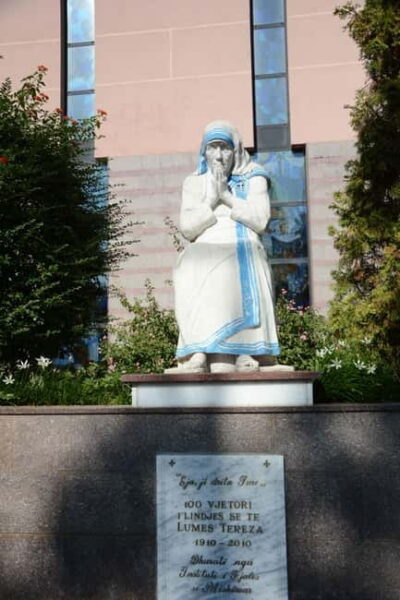
Tirana Center: Magic Walking Tour French/Italian/English Etc
Read our review →
Blue Eye Kayak and walking tour & Lekursi Castle
Read our review →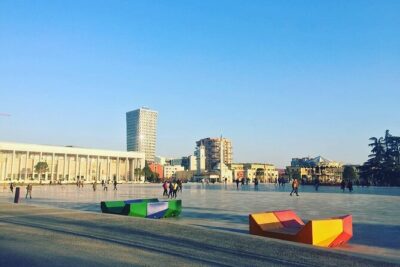

Browse the lists this tour appears in