
Reviewed · WALKING TOURS
Private Walking Tour Visit to Durrës with Licensed Guide
Durrës rewards curious walkers. This private tour connects Roman, Byzantine, Venetian, Ottoman, Italian, communist, and modern Albania in a compact city route. I like the mix of major sights and easy-to-miss traces, especially the medieval bath, old churches, and 1928 city planning details. I also like the private format, since you can ask questions without keeping pace with a large group.
The price is a strong point at $24.10 per person, particularly if you are sharing the guide with family or friends. The main consideration is time: fourteen stops in roughly two to three hours means several locations receive only ten minutes, and the tour does not include the extra fee for the Venetian Tower’s projection and upper balcony.
In This Review
- What makes this Durrës walk worth your time
- Starting beside the Venetian Tower
- The Venetian Tower, from defense to multimedia center
- Saints, churches, and the marks of the communist period
- Bulevardi Epidamn and a short local break
- Aleksandër Moisiu’s house and Durrës’s layered identity
- The amphitheater and the city built over the past
- Saint Lucy and the return of religious life
- Sheshi Liria and the public face of the city
- City Hall, the Grand Mosque, and twentieth-century Durrës
- The Byzantine Forum and the last archaeological chapter
- Price, pace, and practical value
- The guide’s role makes the difference
- Who should book this walk?
- Should you book the Durrës private walking tour?
- FAQ
- Where does the tour start?
- Where does the tour end?
- How long does the walking tour last?
- What language is offered?
- Is this a private tour?
- Are entrance tickets included?
- Are refreshments included?
- What is the cancellation policy?
What makes this Durrës walk worth your time
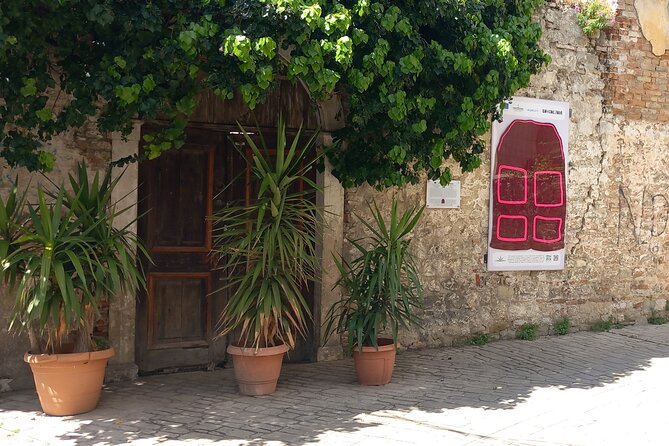
- Roman ruins meet modern city life: The amphitheater and Byzantine forum sit among ordinary streets, homes, shops, and public buildings.
- A private guide makes the city easier to read: You get explanations of maps, building styles, religious sites, and urban changes that are easy to miss alone.
- The Venetian Tower has layers of use: Its story reaches from medieval fortification to Ottoman rule, World War II, communism, and its current multimedia role.
- Refreshment stops add local texture: The walk pauses at two or three local places for coffee, water, burek, ice cream, or orange juice.
- The route covers more than ancient history: You will see Albanian, Ottoman, Italian, communist, and present-day civic architecture.
- The finish is practical: The tour ends at Sheshi Liria, a central square from which you can continue in several directions.
Starting beside the Venetian Tower
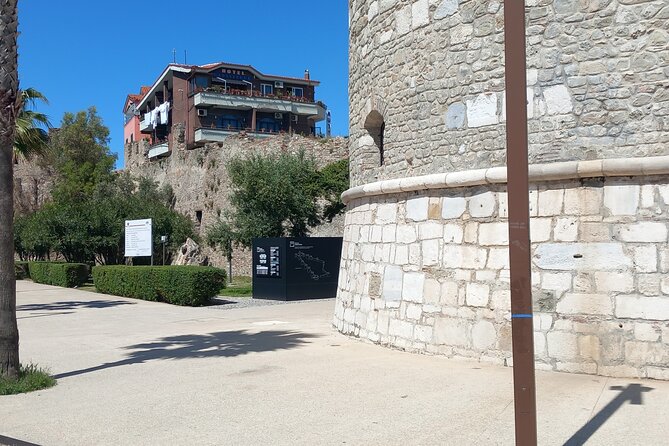
Meet at the Venetian Tower of Durrës, at 8C5W+VQC. This is a useful starting point because the tower introduces the city’s military past before the walk moves into churches, public buildings, and archaeological sites.
The opening section uses old maps, photographs, and physical locations to explain how Durrës grew. You will hear about the second-century amphitheater, Byzantine and Norman defenses, Venetian fortifications, Ottoman additions, industrial-era planning, and recent urban change. That broad opening matters because Durrës is not a city where every period sits in a tidy museum display. Old walls, newer streets, and modern construction often share the same view.
The first stop is listed at about fifteen minutes, followed by another ten minutes inside and around the Venetian Tower. The pace is quick, but the private setting gives you a chance to ask which parts of the fortifications are original, rebuilt, or adapted over time.
More Private Tours in Tirana
- Semi-Private Tour of North Macedonia: Ohrid & Struga from Tirana
★ 5.0 · 170 reviews - Private Ohrid Day Tour and Authentic Village from Tirana & Durres
★ 5.0 · 71 reviews - Semi-Private Day Tour of Montenegro: Budva & Kotor from Tirana
★ 5.0 · 71 reviews
The Venetian Tower, from defense to multimedia center
The tower’s appeal is not just its shape. The guide explains its construction methods and compares it with similar towers around the Adriatic and farther afield. You will also hear how its purpose changed under Ottoman rule, during its military decline before World War II, and throughout Albania’s communist period.
Interior access is included. The projection and raised balcony require an additional payment, so budget a little extra if those features matter to you. That distinction is worth noting before you arrive, since the free portion lets you see inside, but not every presentation feature.
For me, this is one of the most useful moments of the walk because it gives a physical object several different roles. The tower was not frozen in one medieval chapter. It continued to be reused, neglected, altered, and finally repaired with European Commission funding.
Saints, churches, and the marks of the communist period
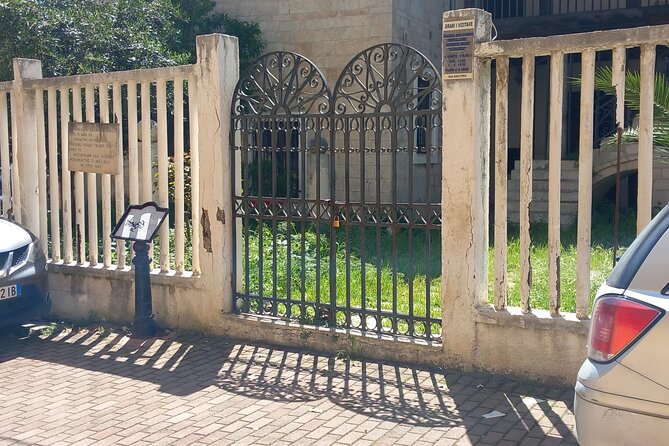
The Church of Apostle Paul and Saint Asti takes about ten minutes. Here, the guide introduces the two saints connected with Durrës and points out traces of the former Church of Saint Spiridon, which was destroyed during the communist regime.
That detail gives the church stop a sharper edge. You are not only looking at a religious building. You are also seeing how political power affected worship and city buildings. Religious activity was legally banned during the communist era, and later sites had to recover their public and spiritual role.
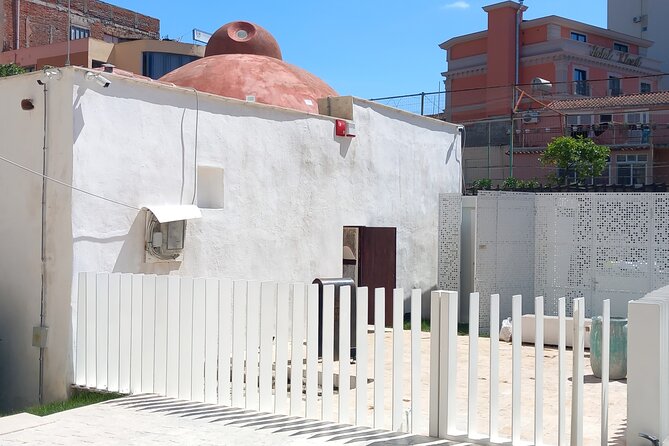
The route then reaches the Ottoman Hamam, or medieval bath. Built in the seventeenth century, it may have been privately owned or connected with government buildings near the seafront. It may also have been linked to the White Mosque, once only about five meters to the west.
The bath survives mainly through its traces, so this is an explanation-heavy stop rather than a grand interior visit. The guide points out remnants of the old road to Durrës Castle and explains the steam and heating systems used in the bath. If you prefer intact monuments, this may feel modest. If you like reconstructing a vanished city from fragments, it is a rewarding ten minutes.
Bulevardi Epidamn and a short local break
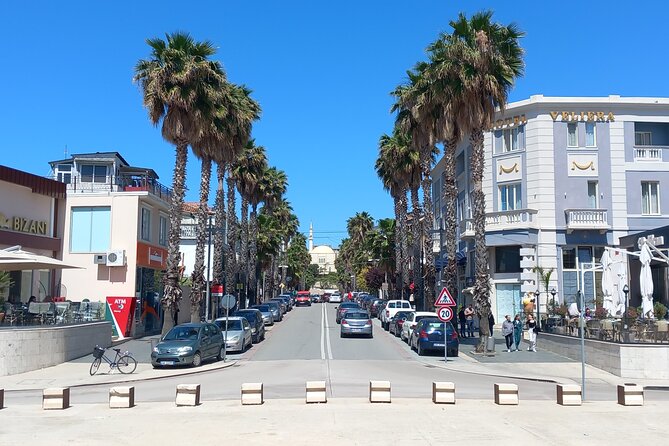
A walk along Bulevardi Epidamn shifts attention from ancient remains to town planning. The early residential buildings here relate to Durrës’s first urban regulatory plan, created in 1928. The guide explains how that plan influenced construction investments and the shape of this road.
This is a good reminder that city history is not only about famous ruins. A street, a facade, or the placement of a public building can show how Durrës changed after national independence and during the years when Italian influence affected local development.
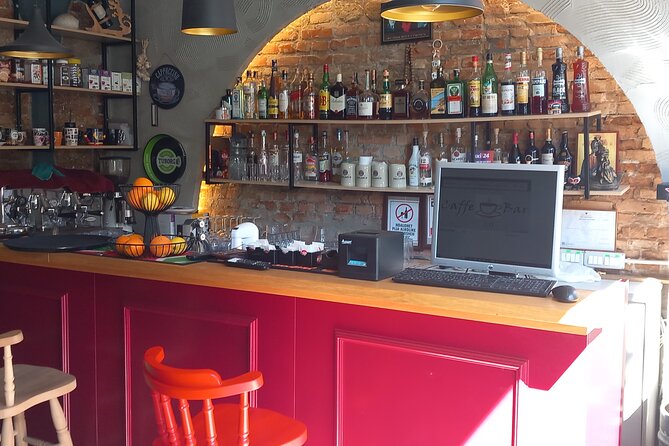
The route pauses at two or three local spots for a drink or snack. Your choices may include coffee, water, burek, ice cream, or orange juice. The supplied details do not specify whether these purchases are included, so treat them as optional refreshments rather than part of the tour price.
The pause also helps break up the steady walking and gives you a chance to ask about the buildings you have just passed. With fourteen stops, a small refreshment break is welcome.
More Walking Tours in Tirana
- Walking Tour of Tirana
★ 5.0 · 646 reviews - Tirana: Express Walking Tour with a Guide
★ 4.8 · 503 reviews - Tirana Center: Magic Walking Tour French/Italian/English Etc
★ 4.9 · 402 reviews - Walking tour of Tirana
★ 4.8 · 285 reviews
Aleksandër Moisiu’s house and Durrës’s layered identity
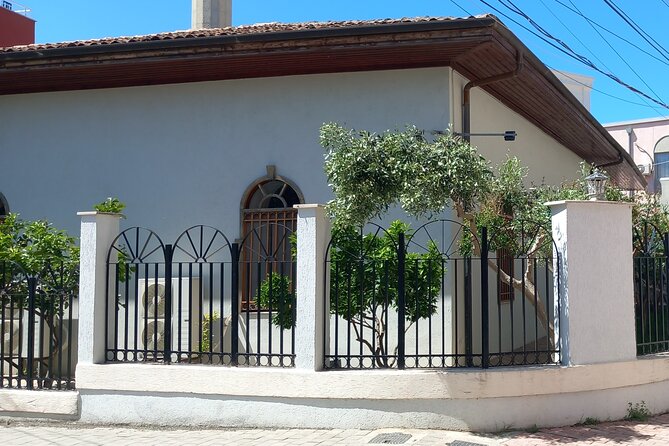
The Aleksandër Moisiu Museum occupies a former residence with several historical roles. The house once served as the English consulate in Durrës, which became the national capital after independence. It is also linked to Aleksandër Moisiu, one of the city’s best-known international theatre artists.
The building was damaged by the 2019 earthquake, along with the Byzantine tower beside it, and is awaiting further investment. That current condition is part of the story. You see a place with cultural importance that has not yet received all the work it needs.
This stop also introduces traditional Albanian and Durrës architecture. The value is less about a polished museum visit and more about understanding the building’s civic, diplomatic, artistic, and architectural roles.
Next comes Fatih Mosque, one of Albania’s three oldest mosques. Built in 1501, it sits at the base of a Byzantine wall between two outer towers. The wall shelters the minaret from direct sea views and possible attacks, while the mosque uses similar building materials and supporting sections of the older fortification.
That physical relationship between mosque and wall is the key point. Durrës’s religious buildings were shaped by the structures already in the city, rather than appearing in isolation. The stop lasts about ten minutes, enough for the main explanation but not a long visit.
The amphitheater and the city built over the past
The Durrës Amphitheatre is the route’s major ancient site. The guide explains how this Roman urban structure coexists with the city built above and around it. The result is a particularly clear lesson in how old cities change: archaeology is not always separated from daily life by a wide park or formal boundary.
The amphitheater was excavated in 1966 by archaeologist Vangjel Toci. The guide also discusses the secrets revealed by that work and the government project intended to restore the full structure while protecting its many historical layers.
The listed visit lasts about ten minutes, so expect an overview rather than a long archaeological session. If the amphitheater is your main reason for visiting Durrës, you may want extra independent time after the tour. The guide’s explanation is useful for giving the site context, but the schedule moves on quickly.
Saint Lucy and the return of religious life
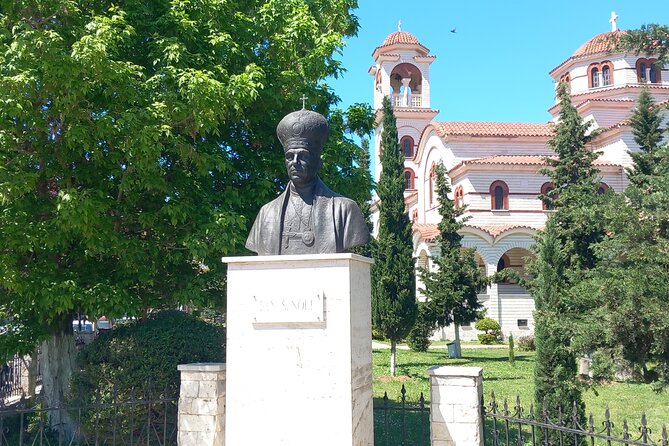
The Catholic Church of Saint Lucy, also called Kisha Katolike Shën Dominiku in the route details, is reached through Durrës’s winding streets. The guide covers the church’s construction, important figures in city government, and the effect of the communist ban on religion.
This stop works well after Fatih Mosque and the earlier church because it shows the city’s religious variety without treating each building as an isolated monument. You see how different faith communities contributed to Durrës and how those communities dealt with political change.
The present condition is placed beside the past. Again, the emphasis is not only on beauty or age. It is on survival, interruption, and continued use.
Sheshi Liria and the public face of the city
The walk reaches Freedom Square, or Sheshi Liria, one of Durrës’s earliest planned squares. The 1928 urban plan first imagined it as a floral garden. Today it is associated with the Municipality and the Grand Mosque.
The guide traces the square from Ottoman times through the years before World War II and into the present. You will also learn how the city expanded from here toward the neighborhoods once called Varosh.
This is a valuable orientation point. A square can tell you how officials wanted the city to function, where people gathered, and how new districts spread outward. It also gives the route a natural pause before the final group of civic and cultural buildings.
City Hall, the Grand Mosque, and twentieth-century Durrës
Durrës City Hall was built in 1931 and reflects Italian design preferences of that period. Its broad central balcony once served for public speeches in the square. A public clock was placed on top after the earlier clock tower was destroyed by the 1926 earthquake.
The building remains the center of local government, so this stop links architecture with current civic life. The clock detail is especially useful because it connects a natural disaster, a lost landmark, and a replacement public feature.
The Grand Mosque, or Xhamia E Madhe E Durresit, was built in 1939 with funding from local merchants during Italy’s strong economic influence before World War II. It was closed and altered under communism, then restored after the 1990s.
The guide presents the mosque as a sign of religious endurance and social continuity. Its story gives you another clear example of how Durrës’s buildings reflect political shifts, not just architectural fashion.
The Palace of Culture, now linked with the Aleksandër Moisiu Theatre, dates from 1960. It was the first structure of its type in Albania. Here, the focus turns to Albanian architecture of the 1960s and its influence on buildings across the country.
This final cultural stop is useful because it prevents the tour from ending in antiquity. You see how the city expressed a new national and political identity during the communist period.
The Byzantine Forum and the last archaeological chapter
The final stop is the Rotonda, or Byzantine Forum, discovered by Vangjel Toci. This open archaeological area helps explain the change from Late Antiquity to the Middle Ages.
The forum is especially useful after the amphitheater because the two sites show different stages of urban life. One points to Roman public culture, while the other helps you understand later Byzantine development. Artifacts displayed in the open forum offer a direct look at that period.
The walk ends at Sheshi Liria. From the square, you can head in any direction through the main city center, making the finish convenient for continuing your own exploration.
Price, pace, and practical value
At $24.10 per person, this is good value if you want a guide to connect the sites. The entrance fees listed for the fourteen stops are free, and the tour is private, so your group receives personal attention rather than following a large crowd.
The value depends on your expectations. You are paying mainly for interpretation, route planning, and local context, not for a series of paid museum entries. The Venetian Tower’s projection and balcony cost extra, and refreshments are not clearly listed as included.
The stated duration is two to three hours. The individual stops add up to a brisk schedule, with most locations receiving ten minutes. You will walk through city streets, pause often, and hear many short explanations. It is best for someone who wants a well-organized first look at Durrës, not someone seeking a slow study of every monument.
The tour is offered in English and uses a mobile ticket. Confirmation arrives at booking. Service animals are allowed, public transportation is nearby, and most people can participate. Since it is a private activity, only your group takes part.
The cancellation terms are simple: cancel at least 24 hours before the start for a full refund. Changes or cancellations inside that 24-hour window are not accepted for a refund.
The guide’s role makes the difference
The guide is the heart of this experience. Artan is identified as the provider, and the feedback connected with the tour praises his clear explanations, warmth, and strong personal affection for Durrës. One detailed account describes the city’s past as especially rewarding for someone interested in history.
Joana is also named as a guide and is praised for being clear and capable. These comments point to the quality you should hope for: not just facts, but a guide who can explain why a wall, square, mosque, or damaged building matters.
Because the tour is private, you can ask for more detail at the amphitheater, spend longer on religious architecture, or keep moving if a site interests you less. The total route remains fixed enough to cover all fourteen stops, but the conversation can be more flexible than on a standard group walk.
Who should book this walk?
I would choose this tour if you are visiting Durrës for the first time and want a quick framework for the city. It suits families, couples, and small groups who prefer a personal guide and want ancient ruins placed beside Ottoman, Italian, communist, and modern landmarks.
It is also a good fit for history-minded visitors who enjoy incomplete buildings and urban clues. The Hamam, earthquake-damaged museum house, former church site, and city walls may reward you more than a polished attraction would.
You should think twice if you want long interior visits, extensive free time, or a tour focused only on the amphitheater. Fourteen stops in two to three hours means the experience is broad and brisk. Plan a separate visit to the amphitheater or the Venetian Tower if you want to examine either site at length.
Should you book the Durrës private walking tour?
Book it if you want strong historical context at a modest price, especially when sharing the cost with your own group. The best parts are the range of periods covered, the local refreshment pause, and the chance to see how ancient and modern Durrës occupy the same streets.
Skip it if your priority is a slow archaeological visit or included access to every tower feature. For most first-time visitors, though, the tour offers a useful map of the city’s past and present, with a guide who can turn scattered ruins and public buildings into a readable story.
FAQ
Where does the tour start?
The tour starts at the Venetian Tower of Durrës, at 8C5W+VQC, Durrës, Albania.
Where does the tour end?
The tour ends at Sheshi Liria, also known as Freedom Square. From the main city center, you can continue in any direction.
How long does the walking tour last?
The tour lasts approximately two to three hours.
What language is offered?
The experience is offered in English.
Is this a private tour?
Yes. Only your group participates in the activity.
Are entrance tickets included?
The listed stops have no admission fee. Interior access to the Venetian Tower is included, but the projection and raised balcony require an additional fee.
Are refreshments included?
The route pauses at two or three local places for coffee, water, burek, ice cream, or orange juice. The supplied tour details do not state that these purchases are included in the price.
What is the cancellation policy?
You can cancel at least 24 hours before the start time for a full refund. Cancellations or changes made less than 24 hours before the start are not accepted for a refund.
Newly listed around Tirana
- Wonderful Sunset and Dinner in the Castel Of Petrela★ 4.6 · 4 reviews
- Zipline Tirana Adventure & Petrela Castle – With Transport★ 4.4 · 10 reviews
- Wine Tasting & Vineyards Escape near Tirana★ 4.9 · 8 reviews
- Walking Tour in Tirana, Albania★ 3.7 · 28 reviews
- Vlora, Dhermi & Llogara Day Trip from Durrës or Golem★ 5.0 · 5 reviews
- Day Tour to Petrela Castle and Zip Line Albania Adventure★ 5.0 · 10 reviews
- From Tirana: Mount Dajti Adventure, Local Vibes & Cable Car opt★ 4.5 · 6 reviews
- Winetasting tour in Alpeta winery – Roshnik village by 1001 Albanian Adventures★ 5.0 · 26 reviews
Walking Tours, compared.
Tirana Center: Magic Walking Tour French/Italian/English Etc
Read our review →
Blue Eye Kayak and walking tour & Lekursi Castle
Read our review →

Browse the lists this tour appears in