
Reviewed · WALKING TOURS
Discover Tirana: Panoramic Tour and Walk around the Artificial Lake
Tirana keeps its secrets in plain sight. I like the way this Spanish-language walking tour links socialist monuments, modern urban art, and everyday city life instead of treating Tirana as a checklist of buildings. I also like the ending at the Artificial Lake, where the city slows down and you see how locals use their favorite green space.
The main consideration is the pace and distance. You cover a large part of central Tirana on foot in 150 minutes, and the route is not suitable for wheelchair users. The activity is priced at $15 per person, although its description also calls it a free tour, so confirm the final booking terms before paying.
In This Review
- At a glance
- Why this Tirana walk works
- Starting at Skanderbeg Square
- Bunk’Art 2 and Tirana Castle
- Namazgjase Mosque and the Orthodox Cathedral
- Along the boulevard to the Pyramid
- Blloku and the house of Enver Hoxha
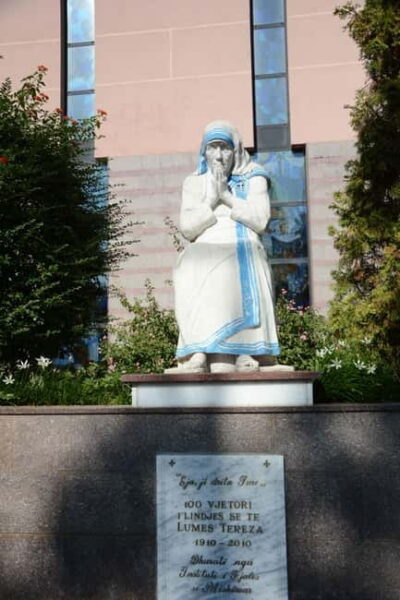
- Mother Teresa Square and Tirana’s modern institutions
- Ending beside the Artificial Lake
- What the $15 price gives you
- Language, comfort, and practical points
- Who should book this Tirana tour
- Should you book it?
- FAQ
- Where does the tour start?
- How long does the tour last?
- What language is the tour in?
- Is admission to Namazgjase Mosque included?
- Are Bunk’Art 2 and the stadium included?
- Is the tour suitable for wheelchair users?
At a glance
- Florina leads in Spanish: Her friendly, warm style puts the focus on stories, questions, and daily life, not only dates.
- A city center with many layers: Skanderbeg Square brings together Ottoman, Italian, communist, religious, and modern Albanian landmarks.
- Blloku tells the sharpest political story: You see Enver Hoxha’s former home and learn how a closed communist district became one of Tirana’s social centers.
- The Pyramid offers a striking contrast: Once built to honor Hoxha, it now represents a very different, more open Tirana.
- The Artificial Lake is the finale: This broad park gives you a calm change of mood after the busy center.
- Outdoor viewing is the norm: Bunk’Art 2, the stadium, and other paid sites are seen from outside unless you pay separately.
Why this Tirana walk works
Tirana can feel confusing at first. Ottoman religious buildings, Italian ministries, communist monuments, glass towers, street art, cafés, and construction projects all share the same compact center. A good guide helps you read those contrasts instead of seeing them as random pieces.
That is the strength of this route. It begins at the Opera and Ballet Theatre, moves through the historic core, continues down the main boulevard, crosses into Blloku, then finishes beside the Artificial Lake. You get a broad introduction to the city, but the route also leaves room for personal stories and questions.
Florina is the guide named for this tour. Her approach is warm and conversational. She explains Albania’s past in Spanish, with attention to Tirana, and adds curiosities that make the subject easier to follow. That matters in Albania, where the communist period is still within living memory and where a dry lecture about Enver Hoxha would miss much of the human side.
The tour receives a perfect 5 rating from three verified bookings, with particular praise for Florina’s kindness, humor, energy, and ability to make people feel comfortable. That pattern gives you a useful clue: this is best for someone who wants a personal introduction rather than a formal architectural lecture.
More Walking Tours in Tirana
- Walking Tour of Tirana
★ 5.0 · 646 reviews - Tirana: Express Walking Tour with a Guide
★ 4.8 · 503 reviews - Tirana Center: Magic Walking Tour French/Italian/English Etc
★ 4.9 · 402 reviews
Starting at Skanderbeg Square
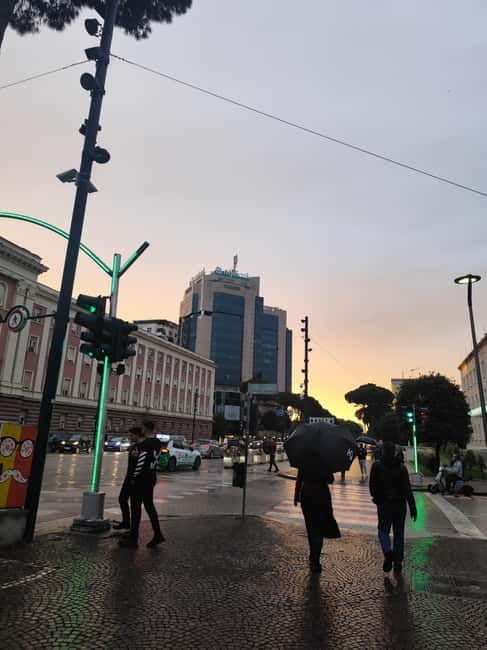
The meeting point is the Opera and Ballet Theatre. Look for Florina’s green umbrella, a simple but useful marker in a busy central area.
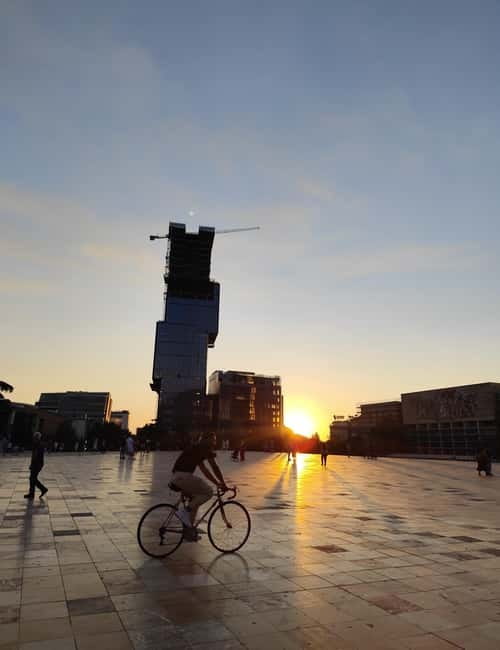
From there, the route brings you into Skanderbeg Square, Tirana’s main civic space. This is where the city presents its biggest symbols, and it is a good place to begin because several periods of Albanian history sit close together.
You will see the Et’hem Bey Mosque, one of the most recognizable Ottoman-era buildings in the city. Nearby, the Clock Tower gives the square its familiar vertical landmark. The National Museum faces the square with its large socialist-era mural, a useful visual reminder of how the communist government shaped public art and national storytelling.
The square also gives you the National Library and the Italian-era ministries. These ministry buildings reflect the period when Italy played a major role in Albania and when Italian planning influenced central Tirana. In a short walk, you are already moving between Ottoman, Italian, socialist, and post-communist Albania.
This part is mainly an outdoor sightseeing walk. You should not expect long interior visits at each building. The value comes from having the symbols pointed out and explained in relation to one another.
Bunk’Art 2 and Tirana Castle
Bunk’Art 2 is another important stop near the center. The museum deals with communist-era persecution and uses a bunker setting, making it a powerful place to discuss state control and fear. On this tour, you see it from the outside. Admission is not included, so you would need to pay separately if you want to enter.
That arrangement keeps the walking tour affordable, but it also limits the time spent with the most difficult parts of Albania’s recent past. If communist history is your main reason for visiting Tirana, set aside extra time for Bunk’Art 2 after the walk.
Tirana Castle offers a different mood. This old walled area now contains cafés and craft shops, so its present-day role is less fortress and more social meeting place. I like this stop because it shows how Tirana keeps old structures in use rather than freezing them as museum pieces.
You can expect a short visit and time for sightseeing rather than a full historical tour of the walls. It is a pleasant place to notice the city’s habit of mixing the old with the new.
Namazgjase Mosque and the Orthodox Cathedral
The route includes the Namazgjase Mosque, one of the most important mosques in the Balkans according to the tour description. Admission is included here, giving you a chance to see the building from inside rather than simply photograph its exterior.
The mosque also helps explain Albania’s religious setting. Tirana’s center includes Muslim, Orthodox, and other cultural landmarks close to one another, and that variety is part of what makes the capital different from many European cities.
The Cathedral of the Resurrection of Christ provides another important contrast. Its large dome and modern design make it easy to spot, while its presence beside the city’s Muslim and secular buildings reflects Albania’s mixed religious life.
Entry to the cathedral is included too. You should still dress and behave respectfully inside both religious buildings. The visit is not described as a service or extended spiritual program, so think of it as a guided cultural stop.
Somewhere else in Albania, a completely different day:
- From Tirana: Bovilla Lake & Gamti Mountain Hiking Day Trip
★ 4.9 · 4,397 reviews - From Tirana: Bovilla Lake & Gamti Mountain Hiking Tour
★ 4.9 · 3,003 reviews - From Tirana: Bovilla Lake & Gamti Mountain Viewpoint Hike
★ 4.8 · 2,053 reviews - Tirana/Durres/Golem: Saranda, Ksamil, Blue Eye Day Trip
★ 4.8 · 1,584 reviews
Along the boulevard to the Pyramid
The walk continues along Tirana’s main boulevard. This is one of the route’s useful transitions. Instead of jumping from one monument to another, you see how the central districts connect and how public space changes as you move south.
The Pyramid is the most visually unusual stop. It was originally dedicated to Enver Hoxha, Albania’s communist dictator, and its history has been marked by debate and controversy. Its shape alone is memorable, but the story behind it is more important than the photograph.
Here you can consider how public monuments change meaning. A building created to praise a dictator can later become a place associated with a new generation, new uses, and a less controlled city. The tour uses the Pyramid to explain that change rather than presenting it as an isolated oddity.
The Pyramid is also a good example of Tirana’s unfinished, changing character. The city is not polished into one neat style. You see old political symbols beside newer design, public art, and modern spaces. Some people love that energy; others may find the city visually uneven.
Blloku and the house of Enver Hoxha
Blloku gives the tour its clearest human story. During the communist period, this district was reserved for the ruling elite. Ordinary citizens could not simply wander through it, shop there, or live there. That division says a great deal about how power worked under Hoxha.
You will see Hoxha’s own house from outside and hear about life under strict government control. This is more useful than a general statement that Albania was communist. The guide connects the political system to homes, neighborhoods, access, and daily limits.
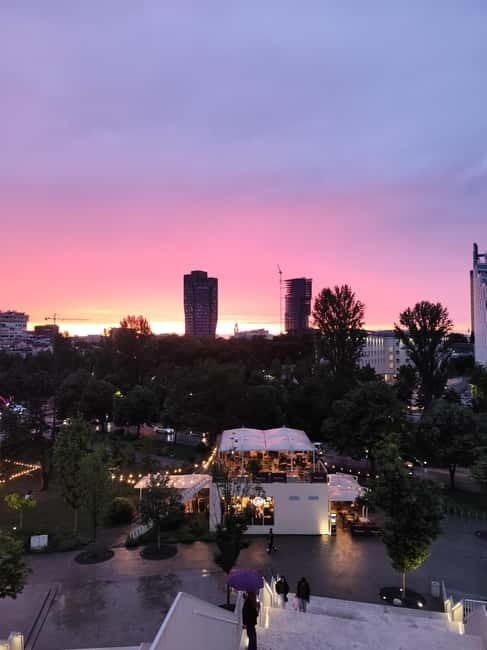
Blloku today is known for cafés, restaurants, nightlife, and modern city life. The change is so sharp that it can be easy to forget what the area once represented. Florina’s explanation helps you hold both versions in mind: the closed district of the leadership and the open social quarter that came later.
Do not expect a visit inside Hoxha’s house. The stop is about location and context. If you want a longer look at the dictator’s period, pair this walk with a museum visit, since the tour does not include entry to Bunk’Art 2 or other paid attractions.
Mother Teresa Square and Tirana’s modern institutions
After Blloku, the route continues to Mother Teresa Square. This broad area is associated with education, sport, and public culture.
You will see the Air Albania Stadium, the University of Fine Arts, and the Polytechnic. These buildings give you a look at Tirana beyond old monuments and communist memory. They show the institutions that shape the city now, especially its students, artists, and sports fans.
The stadium is viewed from outside, and entry is not included. That is enough for a quick orientation, but not enough for a stadium tour or match-day visit. If you are especially interested in football, treat this as a useful introduction rather than the main event.
Mother Teresa Square also helps break up the historical material. After hearing about religious buildings, dictatorship, surveillance, and political power, you get a sense of the city as a working capital with schools and public venues.
Ending beside the Artificial Lake
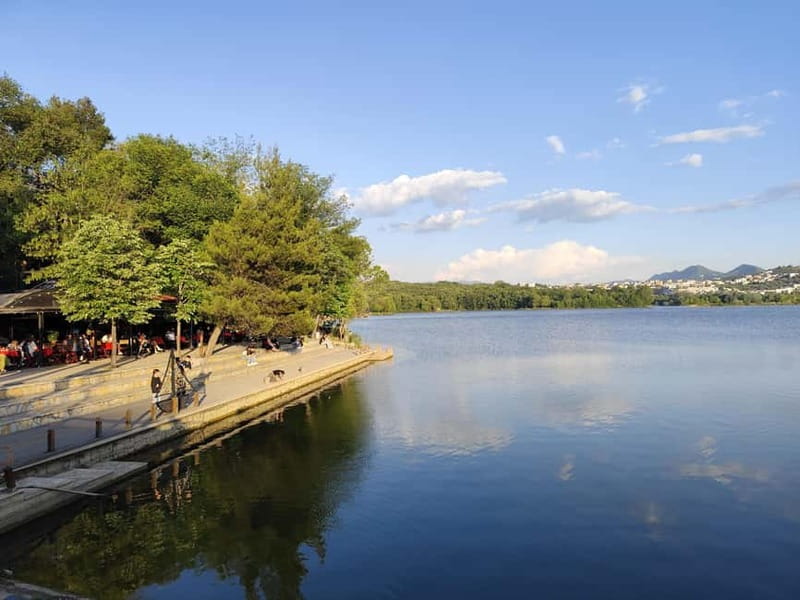
The final walk leads to Tirana’s Artificial Lake, often called the city’s green lung. This is the most restful part of the route and one of its best choices.
The lake and surrounding park give residents room to walk, relax, meet friends, and spend time outdoors. You may see people enjoying the park in the ordinary way, which is precisely why the stop matters. It is not only a scenic viewpoint. It is part of daily Tirana.
The change in atmosphere is welcome. The central section is full of monuments, traffic, political memory, and urban detail. By the time you reach the lake, the tour has moved from national symbols to local routine.
The schedule allows for sightseeing, walking, and a photo stop, including sunset or sunrise times when available. Since the advertised duration is 150 minutes, check the selected starting time carefully. The itinerary also describes the lake visit as lasting three hours, which does not match the stated total duration. That discrepancy should be clarified when you book.
The lake is a strong ending because you can remain afterward if you want more quiet time. The tour itself finishes there, so you are not being rushed back to the starting point.
What the $15 price gives you
At $15 per person, this is a low-cost way to get a first reading of Tirana. The price includes the complete guided route, the outdoor monuments, entry to the Namazgjase Mosque, and entry to the Cathedral of the Resurrection of Christ.
It does not include Bunk’Art 2, the stadium, meals, or other places that charge admission. That is fair for a short walking tour, but you should budget separately if you want to go inside museums or paid sites.
The real value is the route design. You cover the historic center, a former communist power district, modern institutions, and the Artificial Lake in one outing. Doing all of that alone is possible, but you would need to research the political connections and know what you were looking at.
The tradeoff is depth. A 150-minute walk cannot provide a full museum visit, long interior explanations, and extended time at every landmark. You get range and interpretation rather than exhaustive sightseeing.
The description calls the activity a free tour while also listing a $15 price. Because those terms can mean different things on booking platforms, confirm exactly what you will pay and whether any additional contribution is expected.
Language, comfort, and practical points
The live tour is in Spanish, and some material may be presented in its original language. You should choose this only if you can follow Spanish comfortably enough to understand political and historical explanations.
The walk is not suitable for wheelchair users. The supplied information does not give a detailed distance, group size, or exact meeting time, so check availability before booking and plan for a substantial amount of walking.
The green umbrella is the meeting marker. Weapons and sharp objects, alcohol, and drugs are not allowed. Unaccompanied minors cannot join, and audio recording is not permitted.
Free cancellation is available up to 24 hours before the start for a full refund. You can also reserve now and pay later, which is useful if your Tirana plans are still moving around.
Who should book this Tirana tour
I would choose this tour if you have limited time in Tirana and want the city’s main stories tied together. It suits first-time visitors, Spanish-speaking couples, solo visitors who prefer company, and anyone interested in the shift from dictatorship to open urban life.
It is especially good for you if you enjoy questions, local anecdotes, and a guide who brings warmth to serious subjects. Florina’s strongest qualities are her empathy, humor, passion, and attention to making people comfortable.
I would choose another format if you want extensive museum time, a fully accessible route, a private vehicle, or a detailed architectural study. You will see many sites from outside, and the route may feel long if you are not used to walking.
Should you book it?
Book this tour if you want an affordable, Spanish-language introduction that connects Tirana’s landmarks to real political and social change. The visit to Blloku, the Pyramid, and the Artificial Lake gives the route a stronger shape than a standard square-by-square walk.
Before booking, confirm the price wording, the exact duration, and the starting time. If those details suit you, Florina’s friendly style and the mix of city history, modern life, and park time make this a smart first outing in Tirana.
FAQ
Where does the tour start?
The meeting point is the Opera and Ballet Theatre. The guide will have a green umbrella.
How long does the tour last?
The stated activity duration is 150 minutes. The lake portion is also described in one place as lasting three hours, so confirm the exact timing when checking availability.
What language is the tour in?
The live tour guide speaks Spanish. Some content may be shown in its original language.
Is admission to Namazgjase Mosque included?
Yes. The price includes free admission to Namazgjase Mosque and the Cathedral of the Resurrection of Christ.
Are Bunk’Art 2 and the stadium included?
No. Bunk’Art 2, the stadium, meals, and other sites not specifically included require separate payment if you choose to enter them.
Is the tour suitable for wheelchair users?
No. The activity is listed as not suitable for wheelchair users.
Newly listed around Tirana
- Wonderful Sunset and Dinner in the Castel Of Petrela★ 4.6 · 4 reviews
- Zipline Tirana Adventure & Petrela Castle – With Transport★ 4.4 · 10 reviews
- Wine Tasting & Vineyards Escape near Tirana★ 4.9 · 8 reviews
- Walking Tour in Tirana, Albania★ 3.7 · 28 reviews
- Vlora, Dhermi & Llogara Day Trip from Durrës or Golem★ 5.0 · 5 reviews
- Day Tour to Petrela Castle and Zip Line Albania Adventure★ 5.0 · 10 reviews
- From Tirana: Mount Dajti Adventure, Local Vibes & Cable Car opt★ 4.5 · 6 reviews
- Winetasting tour in Alpeta winery – Roshnik village by 1001 Albanian Adventures★ 5.0 · 26 reviews
Walking Tours, compared.
Tirana Center: Magic Walking Tour French/Italian/English Etc
Read our review →
Blue Eye Kayak and walking tour & Lekursi Castle
Read our review →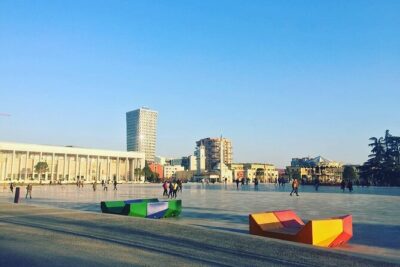

Browse the lists this tour appears in