
Reviewed · ALBANIA
Tirana&Durres Highlights Tour Sightseeing
Two Albanian cities, one busy day. This six-hour private tour gives you a quick but useful introduction to Tirana’s layered architecture and Durres’s seaside Roman past. You begin in the capital on foot, then ride by car to the coast for more sights, photos, and time by the sea.
I especially like the easy mix of major landmarks and smaller city details. The tour brings together a mosque, Catholic church, Ottoman bridge, royal villa, Roman amphitheater, and modern squares without asking you to plan the connections yourself. I also like the private group format, with a guide speaking English, Italian, German, or Spanish. The main consideration is pace: six hours is enough for highlights, but not enough for long museum visits or a slow look at every site.
The guide, Eraldo Mucaj, receives especially warm praise for kindness and clear, thorough information. That matters here, since Tirana can feel like a collection of unrelated streets until someone explains how its Ottoman, communist, royal, and modern pieces fit together. You should also expect walking, outdoor stops, and a car transfer, so comfortable shoes are more useful than stylish ones.
In This Review
- Key Points Before You Book
- Starting at Skanderbeg Square in Central Tirana
- Ethem Beu Mosque and the Clock Tower
- Tanner’s Bridge and the Castle of Tirana
- The Pyramid, Mother Teresa Square, and Grand Park
- A 35-Minute Pause Before Leaving Tirana
- Driving from Tirana to Durres
- Durres City Center and the Roman Amphitheatre
- Castle Walls, the City Promenade, and King Zog’s Villa
- Coffee, Lunch, or Ice Cream by the Sea
- Is $117 a Fair Price?
- Who Will Enjoy This Tour Most?
- My Verdict on the Tirana and Durres Highlights Tour
- FAQ
- How long does the Tirana and Durres tour last?
- Where does the tour begin?
- What cities does the tour visit?
- How long is the guided tour in Tirana?
- Is transportation to Durres included?
- Is the Roman Amphitheatre entrance included?
- Is the Venetian Tower in Durres included?
- Can I visit the inside of King Zog’s Villa?
- What languages are available for the guide?
- When does the tour operate?
Key Points Before You Book
- Two cities in six hours: Start with a two-hour guided walk in Tirana, then continue by car to Durres for another two hours of sightseeing.
- A strong architecture mix: See Skanderbeg Square, Ethem Beu Mosque, the Clock Tower, the Pyramid, Tanner’s Bridge, and more.
- Religious landmarks close together: The route includes the mosque and a Catholic church, showing Tirana’s religious variety within a short walking distance.
- Roman history included: Admission to the Roman Amphitheatre in Durres is part of the $117 price.
- Private guiding in four languages: You can request English, Italian, German, or Spanish, with Eraldo Mucaj as the experience provider.
- A flexible coastal finish: Durres includes a promenade and time for coffee, lunch, or an ice cream near the sea.
Starting at Skanderbeg Square in Central Tirana
The tour begins at Sheshi Skënderbej, Tirana’s main square. This is the right place to begin because the square gives you an instant sense of the capital’s scale and changing identity.
From here, you can expect a guided walk through central Tirana rather than a long drive between isolated monuments. That makes the first two hours efficient. You see important places close together, while your guide supplies the context that connects them.
Skanderbeg Square is also a practical meeting point. If you arrive early, you have a clear central location for getting oriented before the tour begins. Bring your passport or ID card, as that is specifically recommended, and wear shoes suited to city walking.
Other trips out of Albania people pair with this:
- Ksamil & Saranda & Blue Eye Day Tour From Tirana ,Durres or Golem
★ 4.5 · 116 reviews - Saranda Quad adventure on 450cc ATV 4×4
★ 5.0 · 67 reviews - Speedboat to Sazan Island and Karaburun – Small Group Experience
★ 4.0 · 56 reviews
Ethem Beu Mosque and the Clock Tower
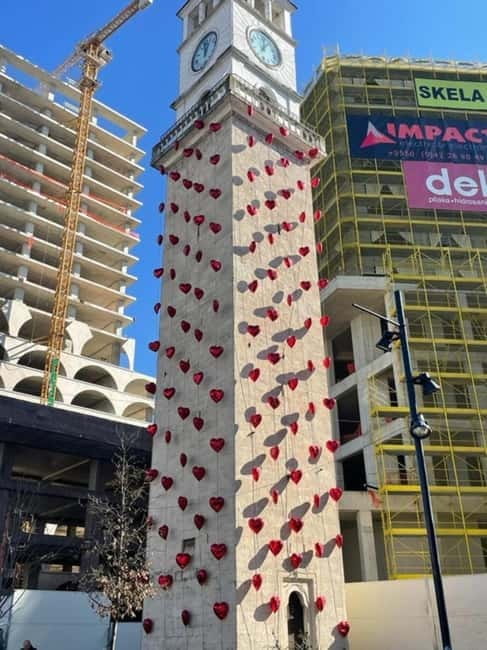
The Ethem Beu Mosque and Clock Tower form one of the most recognizable historic pairings in central Tirana. The mosque brings Ottoman-era character into the heart of a city that has changed sharply over the last century. The Clock Tower offers another familiar marker beside the square.
I like this early stop because it quickly shows why Tirana is interesting. The city is not built in one style. Older religious and civic buildings share space with communist-era structures and newer urban projects.
The tour is designed for sightseeing and explanation rather than a long, quiet visit inside each place. If you want extended time for detailed architectural study or worship, the schedule may feel brisk. For a first look, though, the combination gives you a useful introduction without using up the whole morning or afternoon.
Tanner’s Bridge and the Castle of Tirana
The stop at Tanner’s Bridge adds a more intimate piece of Tirana’s past. Compared with the main square, a historic bridge gives you a smaller-scale view of the city and a chance to see how older routes and neighborhoods fit into the modern capital.
You also stop to see the Castle of Tirana. The name can suggest a grand fortified complex, but the value of this stop is seeing how history is presented within the current city. The route keeps the focus on central sights, so you get a broad picture rather than a specialist visit to one monument.
These stops are useful for photographs too. The tour specifically emphasizes photo opportunities, and the mix of stonework, city streets, and contrasting buildings gives you more variety than a route limited to large squares.
The Pyramid, Mother Teresa Square, and Grand Park
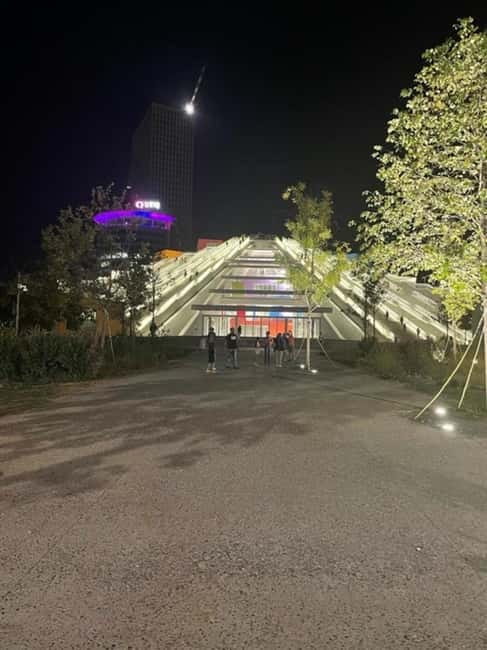
The Pyramid offers a sharp change in mood and design. It is one of Tirana’s most recognizable modern structures, and its presence helps explain the city’s communist past and its ongoing effort to reshape public spaces.
Next comes Mother Teresa Square and the Grand Park. These areas give the walking tour room to breathe after the tighter central streets. You get a sense of Tirana beyond its main monuments, with broad public spaces and a more open setting.
The tour also includes a visit to Tirana’s Catholic church. Placing this church near the Ethem Beu Mosque creates one of the day’s clearest themes: different religious traditions are found within a relatively short walking distance. I find that more revealing than simply checking off separate buildings. It shows how much of Tirana’s character comes from contrast.
Somewhere else in Albania, a completely different day:
- Kayak Sup Tours Lukova Caves – Kroreza
★ 5.0 · 49 reviews - Small Group Speedboat Excursion: Karaburun National Marine Park
★ 4.0 · 31 reviews - Komani Lake and Shala River Tour
★ 4.0 · 23 reviews - Albanian Alps Off-Road Adventure :Boge & Theth 1 Day
★ 5.0 · 18 reviews
A 35-Minute Pause Before Leaving Tirana
After the guided portion in Tirana, you have about 30 to 45 minutes of free time. The stated itinerary gives roughly 35 minutes, so consider it a short personal break rather than a chance to explore a new neighborhood.
Use this pause for coffee, a snack, photographs, or a brief rest before the drive. You should not count on enough time for a full meal or a major detour. The break is especially helpful because the day has both walking and sightseeing ahead.
The tour runs twice daily, at noon and in the afternoon. That gives you some choice, though the timing may shape how much daylight you have for Durres and the sea. Check the available starting times before booking if daylight photography is important to you.
Driving from Tirana to Durres
The transfer to Durres is by car. This is one of the practical strengths of the experience. You do not need to organize separate transport between the two cities, and the private format keeps the day focused on your group.
The tour does not present Tirana and Durres as identical places. Tirana is the capital, with its mix of political, religious, communist, and modern architecture. Durres shifts the focus to the coast, Roman remains, old walls, and a promenade.
You should think of this as a highlights transfer rather than a full regional tour. There is no room for a long stop at every point between the cities. The value comes from seeing both urban centers in one compact outing.
Durres City Center and the Roman Amphitheatre
In Durres, the route includes the city center, Roman Amphitheatre, Castle Walls, City Promenade, and the outside of King Zog’s Villa. The Roman Amphitheatre is the centerpiece, and its entrance ticket is included in the price.
That inclusion improves the value of the tour. You are not just looking at the exterior of an ancient site before moving on. You have access to the amphitheater as part of the planned visit, while the guide explains what you are seeing.
Durres’s Roman remains also give the second half of the day a different feel from Tirana. The capital’s story is told through public squares and changing architecture. In Durres, ancient urban life is more visible in the surviving amphitheater and castle walls.
The visit is listed as a guided tour and walk lasting about two hours in total. That time includes several stops, so the amphitheater will not be an all-day archaeological study. If ancient ruins are your main reason for visiting Albania, you may want a longer specialist visit elsewhere. If you want a solid first look while also seeing the coast, this arrangement works well.
Castle Walls, the City Promenade, and King Zog’s Villa
The castle walls add another layer to Durres’s past, while the city promenade changes the pace again. After the enclosed feeling of historic remains, the waterfront gives you open views and a more relaxed setting.
The tour also stops at the Villa of King Zog. The villa is closed to the public, so you see it from outside. This is important to understand before booking. It is a photo and context stop, not an interior palace visit.
I like the way this part balances archaeology with everyday city life. You see ancient defenses, a royal site, and the modern seafront in one compact route. It is also the part of the tour most likely to suit anyone who wants pictures, especially in sunny weather.
Coffee, Lunch, or Ice Cream by the Sea
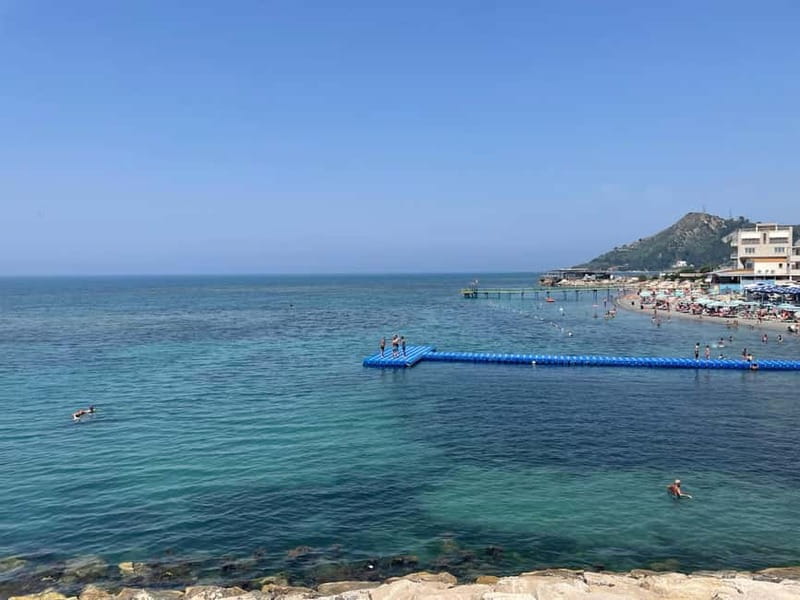
A break of about 30 minutes to one hour follows the Durres sightseeing. The available description allows time for coffee or lunch, and the tour also highlights enjoying the sea with an ice cream.
That flexibility is useful because meal needs vary. A 30-minute stop may work for a quick coffee or snack, while an hour gives you more room for lunch. The exact length matters, so I would not plan a leisurely restaurant meal unless your guide confirms the timing.
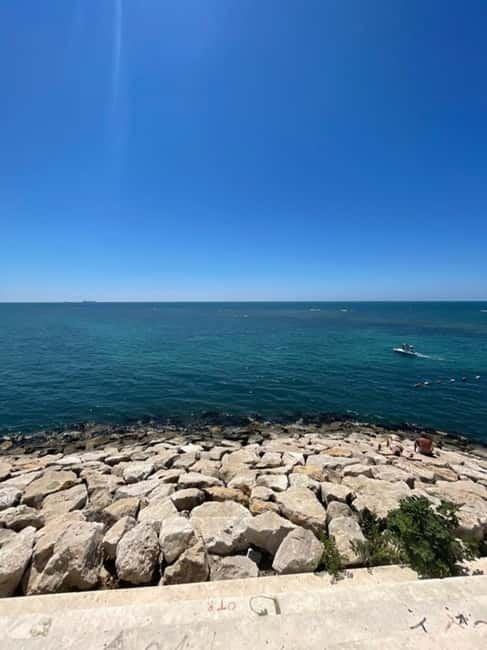
The seafront break also keeps the experience from becoming a nonstop list of monuments. You can pause, look toward the water, and let the two-city contrast settle in before returning to Tirana.
Is $117 a Fair Price?
At $117 per person, this is not the cheapest way to see Tirana and Durres independently. You are paying for a private group, a live guide, transport by car between the cities, a planned route, and admission to the Roman Amphitheatre.
The value is strongest if you want convenience and explanation. You avoid working out the connection between the capital and coast, and you can ask questions in your chosen language. The guide’s praised kindness and thorough information are particularly important because the sights cover several periods and traditions.
The value is weaker if you are already staying in Tirana, comfortable arranging transport, and happy to see only a few landmarks on your own. You may prefer an unhurried day with more free time. This tour is best for someone who wants a structured introduction and would rather spend the day seeing a wide range of places.
Who Will Enjoy This Tour Most?
I would recommend it to first-time visitors who want a fast orientation to both Tirana and Durres. It also suits cruise passengers or short-stay visitors who need to make good use of one day, provided the starting time fits their schedule.
It is a good match for couples, families, or small private groups that want to move at their own pace within a planned framework. The four language options make it easier to choose a guide who can explain the sights clearly.
You should think twice if you have a pre-existing medical condition that makes walking or a six-hour sightseeing day difficult. Comfortable shoes are essential, and the day includes walking, outdoor photo stops, and time in a car.
Free cancellation up to 24 hours before the experience and the reserve-now, pay-later option add useful flexibility. They do not change the tour’s pace, but they reduce the risk of committing too early when your plans are still moving.
My Verdict on the Tirana and Durres Highlights Tour
I would book this tour if I wanted a well-organized first look at two Albanian cities in one day. The strongest reasons are the private format, the combination of architecture and religious sites in Tirana, the included Roman Amphitheatre admission, and the coastal pause in Durres.
I would not book it expecting a slow archaeological day, a full visit inside King Zog’s Villa, or long museum time. The route is broad rather than deep. For the right visitor, that is its advantage: you leave with a clear sense of Tirana’s contrasts, Durres’s Roman remains, and the practical shape of both cities.
FAQ
How long does the Tirana and Durres tour last?
The tour lasts six hours.
Where does the tour begin?
It begins at Sheshi Skënderbej, also known as Skanderbeg Main Square, in Tirana.
What cities does the tour visit?
It visits Tirana and Durres.
How long is the guided tour in Tirana?
The guided tour in Tirana lasts about two hours.
Is transportation to Durres included?
Yes. The tour departs for Durres by car from Tirana.
Is the Roman Amphitheatre entrance included?
Yes. The entrance ticket to the Roman Amphitheatre is included.
Is the Venetian Tower in Durres included?
No. Visiting the Venetian Tower is optional and is not included.
Can I visit the inside of King Zog’s Villa?
No. The villa is closed to the public, so the tour views it from outside.
What languages are available for the guide?
The live guide is available in English, Italian, German, and Spanish.
When does the tour operate?
The tour takes place twice each day, around noon and in the afternoon. Check availability for the exact starting time.
Newly listed around Albania
- Sunset kayak/Sup tour – Lukova caves and Secret beaches★ 5.0 · 7 reviews
- Small Group Speedboat Adventure Trip to Grama Bay★ 5.0 · 13 reviews
- Half-Day Private Speedboat Excursion to Sazan Island & Karaburun★ 4.5 · 11 reviews
- Private Panoramic Boat Tour of Vlora Bay★ 5.0 · 3 reviews
- Komani Lake and Shala River Tour★ 4.0 · 23 reviews
- Family Mandarin Farming Tour with Traditional Cooking Lunch★ 4.5 · 9 reviews
- Gourmet Lunch Farm Tour with Cooking Class★ 4.5 · 8 reviews
- Porto Palermo Kayak and Sup Tour★ 5.0 · 17 reviews