
Reviewed · PRIVATE TOURS IN TIRANA
Tirana to Sarajevo / Belgrade; Semi – Private Tour
Five countries, one road trip. This semi-private journey links Albania, Kosovo, Montenegro, Bosnia and Herzegovina, and Serbia in eight busy days, with local food, old towns, castles, monasteries, vineyards, and mountain-to-coast scenery along the way. I especially like the small group size, capped at 10 people, and the mix of famous sights with places such as Gjakova’s artisan bazaar and Shkodra’s Venetian mask workshop.
The strongest parts are the local food experiences in Tirana and at Mrizi i Zanave, plus the historical range from Kruja Castle to Sarajevo’s Latin Bridge. The main drawback is the pace. Border crossings and long road days leave limited free time, and the $2,549.21 price per person deserves a close look before booking.
In This Review
- Key points to know before booking
- Starting with Tirana’s markets and Albanian flavors
- Kruja and Prizren: medieval roads across the border
- Gjakova, Deçan, and the vineyards of Rahovec
- Mrizi i Zanave and Shkodra’s creative side
- Montenegro’s coast: Sveti Stefan, Budva, and Kotor
- Blagaj and Mostar: Ottoman-era Bosnia
- Sarajevo’s Ottoman, Austro-Hungarian, and wartime layers
- What the $2,549.21 price really covers
- Who this Balkan route suits best
- Should you book this tour?
- FAQ
- Where does the tour begin?
- How long does the tour last?
- Which countries does the tour visit?
- Where does the tour end?
- Is transportation included?
- Are meals included?
- What size is the group?
- Is airport transfer included?
Key points to know before booking
- Five Balkan countries in eight days: Albania, Kosovo, Montenegro, Bosnia and Herzegovina, and either Sarajevo or Belgrade at the finish.
- Small group transport: Private transportation is provided, with a maximum of 10 people.
- Food is part of the story: Try byrek, Albanian raki, a traditional meal in Tirana, and farm produce at Mrizi i Zanave.
- The route mixes major sights and local stops: Kruja, Prizren, Mostar, Kotor, Sarajevo, Rahovec, and Gjakova all appear.
- The price includes plenty of road costs: Fuel, road taxes, tourist taxes, breakfast, site entries, and airport or hotel transfer are covered.
- Plan for a full schedule: Several stops last only 30 minutes to one hour, so this is a sampler of the Balkans rather than a slow stay in each place.
Starting with Tirana’s markets and Albanian flavors
The tour begins with hotel pickup in Tirana at 9:00 a.m. That is a useful start time: early enough to make the most of the day, but not so early that breakfast becomes a problem.
Your first introduction to Tirana comes through food and ordinary city life. At a small local stop near Tregu Çam, you try byrek, the flaky Albanian pastry filled with cheese, meat, spinach, or other ingredients. This is exactly the sort of first taste I like on a city tour because it is cheap, familiar to locals, and tied to daily routines.
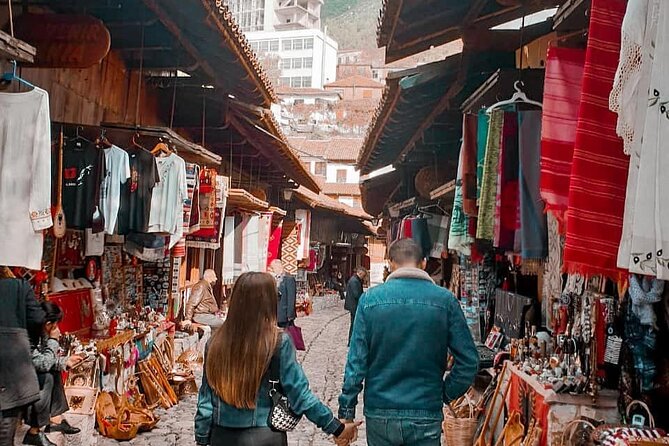
The route then moves through Çam bazaar, where you can browse clothing, household goods, produce, and other practical items. Bargaining is part of the experience. Do not expect a polished sightseeing district here. The appeal is seeing how people shop, trade, and move through the city.
At Pazari i Ri, you get more time for the market and a traditional Albanian meal. Albanian grape raki is included as part of the tasting experience. It is strong, so take the small glass slowly, especially with a long drive still ahead on later days.
You also receive free time in Tirana. Use it well. The guided portion gives you local orientation, while the unstructured time lets you choose between more food, a walk, shopping, or simply a break. That balance is valuable because the rest of the itinerary moves quickly.
More Private Tours in Tirana
- Semi-Private Tour of North Macedonia: Ohrid & Struga from Tirana
★ 5.0 · 170 reviews - Semi-Private Day Tour of Montenegro: Budva & Kotor from Tirana
★ 5.0 · 71 reviews - Private Ohrid Day Tour and Authentic Village from Tirana & Durres
★ 5.0 · 71 reviews
Kruja and Prizren: medieval roads across the border
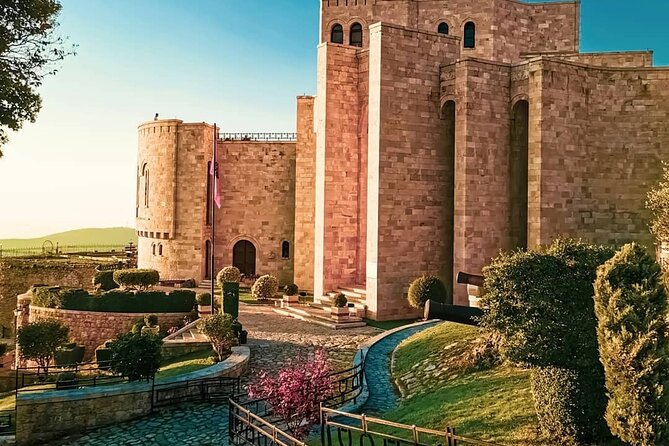
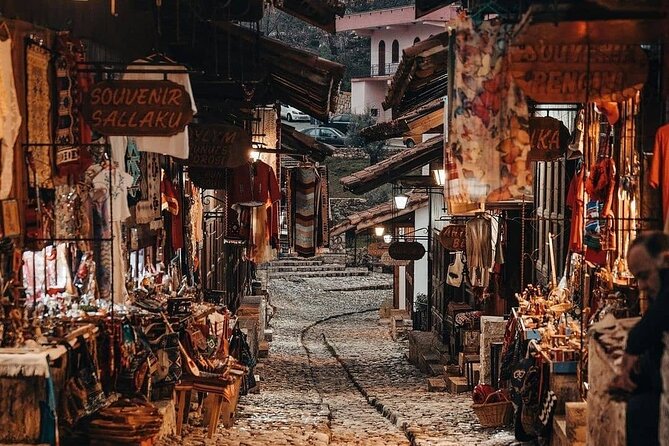
Day two begins with Kruja, a hill town tied to Albania’s resistance against Ottoman expansion in the 15th century. The old bazaar is one of the most enjoyable stops for browsing. Its narrow lanes and wooden shops sell carpets, jewelry, crafts, and other souvenirs.
Kruja Castle sits above the town on rocky ground. The tour includes entry and a walk through lesser-used paths connected with the castle’s defensive past. The visit is short, but the setting gives the site real impact. Wear shoes with a decent grip, since the itinerary includes uneven ground and old paths.
The border crossing into Kosovo brings you to Prizren, often regarded as Kosovo’s cultural capital. Its old town follows the river, with bridges, Ottoman-era houses, religious buildings, and lanes suited to wandering. Two hours is enough to get a feel for the center and stop for food, but not enough for a detailed museum visit or a long climb above town.
Prizren is also known for filigree metalwork. If you want a meaningful souvenir, look for locally made silver work rather than buying the first mass-produced item in the bazaar. The city has an especially lively cultural calendar during Dokufest in August, though the tour does not include festival tickets or special programming.
Gjakova, Deçan, and the vineyards of Rahovec
Gjakova offers a different view of Kosovo. Its bazaar was damaged several times during the region’s wars, then rebuilt in its older form. The stop gives you a chance to see traditional crafts and artisan workshops rather than only monuments.
The next stop is Deçan Monastery, an Orthodox monastery still inhabited by monks. It is known for its white exterior, 14th-century frescoes, and organic food production, including cheese. The monastery became a UNESCO site in 2004.
This is an important cultural stop, but allow for a little patience. Religious and heritage sites can have entry procedures or security requirements, and the itinerary provides only about an hour. Dress respectfully and follow your tour leader’s instructions.
Rahovec Valley shifts the focus to wine. Grapes have been cultivated here since Illyrian times, and vineyards cover the gentle hills at elevations between 350 and 520 meters. The tour description identifies Rahovec as a major wine center, with an annual wine festival each September.
The itinerary does not clearly promise a formal wine tasting, so do not assume one is included. Think of this as a scenic and cultural stop connected to Kosovo’s agricultural traditions.
Mrizi i Zanave and Shkodra’s creative side
Day four returns to Albania and begins at Mrizi i Zanave, an agro-tourism farm known for slow food and regional products. You tour the farm, hear how the family business developed, and see how former communist buildings were adapted for storage.
The farm collects, prepares, and preserves local produce. It has also created jobs for more than 400 people in the surrounding area. That gives the visit more substance than a simple lunch stop. You are seeing how food production, rural employment, and tourism can work together.
Lunch is not included, but you have free time to eat or buy farm products. Budget for this separately. Since meals, drinks, and snacks are excluded throughout the trip, these farm products may be tempting, but your food spending can rise quickly if you purchase at every stop.
Shkodra sits in northwestern Albania beside Lake Shkodra, the largest lake in the Balkans. At Rozafa Castle, you get broad views toward the lake and the rivers flowing toward the Adriatic. The city’s architecture reflects Illyrian, Ottoman, and Venetian influences.
A short visit to the Venetian Art Mask Factory adds a welcome handmade element. Masks are made from papier-mâché, then painted and decorated by hand. The stop lasts about 30 minutes, so it is more of a workshop glimpse than a full art lesson or extended shopping visit.
A few more Tirana trips worth comparing
- From Tirana: Bovilla Lake & Gamti Mountain Hiking Day Trip
★ 4.9 · 4,397 reviews - From Tirana: Bovilla Lake & Gamti Mountain Hiking Tour
★ 4.9 · 3,003 reviews - From Tirana: Bovilla Lake & Gamti Mountain Viewpoint Hike
★ 4.8 · 2,053 reviews - Tirana/Durres/Golem: Saranda, Ksamil, Blue Eye Day Trip
★ 4.8 · 1,584 reviews
Montenegro’s coast: Sveti Stefan, Budva, and Kotor
The route reaches Montenegro on day five. The viewpoint near Sveti Stefan is a photo stop, not an island visit. The former fishing village is now an exclusive resort, and the island cannot currently be visited as part of this tour.
That distinction matters. You will see Sveti Stefan from the coast, take in the view, and continue. It is worth keeping expectations realistic.
Budva offers a contrast between modern resort development and the older walled center. The new part has offices, shops, restaurants, bars, and newer buildings. The old town has medieval streets and churches, including St. Ivan and St. Mary.
Only about an hour is allocated to Budva, so you will get an introduction rather than a beach day. If you want swimming, a long café stop, or extensive shopping, this itinerary will feel too tight.
Kotor follows on day six. Its UNESCO-listed old town is compact but full of narrow cobbled lanes, churches, and buildings marked with plaques showing their original use and construction dates. The maze-like street plan once helped confuse attackers. Today it simply makes wandering enjoyable.
The visit includes St. Luke’s Church, which has meaning for local ideas of religious unity. Kotor is one of the places where an hour can pass very quickly. You may wish for more time, especially if you want to climb or pause for lunch, but the route has another border crossing and several major stops still ahead.
Blagaj and Mostar: Ottoman-era Bosnia
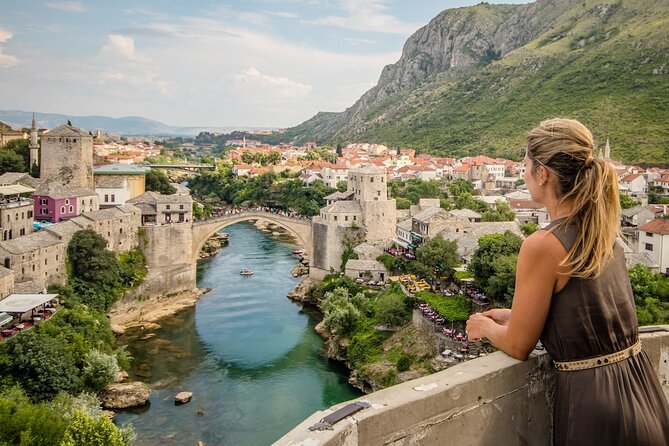
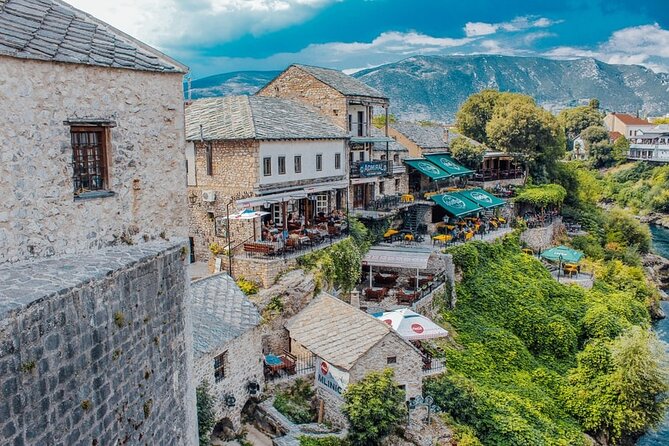
After Montenegro, the route crosses into Bosnia and Herzegovina and reaches Blagaj, just outside Mostar. The town sits beneath a cliff beside the spring of the Buna River. The setting is especially peaceful, with cool blue water and Ottoman-era buildings.
The visit lasts around an hour. That gives you time to see the spring and town, but not necessarily to linger over a long meal or explore every side street.
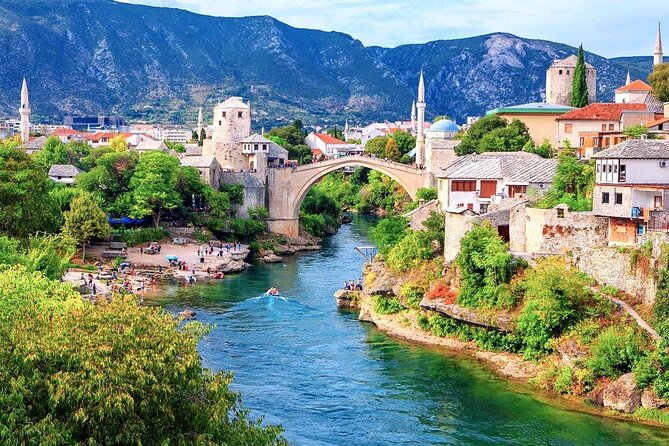
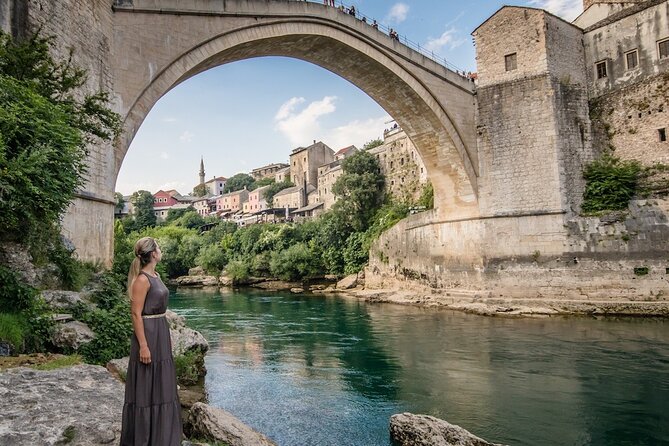
Mostar is one of the tour’s central highlights. Stari Most, the famous Old Bridge, was built in the 16th century in an Islamic architectural style and is part of the UNESCO-listed old town. The surrounding bazaar has stone lanes, shops, and a lively feel.
You will also see reminders of the city’s recent past. Stones marked with Don’t Forget appear around town, pointing to the damage and loss caused by war. Mostar works best when you take time to notice both sides of the city: the restored Ottoman center and the newer areas shaped by conflict.
Bišćevića Kuća adds a quieter, more intimate stop. This 17th-century riverside house shows how a wealthy Ottoman family lived. Entry is included, and the visit helps explain the domestic side of Ottoman architecture, which can be easy to miss when your attention is fixed on the bridge.
Sarajevo’s Ottoman, Austro-Hungarian, and wartime layers
Day seven takes you from Mostar to Sarajevo. The tour covers the city’s origins, the medieval Bosnian kingdom, and the Ottoman and Austro-Hungarian sections of the center.
Sarajevo is often called the European Jerusalem because mosques, churches, and synagogues exist within the same urban setting. You will walk through markets and bazaars while moving between different architectural and religious traditions.
The route also points out bullet holes, cannon marks, and war-damaged buildings. Expect uneven ground, and bring shoes that are comfortable for walking. The one-hour city introduction is useful, but Sarajevo deserves more time than the scheduled sightseeing alone provides.
Latin Bridge is the key historical stop. It links the Miljacka River’s banks and takes its name from the Catholic quarter once called Latinluk. The bridge is associated with the 1914 assassination of Archduke Franz Ferdinand, the event that helped trigger the First World War.
The day ends at Caffe Divan with an Ottoman-style coffee or tea. This is included and makes a pleasant pause after the historical walking tour. You then have free time for dinner and an evening walk, so Sarajevo is one of the few places where the schedule gives you a little room to choose your own pace.
What the $2,549.21 price really covers
The advertised cost is $2,549.21 per person, based on double, twin, triple, or quadruple room occupancy in three-star hotels. That price is not simply paying for sightseeing. It covers private transport, a professional tour leader, fuel, road taxes, tourist taxes, entry tickets for listed sites, seven breakfasts, and final transfer to Sarajevo Airport or a hotel in Belgrade.
The small group limit of 10 is important. You get the convenience of private transportation without the size of a large coach tour. It should also make border crossings and short stops easier to manage.
Still, compare the cost carefully with what you plan to spend on meals. Lunches, dinners, drinks, snacks, souvenirs, and personal purchases are excluded. A price this high may make sense if you value a single organized route through five countries, but it is less attractive if you prefer inexpensive public transport, longer stays, or independent hotel choices.
There is also a detail worth clarifying before payment. The inclusions refer to breakfast for seven mornings, but the accommodation wording mentions one overnight in a three-star hotel. The eight-day schedule clearly implies multiple overnight stays, so ask the operator to confirm exactly how many hotel nights are included and where they are located.
Who this Balkan route suits best
I would choose this tour if you want to cover a large section of the western Balkans without arranging several border crossings, hotels, and transfers yourself. It suits people who enjoy history, food, changing scenery, and a full daily schedule.
It is also a good fit if you like having a local escort who can explain the region as you go. One particularly praised guide is Illir, described as a former teacher with a strong grasp of local history, culture, and geography. Gerion is also identified as a friendly guide who helped make a long Albanian road journey comfortable. Guide assignments can change, so ask if either is available.
I would not choose this route if your priority is slow travel. You get only brief stops in several places, and the roads and border crossings can make some days feel long. A past itinerary account also described the long distances in Albania and advised taking the drives calmly rather than rushing.
The cancellation terms are strict: the experience is non-refundable and cannot be changed for any reason. Confirm your dates, room arrangement, final destination, and passport requirements before booking.
Should you book this tour?
Book it if you want a well-organized introduction to five Balkan countries, value private transport, and would rather have the route handled for you. The mix of food, craft, religious sites, wine country, Adriatic towns, Ottoman architecture, and wartime history is unusually broad.
Skip it if you want extended beach time in Montenegro, long museum visits, or control over every hotel and meal. The best reason to book is the range: Tirana’s markets, Kruja’s castle, Prizren’s old town, Mrizi i Zanave, Kotor, Mostar, and Sarajevo all arrive in one trip. The biggest cost is the pace.
FAQ
Where does the tour begin?
The tour begins with hotel pickup in Tirana, Albania, at 9:00 a.m.
How long does the tour last?
The tour lasts approximately eight days.
Which countries does the tour visit?
The route includes Albania, Kosovo, Montenegro, Bosnia and Herzegovina, and either Serbia or Sarajevo as the final destination, depending on your chosen ending.
Where does the tour end?
You can finish with a transfer to Sarajevo Airport or with hotel drop-off in Belgrade, Serbia.
Is transportation included?
Yes. Private transportation, fuel, road taxes, and tourist taxes are included.
Are meals included?
Seven breakfasts are included. Lunches, dinners, drinks, snacks, and personal food purchases are not included.
What size is the group?
The tour has a maximum of 10 people.
Is airport transfer included?
A Sarajevo Airport drop-off is included on the final day only. A transfer at another time requires a separate quotation.
Newly listed around Tirana
- Wonderful Sunset and Dinner in the Castel Of Petrela★ 4.6 · 4 reviews
- Zipline Tirana Adventure & Petrela Castle – With Transport★ 4.4 · 10 reviews
- Wine Tasting & Vineyards Escape near Tirana★ 4.9 · 8 reviews
- Walking Tour in Tirana, Albania★ 3.7 · 28 reviews
- Vlora, Dhermi & Llogara Day Trip from Durrës or Golem★ 5.0 · 5 reviews
- Day Tour to Petrela Castle and Zip Line Albania Adventure★ 5.0 · 10 reviews
- From Tirana: Mount Dajti Adventure, Local Vibes & Cable Car opt★ 4.5 · 6 reviews
- Winetasting tour in Alpeta winery – Roshnik village by 1001 Albanian Adventures★ 5.0 · 26 reviews
Private Tours in Tirana, compared.
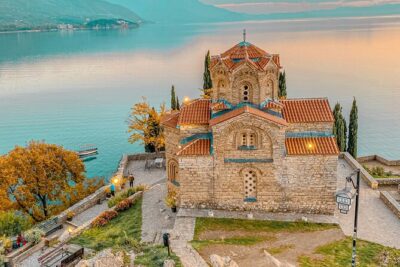
Semi-Private Tour of North Macedonia: Ohrid & Struga from Tirana
Read our review →
Semi-Private Day Tour of Montenegro: Budva & Kotor from Tirana
Read our review →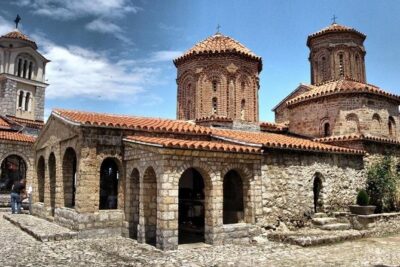
Private Ohrid Day Tour and Authentic Village from Tirana & Durres
Read our review →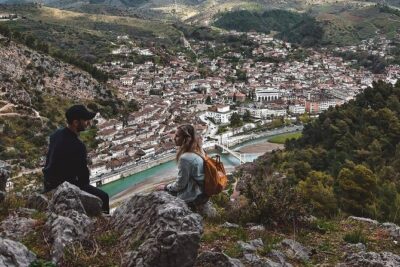
From Tirana; Semi – Private Day Trip to Berat & Belsh Lake
Read our review →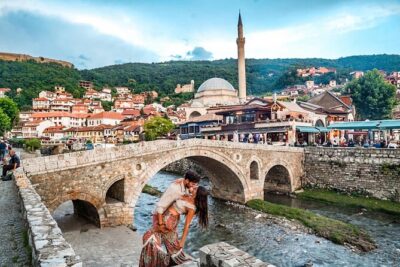
Semi-Private Day Tour of Theth & Blue Eye from Tirana / Shkoder
Read our review →
Semi – Private Tour of Saranda, Ksamil & Blue Eye from Tirana
Read our review →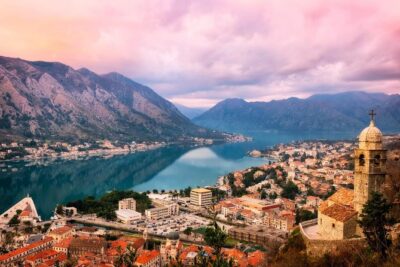
Private Montenegro Tour – Budva, Kotor & Sveti Stefan from Tirana
Read our review →Browse the lists this tour appears in