
Reviewed · KOSOVO & PRIZREN DAY TRIPS
Montenegro, Kosovo & North Macedonia in 3 Days from Tirana
Three countries, three days, one very full ride. This tour links Albania, Montenegro, Kosovo, and North Macedonia through old towns, fortresses, mosques, churches, and lake views. I especially like the small group of up to eight people and the fact that transport, hotels, breakfast, entry fees, and a guide are bundled together.
I also like the mix of famous places and less obvious stops, from Kotor’s Venetian lanes to Prizren’s traditional bazaar. The main caution is simple: this is a fast-paced road trip, with early starts and several long drives. You will see a great deal, but you will not have much time to linger.
In This Review
- Key points to know before booking
- What this three-day Balkan route really offers
- Day one: Rozafa, Kotor, Budva, and Shkoder
- Kotor’s old town and Sea Gate
- Budva’s walls and coastal views
- Shkoder after the border crossing
- Day two: Prizren’s old streets and Pristina’s modern symbols
- Prizren and the Albanian League
- Pristina’s contrasting character
- Reaching Skopje
- Day three: Skopje’s bridges, religious sites, and Mother Teresa
- Kale Fortress and the old quarter
- Ohrid: lake, fortress, and St. John at Kaneo
- Tsar Samuel’s Fortress
- Is $776.65 a fair price?
- Practical advice for making the trip work
- Who should book this Balkan tour?
- FAQ
- How long is the tour?
- What time does pickup begin?
- Where are the overnight stays?
- Are hotels and breakfast included?
- What is not included in the price?
- How large is the group?
Key points to know before booking
- Four Balkan countries in one trip: Begin in Albania, visit Montenegro and Kosovo, then finish in North Macedonia.
- Small-group transport: The air-conditioned vehicle carries a maximum of eight people, which should make hotel pickups and border travel more manageable.
- Two overnight stops: Spend one night in Shkoder and one in Skopje, with breakfast included both mornings.
- Strong guide praise: Engjell and Redi Boraj receive especially warm comments for their history, culture, and regional knowledge.
- A packed sightseeing plan: Kotor, Budva, Prizren, Pristina, Skopje, and Ohrid all appear within three days.
- Price and value: At $776.65 per person, the cost is high for a short trip, but it includes transport, guiding, hotels, breakfast, taxes, and admissions.
What this three-day Balkan route really offers
This is not a relaxed holiday with long afternoons in cafés. It is a compact introduction to several Balkan cultures, built around moving from one historic center to the next.
You leave Tirana at 7:00 a.m. on the first day, return to Albania for the night, cross into Kosovo on day two, and reach North Macedonia by evening. Day three continues through Skopje to Ohrid. That routing makes geographic sense, but it also means you should expect a lot of time in the vehicle.
The reward is variety. In three days, you can see a fortified Adriatic town, a small coastal resort, an Albanian city shaped by Ottoman and Illyrian traditions, Kosovo’s cultural center, the unusual monuments of Skopje, and Ohrid’s churches and lakefront.
The maximum group size is eight. That matters on a route with hotel pickups, border crossings, and narrow old-town streets. A smaller group also gives you a better chance to ask questions directly. Guide quality is especially important here. Engjell is praised for explaining the area’s history, economy, and culture in detail, while Redi Boraj is described as friendly, helpful, and highly professional.
More runs up to Kosovo:
- Day Tour of Kosovo from Tirana, Pristina and Prizren
★ 5.0 · 93 reviews - From Tirana/Durres/Golem: Prizren and Prishtina Full-Day Tour
★ 5.0 · 67 reviews - Best of Kosovo Day Tour – Pristina & Prizren from Tirana & Durres
★ 5.0 · 66 reviews
Day one: Rozafa, Kotor, Budva, and Shkoder
The first morning begins with a drive north from Tirana through the flatter northwestern part of Albania. You pass Lezha and follow the Buna River toward the Montenegrin border. The Buna is described as Albania’s only navigable river, and it provides a useful geographic introduction before the Adriatic towns begin.
There is a quick stop near Rozafa Castle. The visit is brief, so do not expect a full castle tour at this point. Still, even a short look helps frame Shkoder and northern Albania, a region tied to old trade routes, lake country, and stories of resistance.
Kotor’s old town and Sea Gate
Kotor receives the largest block of sightseeing on day one, with about four hours in the old town. Set at the head of the Bay of Kotor, it has an unusual position surrounded by steep mountains and water. The town’s past includes ancient settlement, medieval power, and a long Venetian period, with the Venetian influence especially visible in the architecture.
The walking portion begins near the marina and enters through the Sea Gate. The gate also recalls the city’s liberation at the end of World War II. From there, you move through small squares and narrow lanes, seeing the old city’s main architectural and historic points.
St. Tryphon Cathedral is one of the main stops. Its age and importance make it more than a quick photo point, though the scheduled visit is only about 20 minutes. That is enough for an introduction, but not for a slow architectural study.
I would use your free moments in Kotor for simple pleasures: look up at the stone buildings, notice the different periods of construction, and keep an eye on the clock. The old town is easy to enjoy on foot, but the four-hour block also includes organized sightseeing, so it is not four hours of completely independent wandering.
Budva’s walls and coastal views
After Kotor, the road follows Montenegro’s southern coast toward Budva. The route passes small rocky beaches and stretches of the Riviera before reaching one of Montenegro’s best-known resort towns.
Budva’s history reaches back about 2,600 years. The stop focuses on the old city, its walls, Roman remains, and the coastal fortress. The views from the fortifications are a major reason to pay attention here, especially with the sea below and the compact old town behind you.
There is also a stop at the Dancing Girl statue. The scheduled time is short, around 20 minutes, followed by free time for lunch. Budva is a good place to combine sightseeing with a meal, but lunch is not included in the tour price. You will also want to budget for dinner on both overnight stops and for any snacks during the drives.
The Budva visit is appealing because it gives you a different side of Montenegro from Kotor. Kotor feels more like a historic trading city in a dramatic bay. Budva adds resort life, beaches, shops, and a smaller fortified core. The tradeoff is that neither place receives the slow, unhurried treatment it would get on a dedicated city tour.
More crossings into Montenegro:
- Tirana/Golem/Durres: Montenegro Trip(Budva,Kotor,St.Stefan)
★ 4.9 · 146 reviews - Semi-Private Day Tour of Montenegro: Budva & Kotor from Tirana
★ 5.0 · 71 reviews - Tirana: Day Tour to Montenegro, Budva and Sveti Stefan
★ 5.0 · 53 reviews - Private Montenegro Tour – Budva, Kotor & Sveti Stefan from Tirana
★ 5.0 · 46 reviews
Shkoder after the border crossing
The last major stop is Shkoder, back in Albania. You arrive after leaving Montenegro and spend about three hours in the city before staying overnight.
Shkoder is known as the capital of northern Albania and is one of the country’s oldest urban centers. Its connections reach back to the Illyrian Kingdom, while local traditions include the legends surrounding Rozafa Castle and the natural setting near Lake Shkoder.
This overnight is well placed. Rather than returning all the way to Tirana, you remain in the north and shorten the next day’s route toward Kosovo. Two nights are included in good three-star hotels, with breakfast each morning. Hotel names are not specified, so you should treat the category as practical rather than luxurious.
Day two: Prizren’s old streets and Pristina’s modern symbols
Day two takes you from Shkoder into Kosovo. The first destination is Prizren, often called Kosovo’s cultural capital.
Prizren and the Albanian League
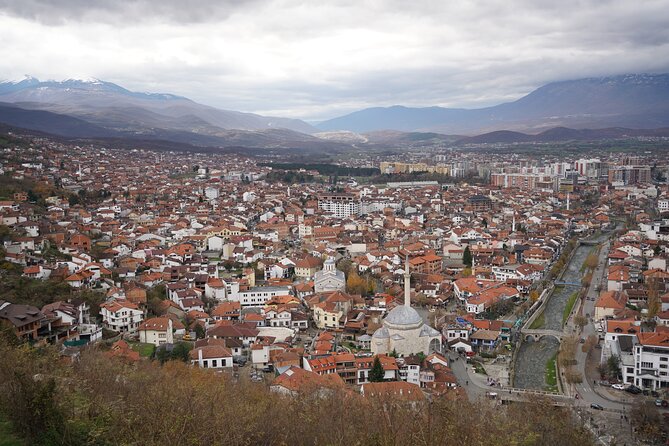
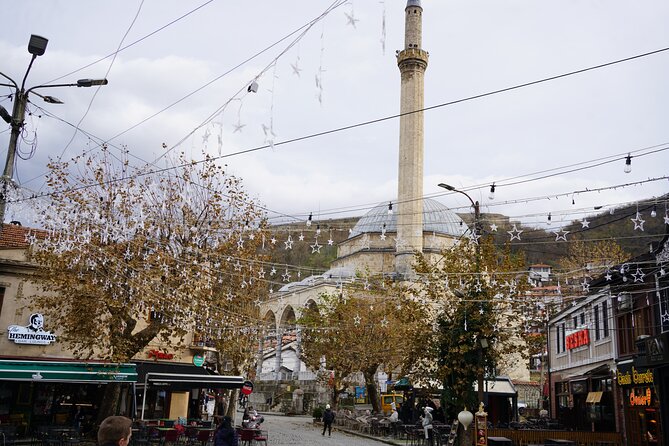
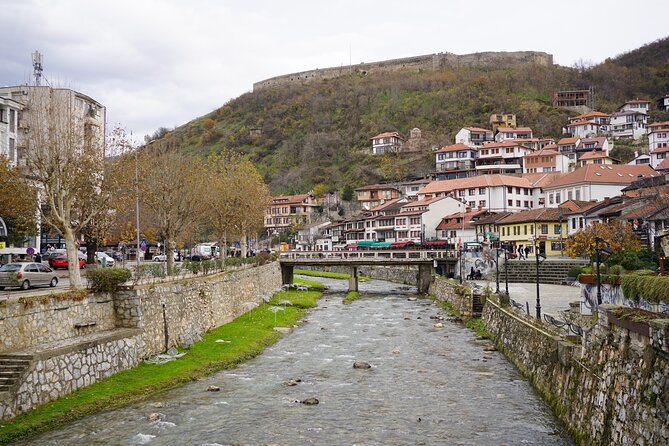
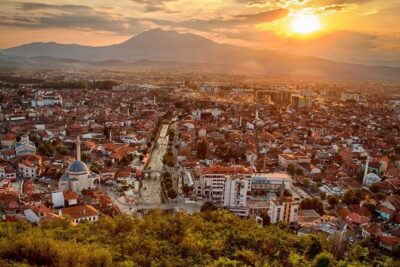
Prizren sits along the Bistrica River below its castle. The city has an important place in Albanian political history, particularly during the 19th century. The old center is compact enough to explore on foot, with stone bridges, traditional buildings, and a bazaar near the river.
The Albanian League of Prizren Museum is a key stop. The house recalls the political movement that pushed toward Albanian independence and the creation of a parliament and government. You also visit the ethnographic collection inside the complex.
That visit gives the city more meaning than a simple walk through picturesque streets. You can connect the local buildings and political events to the wider story of Albanian identity across the region.
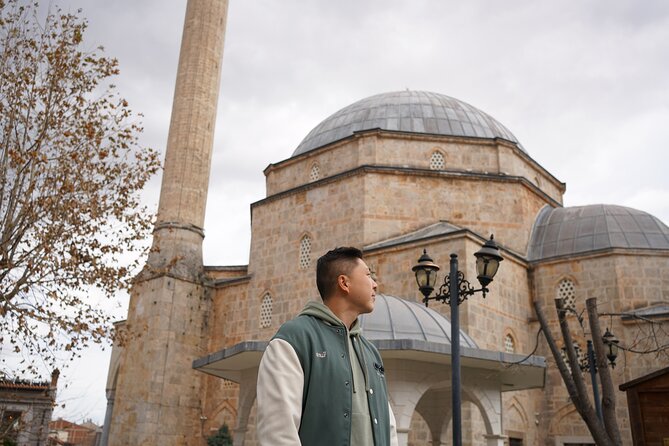
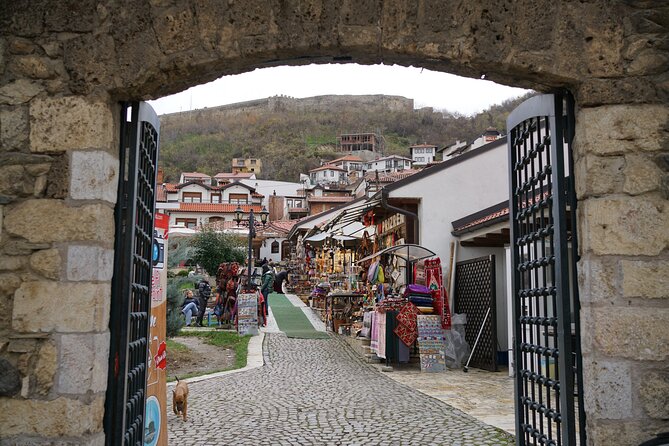
The tour continues to Sinan Pasha Mosque, the Stone Bridge of Love, and the traditional bazaar. The mosque and bridge help show how religious buildings, river crossings, shops, and homes fit together in the old center.
Prizren is also the best place on this route for a traditional lunch. Food is not included, but the schedule allows time to eat. The bazaar includes handcraft and perfume shops, so you may want a little spending money if browsing appeals to you.
The visit is about two hours, with only short scheduled stops at the museum and mosque. That is enough to get a feel for Prizren, but not enough to climb every upper street or spend a long time at the castle. Wear comfortable shoes because the old-town portion is on foot.
Pristina’s contrasting character
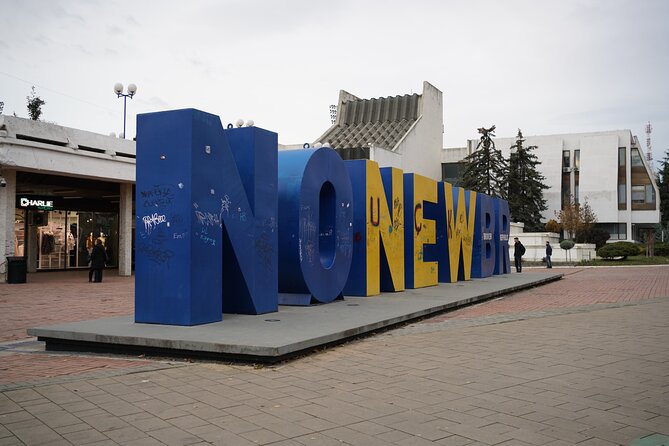
From Prizren, you continue to Pristina, Kosovo’s capital and largest city. The tone changes here. Prizren offers an older, more compact center, while Pristina is presented through its capital-city role, archaeological background, newer buildings, and old neighborhoods.
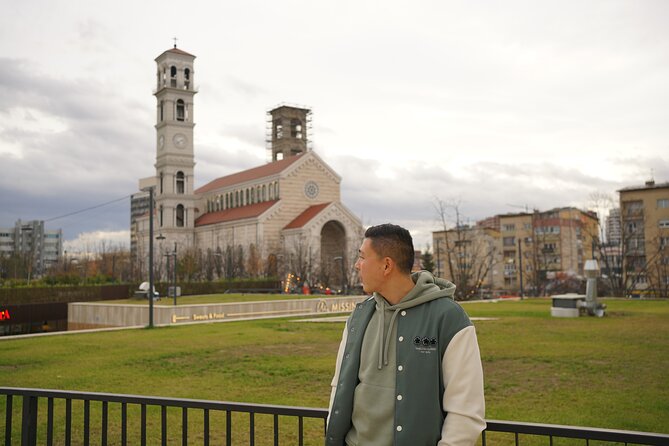
The National University Library of Kosovo is one of the most distinctive stops. Its unusual design makes it an important piece of modern Pristina, and the city tour also includes a cathedral and older parts of town.
You have about two hours in Pristina, split between general sightseeing and the library area. This is enough for a capital-city overview, though the route will feel brief if you want museums or extended time in cafés.
Pristina is valuable in this trip because it prevents the experience from becoming only a parade of preserved old towns. You see a place shaped by contemporary politics, education, religion, and urban change. The contrast with Prizren is one of the stronger parts of the route.
Reaching Skopje
The final stop on day two is Skopje, where you spend the second night. Only about an hour is set aside for the evening visit, so this is mainly an orientation stop rather than a complete city tour.
That overnight gives you a useful head start for the following morning. Breakfast is included, but lunch and dinner are your responsibility throughout the trip.
Day three: Skopje’s bridges, religious sites, and Mother Teresa
Skopje is North Macedonia’s largest economic, political, and cultural center. The city has ancient and medieval roots, but much of its present form was shaped by the devastating 1963 earthquake and the rebuilding that followed.
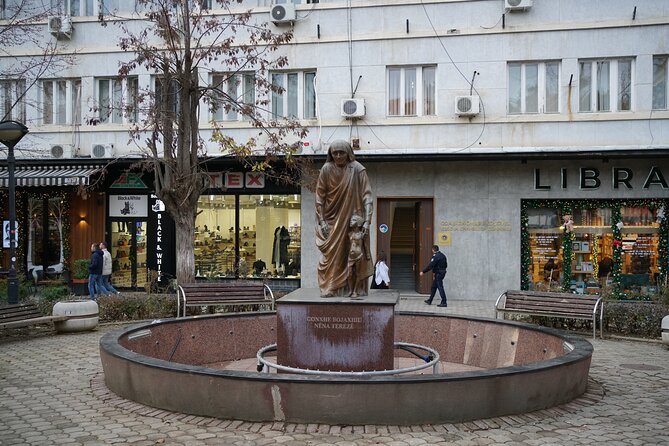
The Vardar River divides the city while also connecting its two sides. Bridges, statues, the main square, and large public buildings form a central part of the morning tour. Skopje is sometimes described as a memorial city because of the many statues and monuments placed around its public spaces.
Kale Fortress and the old quarter
The day begins at Skopje Fortress, also called Kale. The fortress provides a historical anchor above the city, while the old quarter below gives you a more street-level experience.
The tour also includes the Memorial House of Mother Teresa. Skopje is associated with her early life, and the house offers a personal point of focus amid the city’s large monuments and public spaces.
You then walk through the older part of town, where vendors sell local products. The schedule includes about 20 minutes at the Mother Teresa site and one hour at the fortress, with the rest of the city tour covering bridges, statues, and the main square.
Kapan Han adds another layer to the morning. This old inn is part of the city’s traditional commercial quarter, where Ottoman-era trade and lodging once shaped daily life. The route also visits St. Clement of Ohrid Church and Mustafa Pasha Mosque, showing the city’s mix of Christian and Muslim buildings.
The religious stops are particularly useful because they keep Skopje from being reduced to statues and reconstruction. You get a look at the city’s religious variety and its older commercial center as well.
Ohrid: lake, fortress, and St. John at Kaneo
The final destination is Ohrid, on the shore of one of Europe’s oldest lakes. The town is associated with very early settlement, long religious traditions, and the spread of Slavic Orthodoxy. It is also known for the claim that it once had 365 churches, one for each day of the year.
Ohrid receives about three hours, followed by a separate one-hour visit focused on Tsar Samuel’s Fortress and the lower part of town. The plan begins in the old city and climbs toward the fortress, then moves downhill toward Kaneo Bay.
Tsar Samuel’s Fortress
The fortress is one of Ohrid’s main historic points. From its higher position, you can understand how the town relates to the lake and surrounding hills. The visit is more than a quick photo stop because the fortress links Ohrid’s political past with its defensive position.
Afterward, the route goes downhill through one of the town’s most scenic areas. Kaneo Bay is known for views of the Church of St. John, perched above the water. It is one of Ohrid’s most photographed scenes and a natural closing image for the tour.
The final section brings together the old city, the lake, and two religious traditions. That idea of different communities meeting in one place is central to the way Ohrid is presented on this route.
The main limitation is timing. Three hours in Ohrid cannot cover every church, museum, viewpoint, and lakeside street. If Ohrid is your main reason for visiting North Macedonia, you may want a longer stay after the tour.
Is $776.65 a fair price?
At $776.65 per person, this is not a cheap three-day excursion. The price makes more sense when you count what is included: an air-conditioned vehicle, guide service, two hotel nights, two breakfasts, admission fees, taxes, and pickup from your Tirana hotel.
You still pay separately for lunch, dinner, and tips. Those costs should be added to your budget before you decide.
The value comes from the route itself. Planning transport across Albania, Montenegro, Kosovo, and North Macedonia would involve several borders, hotels, and separate local tours. Here, the work is handled for you, and the small group keeps the experience more personal than a large coach trip.
The price is harder to justify if you prefer slow travel, independent meals, or long museum visits. You are paying for coverage and convenience, not for extended time in each city.
Practical advice for making the trip work
Give your hotel address when arranging pickup. The start time is 7:00 a.m., so have your belongings ready and expect the first morning to feel early.
Keep your schedule flexible. The published times are tight, and each day combines driving with walking. A small day bag is more useful than a large suitcase during old-town visits.
Choose shoes that handle stone streets and slopes. Kotor, Budva, Prizren, Skopje, and Ohrid all include walking through historic areas, while Ohrid and the fortresses involve uphill or downhill sections.
Use meal breaks wisely. Lunch and dinner are not included, but Prizren is specifically suited to a traditional meal, and Budva also provides free time for lunch.
The tour is offered in English. Confirmation is normally sent within 48 hours, subject to availability. Most people can participate, but the pace and walking mean you should be comfortable with full sightseeing days.
Free cancellation is available up to 24 hours before the start time. If the minimum number of participants is not reached and the operator cancels, you can choose another date or experience, or receive a full refund.
Who should book this Balkan tour?
I would choose this tour if you have only three days, want to see several countries, and prefer having transport, hotels, admissions, and guiding arranged in one package. It is especially useful for a first look at the western Balkans, where borders and changing regional history can make independent planning time-consuming.
You should think twice if you want beach time in Montenegro, a long visit to Ohrid, or several quiet evenings. The early departure, multiple drives, and short city visits are part of the bargain.
The best reason to book is the combination of range and guide support. Engjell and Redi Boraj are praised for clear explanations and friendly help, which matters when one trip crosses several cultures and historical traditions. If you accept the pace, this tour gives you a strong first taste of the region in a remarkably short time.
FAQ
How long is the tour?
The experience lasts approximately three days and begins in Tirana.
What time does pickup begin?
Pickup starts at 7:00 a.m. You need to provide your Tirana hotel address for pickup arrangements.
Where are the overnight stays?
You spend the first night in Shkoder and the second night in Skopje.
Are hotels and breakfast included?
Yes. The price includes two nights in good three-star hotels and two breakfasts.
What is not included in the price?
Lunch, dinner, and tips are not included. You are also responsible for any personal spending during the trip.
How large is the group?
The tour has a maximum of eight participants and is offered in English.
Newly listed around Tirana
- Zipline Tirana Adventure & Petrela Castle – With Transport★ 4.4 · 10 reviews
- Wonderful Sunset and Dinner in the Castel Of Petrela★ 4.6 · 4 reviews
- Wine Tasting & Vineyards Escape near Tirana★ 4.9 · 8 reviews
- Walking Tour in Tirana, Albania★ 3.7 · 28 reviews
- Vlora, Dhermi & Llogara Day Trip from Durrës or Golem★ 5.0 · 5 reviews
- Day Tour to Petrela Castle and Zip Line Albania Adventure★ 5.0 · 10 reviews
- From Tirana: Mount Dajti Adventure, Local Vibes & Cable Car opt★ 4.5 · 6 reviews
- Winetasting tour in Alpeta winery – Roshnik village by 1001 Albanian Adventures★ 5.0 · 26 reviews
Kosovo & Prizren Day Trips, compared.
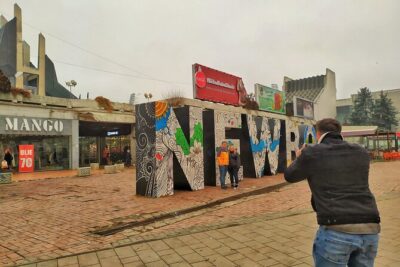
Day Tour of Kosovo from Tirana, Pristina and Prizren
Read our review →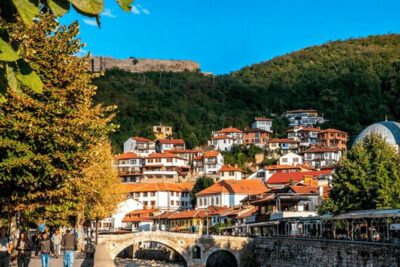
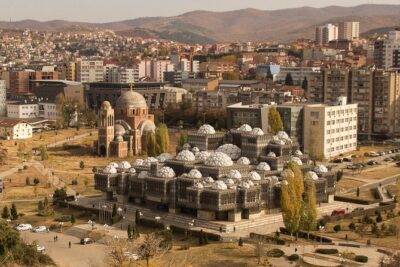
Best of Kosovo Day Tour – Pristina & Prizren from Tirana & Durres
Read our review →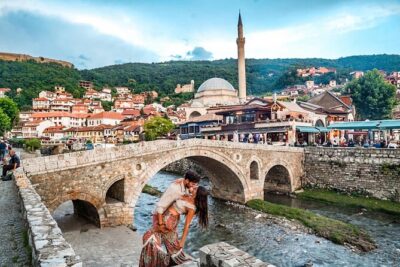

2 Day Tour of North Macedonia & Kosovo from Tirana
Read our review →
Private Kosovo Tour from Tirana: Prishtina & Prizren Highlights
Read our review →
Full Day Tour from Tirana to Prishtina and Prizren
Read our review →Browse the lists this tour appears in